6 Minute English now comes with a video! It's the same programme that you know and love, but now you can see us!
_____________________________________________________________________________________________________
Download a free 6 Minute English worksheet and transcript!
Try our free interactive quiz!
______________________________________________________________________________________________________


Introduction
Have you ever had an itch that you really wanted to scratch, but couldn't? Feeling itchy is unpleasant, and the feeling of finally scratching that itch can be very satisfying! But why do we feel itchy in the first place? And is it possible to catch an itch from someone else? Neil and Georgie discuss this and teach you some new vocabulary.
This week's question
Listen to the recording of scratching on the programme (at 1:38). What is being scratched?
a) an arm
b) a beard
c) some jeans
Listen to the programme to hear the answer.
Vocabulary
itch / itchy
unpleasant feeling on your skin / feeling something unpleasant on your skin
scratch
rub your nails back and forth against something, often to relieve an itch
unpack
explain in clear detail
parasite
animal, plant or fungus that lives on another lifeform and feeds on it
spontaneously
without being asked; without thinking
catch (an illness/feeling)
get an illness or feeling from someone else
TRANSCRIPT
Note: This is not a word-for-word transcript.
Neil
Hello and welcome to 6 Minute English from BBC Learning English. I'm Neil.
Georgie
And I'm Georgie. Find the vocabulary, definitions and a free worksheet on our website, bbclearningenglish.com.


Neil
So, Georgie we're going to talk about something a little different today. We're talking about itching. Now an itch is that unpleasant feeling you get on your skin that you have to scratch with your fingers. What sort of things make you itch?
Georgie
Well, funny you should ask, because I'm actually wearing quite an itchy jumper at the moment and it's making me want to scratch my skin. What about you?
Neil
Well, recently I was bitten by a mosquito and, as you know, when you get bitten by a mosquito, it's really itchy. I had to scratch loads and loads.
Georgie
Oh, I hate it when that happens.
Neil
It was horrible. In this podcast, we're going to hear from some experts about why we itch and how scratching can be good for us.
Georgie
And as usual, we'll be learning some useful new vocabulary.
Neil
OK. Well, we're going to start with a quiz question of course, Georgie. It's a bit of a different one today. Dr Henning Holle studies the psychology of itching, and he played some scratching sounds to the guests on the BBC World Service programme CrowdScience. Now the question is, what is being scratched? You have three choices:
a) an arm,
b) a beard, or
c) some jeans.
Georgie
OK. Well, let's listen... Well, that sounded a bit hairy, so I'm going to go with b) a beard.
Neil
Well, we'll find out at the end of the programme.
Georgie
So, Neil, I mentioned that my jumper was a bit itchy but sometimes I feel itchy for no particular reason. So, what's going on there?
Neil
Well, that's something that the listeners of BBC World Service programme CrowdScience also wondered. They wanted to know the answer to that. The presenter, Anand Jagatia, spoke to itching expert Sonja Ständer to find out more. Let's listen.
Anand Jagatia
There's lots of science to unpack here. Sonja, what actually is itchiness?
Sonja Ständer
Yeah. So, by scratching the skin, we remove parasites or plants or anything that does not belong on the skin. And so, we start to scratch at the very same area where we itch and remove it. And it can no longer damage the skin and harm ourselves.
Georgie
Anand says there's a lot of science to unpack about itchiness. Unpack here means explain.
Neil
Sonja explains that when our skin feels itchy, we scratch it, and that helps to get rid of parasites and other harmful things on our skin. Parasites are animals or plants that live on another animal and feed from them.
Georgie
So, Neil, itching is our skin's way of protecting itself against harmful parasites. And I have to say, all of this talk of itching and scratching is making me feel a bit itchy right now.
Neil
Well, that's interesting because Dr Henning Holle wanted to study whether just thinking about itching makes us more likely to feel itchy.
Georgie
Henning and his team studied what happened when people watched videos of itching and scratching.
Neil
Let's listen to him speaking to BBC World Service programme CrowdScience.
Dr Henning Holle
And what we found in this study was, yes, these scratching videos indeed made people feel itchier. They also started to scratch themselves more spontaneously. So, the answer is basically yes, you can catch a scratch.
Neil
In Henning's study, when people watched videos of scratching, they scratched themselves spontaneously. If you do something spontaneously, you do it without being asked or without thinking.
Georgie
So, Henning concludes that yes, you can catch a scratch, just like you might catch an illness. Catch in this context means get from someone else.
Neil
OK. Georgie, I think it's time for the answer to my quiz question. We had a clip of people scratching and you had to decide what is being scratched.
Georgie
I said that was a beard.
Neil
OK. Well, let's see if the people who are listening to this on the programme CrowdScience agreed.
Sonja Ständer
It sounds like hairy skin so I would go for the scalp.
Anand Jagatia
Yeah, I think it's beard or something because it does sound like there's hair there.
Dr Henning Holle
It is definitely hairy skin and Anand was spot on. So, it is indeed a beard scratch that we were listening to.
Anand Jagatia
Wow!
Georgie
So I was right!
Neil
You were. Congratulations!
Georgie
OK. Let's recap the vocabulary we learned in this programme, starting with itch, which is an unpleasant feeling on your skin. And something can be described using the adjective itchy.
Neil
When you feel an itch, you often scratch it with your fingers by rubbing your nails on the skin.
Georgie
If you unpack an idea or scientific concept, you explain it in clear detail.
Neil
A parasite is an animal or plant that lives on another animal and feeds on it.
Georgie
If you do something spontaneously, you do it without being asked or without thinking.
Neil
Catch can be used to mean get from someone else, such as an illness. For example, you can catch a cold.
Georgie
Once again, our six minutes are up, but you can test what you've learned with the worksheet on our website, bbclearningenglish.com.
Neil
Thank you for joining us and goodbye.
Georgie
Goodbye.

What do you think of the new version of 6 Minute English? Email us at learningenglish@bbc.co.uk.
Next
Find an A-Z list of our programmes.
Find more programmes for your level here.
Practise your reading skills with The Reading Room.
최신 6 Minute English


Can apps teach you a language?
Episode 260910 / 10 Sep 2026
What's better for learning languages – an app or a class?

Climate change and extreme weather
Episode 260903 / 03 Sep 2026
Every year we see damage, death and destruction caused by hurricanes, cyclones and typhoons - tropical storms. Is climate change making this impact worse?


Sharing the road with driverless cars
Episode 260820 / 20 Aug 2026
Would you trust a robot to drive you around a city?
Who does the housework?
Episode 260813 / 13 Aug 2026
When you were growing up, did your mum or dad do more household chores?
How do climate scientists make predictions?
Episode 260806 / 06 Aug 2026
What is the difference between a prediction and a projection?
The Enhanced Games
Episode 260730 / 30 Jul 2026
Would you watch a sport if you knew the athletes had taken drugs?
What's in a footballer's brain?
Episode 260716 / 09 Jul 2026
How do footballers cope with high-pressure scenarios like penalties and corners?
Stress-free family meals
Episode 260625 / 25 Jun 2026
What foods did you dislike when you were growing up?
Limiting screen time for children
Episode 260618 / 18 Jun 2026
Children are spending too much time with electronic devices.
How advertisers make us spend money
Episode 260611 / 11 Jun 2026
When was the last time you bought something you didn't need?
How reading shapes your brain
Episode 260514 / 14 May 2026
Can learning to read alter the way your brain works?
Should we eat ultra-processed food?
Episode 260430 / 30 Apr 2026
Ultra-processed food can be tasty, but what is it doing to our health?

Weight loss drugs
Episode 260326 / 26 Mar 2026
How do weight loss drugs like Ozempic and Mounjaro help people lose weight?
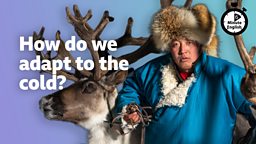
How do we adapt to the cold?
Episode 260319 / 19 Mar 2026
Would you prefer to be too hot or too cold?
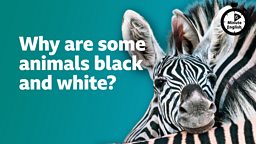
Why are some animals black and white?
Episode 260305 / 05 Mar 2026
The answer is not as black and white as you might think!
Why are billionaires building bunkers?
Episode 260129 / 29 Jan 2026
Is the end of the world closer than we thought?
Scared of speaking English?
Episode 260122 / 22 Jan 2026
Beth and Pippa talk about why we often find speaking a new language scary.
What English phrases really mean
Episode 260115 / 15 Jan 2026
Why don't British people say what they mean, or mean what they say?