_____________________________________________________________________________________________________
Download a free 6 Minute English worksheet and transcript!
Try our free interactive quiz!
______________________________________________________________________________________________________


Introduction
Unloading the dishwasher, mopping the floor, cleaning the loo... what is your most hated household chore? We all know there are jobs around the house which have to be done regularly, even if they are sometimes boring or unpleasant. But who tends to do the most amount of jobs in your household? And is there anyone who isn't pulling their weight...? Pippa and Neil discuss this and teach you some new vocabulary.
This week's question
According to a survey conducted by Good Housekeeping magazine earlier in 2026, what is the most hated household chore in Britain?
a) deep cleaning the oven
b) scrubbing the toilet
c) cleaning the windows
Listen to the programme to hear the answer.
Vocabulary
chores
tasks around the home, such as cleaning, washing and ironing, that have to be done regularly
fair share
reasonable amount
women's work
negative term for the boring and repetitive tasks which are traditionally or stereotypically done by women
division of labour
way of organising work where different tasks are done by different groups of people
take a breather
(idiom) stop what you are doing for a short time to rest
pull your weight
work as hard as everyone else doing the same job

TRANSCRIPT
Note: This is not a word-for-word transcript.
Neil
Hello, this is 6 Minute English from BBC Learning English. I'm Neil.
Pippa
And I'm Pippa. When it comes to household chores, jobs like cleaning, washing clothes or looking after the kids, it's often women who do most of the work. Here, two female listeners of BBC World Service programme People Fixing the World share their experiences. Do they sound familiar to you?
Listener 1
I do everything. I do all the house chores, I do the food shopping, I do all the cooking, I clean the bathroom.
Listener 2
Are the chores done equally between me and my husband? No, they're not done equally. I do most of the chores.
Pippa
So, you're a family man, Neil. Do you do your fair share of household chores?
Neil
I think so. My wife works part time and I work full time, so when I'm not working, I do things, and when she's not working, she does things.
Pippa
Yeah, it's similar in my house, so me and my husband try to split things, but it's difficult, isn't it?
Neil
It is.
Pippa
Of course, no one enjoys cleaning the toilet or taking out the bins, but there is a serious side to the issue. Figures from UN Women, an organisation promoting gender equality, suggest that every day women around the world spend three hours more than men on unpaid care and domestic work. So, in this episode, we'll be hearing about two projects helping husbands and wives share the housework more fairly.
Neil
And as usual, you'll find a quiz and a worksheet to go with this episode on our website, bbclearningenglish.com.


Neil
But now I have a question for you, Pippa. According to a survey conducted by Good Housekeeping magazine earlier this year, what is the most hated household chore in Britain? Is it:
a) deep cleaning the oven,
b) scrubbing the toilet, or
c) cleaning the windows?
Pippa
Hmm. I'm going to say deep cleaning the oven because I really hate that job. I hardly ever do it.
Neil
I don't like any of those, but we'll find out the answer at the end of the programme. Now, the first project we're going to look at is on the remote Indonesian island of Rote. Here, men traditionally work as rice farmers or fishermen, while women look after the home, the children and older people. But with few washing machines and no running water, these domestic chores take a long time.
Pippa
The NGO ARUNGI runs a project trying to change attitudes about the role of the island's women. They work alongside community leaders like Mama Shilpa, who spoke with BBC World Service reporter Ade Mardiyati.
Mama Shilpa
It is expected that the tasks done in the house, like holding the child, feeding the child, washing dishes, cooking, will all be done by the mother.
Ade Mardiyati
Shilpa tells me these are all considered women's work. And you might be thinking, "Well, the man is busy in the fields, so it's just a fair division of labour." But Shilpa tells me women also help out in the fields.
Neil
On Rote, cleaning, cooking and sweeping are considered women's work – a negative term for boring and repetitive tasks which are traditionally done by women.
Pippa
Many cultures have a division of labour – a way of organising work where different tasks are done by different groups of people. But on Rote this means women work even harder, helping out with the farming and fishing too.
Neil
You might think this only happens in traditional societies, but research suggests that women in wealthy countries also spend much more time on unpaid care work than men. One such country is Croatia, where the NGO Status M run their Superdads project. Project worker Anamarija Sočo leads workshops encouraging dads and sons to take some of the pressure off mums. Here, she explains the benefits of this to the BBC World Service.
Anamarija Sočo
Mothers have, you know, of course, more space for their careers, or hobbies, or just simply to rest – I mean, just to take a breather. Women tend to especially appreciate men who do these kinds of chores. And when they start pulling their weight, then they jokingly say that, "Uh yeah, women tend to nag less."
Pippa
Sometimes mums need to take a breather – an informal way of saying stop and rest a while.
Neil
Anamarija also thinks women appreciate it when their husbands pull their weight. If you pull your weight, you work as hard as everyone else.
Pippa
Both these NGO projects agree about one thing – men doing more to help around the house results in happier homes, even if that means cleaning the toilet now and then. And speaking of cleaning the toilet, what was the answer to your quiz question, Neil?
Neil
I asked you what chore is the most hated in Britain.
Pippa
I thought it was cleaning the oven.
Neil
Well, I'm afraid that's not the right answer. People hate cleaning the windows even more than scrubbing the oven. Apparently, 23% of the people who did the survey said cleaning the windows. OK. Let's recap the vocabulary we've learned, starting with chores – household tasks like cleaning, washing and ironing that have to be done regularly.
Pippa
If you do your fair share of work, you do a reasonable amount.
Neil
Women's work is a negative term for the boring and repetitive tasks which are stereotypically done by women.
Pippa
The division of labour is a way of organising work where different tasks are done by different groups of people.
Neil
The idiom take a breather means to stop what you're doing for a short time and rest.
Pippa
And finally, if you pull your weight, you work as hard as everyone else doing the same job. Once again, our six minutes are up, but remember, you can find a free transcript including all the vocabulary on our website, at bbclearningenglish.com. Goodbye for now.
Neil
Goodbye!

Next
Find an A-Z list of our programmes.
Find more programmes for your level here.
Practise your reading skills with The Reading Room.
የቅርብ 6 Minute English


Can apps teach you a language?
Episode 260910 / 10 Sep 2026
What's better for learning languages – an app or a class?

Climate change and extreme weather
Episode 260903 / 03 Sep 2026
Every year we see damage, death and destruction caused by hurricanes, cyclones and typhoons - tropical storms. Is climate change making this impact worse?


Sharing the road with driverless cars
Episode 260820 / 20 Aug 2026
Would you trust a robot to drive you around a city?
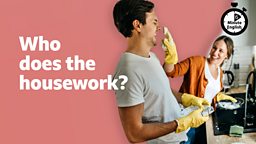
Who does the housework?
Episode 260813 / 13 Aug 2026
When you were growing up, did your mum or dad do more household chores?

How do climate scientists make predictions?
Episode 260806 / 06 Aug 2026
What is the difference between a prediction and a projection?

The Enhanced Games
Episode 260730 / 30 Jul 2026
Would you watch a sport if you knew the athletes had taken drugs?


What's in a footballer's brain?
Episode 260716 / 09 Jul 2026
How do footballers cope with high-pressure scenarios like penalties and corners?



Stress-free family meals
Episode 260625 / 25 Jun 2026
What foods did you dislike when you were growing up?

Limiting screen time for children
Episode 260618 / 18 Jun 2026
Children are spending too much time with electronic devices.

How advertisers make us spend money
Episode 260611 / 11 Jun 2026
When was the last time you bought something you didn't need?




How reading shapes your brain
Episode 260514 / 14 May 2026
Can learning to read alter the way your brain works?


Should we eat ultra-processed food?
Episode 260430 / 30 Apr 2026
Ultra-processed food can be tasty, but what is it doing to our health?





Weight loss drugs
Episode 260326 / 26 Mar 2026
How do weight loss drugs like Ozempic and Mounjaro help people lose weight?

How do we adapt to the cold?
Episode 260319 / 19 Mar 2026
Would you prefer to be too hot or too cold?


Why are some animals black and white?
Episode 260305 / 05 Mar 2026
The answer is not as black and white as you might think!





Why are billionaires building bunkers?
Episode 260129 / 29 Jan 2026
Is the end of the world closer than we thought?

Scared of speaking English?
Episode 260122 / 22 Jan 2026
Beth and Pippa talk about why we often find speaking a new language scary.

What English phrases really mean
Episode 260115 / 15 Jan 2026
Why don't British people say what they mean, or mean what they say?