 | 28 October 2014 |

| |
| BBC Homepage | | |
| |||
| Contact Us | | |
CoastYou are in: Kent > Coast > Point 5 - Regency Ramsgate 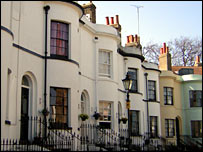 Regency Ramsgate Point 5 - Regency RamsgateRamsgate became a fashionable resort between 1780 and 1840. Royalty and the money-classes visited and settled here. On this leg of the walk you'll see Regency architecture and a very sorry looking public library. Just before you begin walking down Chapel Place notice the ship's anchor in the garden on your left. 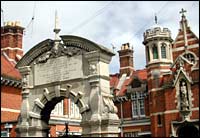 The Almshouses Notice the unusual blue bay windows that protrude from the mock tudor house at the far end of the street. This used to be the vicarage of St George's Church. It is now an adult education centre although no classes are held there. At the end of Chapel Place turn left down Elms Avenue and you will see on the left the Almshouses of the Parish of St George "built, endowed and dedicated to the poor... by the will of Frances Barber".
Take the first left road after the Almshouses into Clarendon Gardens and you'll see Clarendon House Grammar School on your right. Walk past the school towards a lovely flint wall and walk to the right of the wall. He said of his very generous donation: "A man dies disgraced if he leaves millions of dollars which he could have used in his life time for the benefit of Mankind." Opposite the library is Guildford Lawn, our next stopping point. 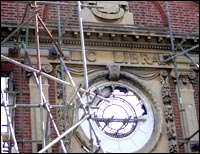 Remnants of the public library This crescent is in the Regency style which was very fashionable from the beginning of the 19th century until about 1830. Wander around the crescent and you’ll see the painted stucco, curved bays, round headed doorways and sash windows that are typical features of this style. William Saxby built the beautiful houses in 1842. But alas they lost their lawns as a Mr Beer gradually bought them one-by-one and resold them garden-less to make room for Lawn Villas which now stands on the spot. It is said that Karl Marx’s daughter used to stay in one of the houses in Guildford Lawn. Once you come to the end of the crescent go straight down Effingham Street, the road opposite. last updated: 06/03/2008 at 14:22
| |||||||
| | About the BBC | Help | Terms of Use | Privacy & Cookies Policy |



 Introduction