The surprising date night meal that’s gone viral
Think a romantic meal calls for food like steak, pasta or chocolate-dipped strawberries? Well, one TikTok trend is seeing couples take a different approach entirely…
It all started with a baby that wouldn’t sleep.
When chef Ali Hooke became a parent, she and her partner found themselves sleep deprived – and hungry. So, when a short window of time opened up to sit down together and eat one day, they prepared something quick and convenient, not knowing their easy dinner would give rise to a whole new food trend online.
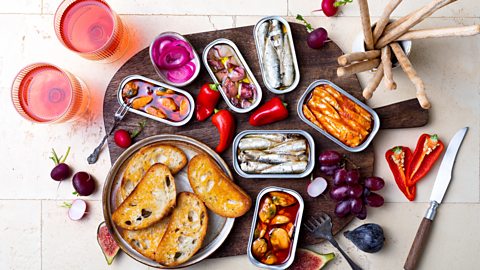
“My son was a horrible, horrible, horrible sleeper,” says Hooke. “Eventually, we reached the stage where he would reliably sleep for two hours in the evening. So, one Friday night while he was down, we opened a bottle of wine. I got some tinned fish, toasted some bread and put it all on a chopping board – not for aesthetics but because it was all I had that everything would fit on.
“We sat down and ate, and had such a good time reconnecting and being husband and wife instead of parents for a minute. So much so, we did it again the following Friday.”
And with that, tinned fish date night was born.
Hooke uploaded videos of her new go-to romantic meal to TikTok and it quickly gathered pace, with one clocking up 4.5million views – and counting.
Feeling inspired, other people were soon creating their own tinned fish boards and sharing videos of their efforts. Things snowballed from there, making these little tins the unlikely hero of a new culinary TikTok trend.
Sound intriguing? Here are some tips for mastering tinned fish date night, from the person who started it all.
Start with the flavours you know you like
Some of the most popular varieties of tinned fish are salmon, mackerel, oysters, mussels, tuna and anchovies. However, you also might spot the likes of pilchards, kippers, cockles, crabmeat, sild (young herring) and roe or caviar on the shelves at your local supermarket.
If you’ve no idea what to pick for your first tinned fish night, go for something familiar, says Hooke. “I always say start with a fish that you already know you like – so, if you're really into salmon, find a tin of it.”
Then you can start branching out and getting used to the flavours and textures of all the different types. It’s not just the species of fish to consider though – tinned seafood often comes in sauces.
“My husband grew up in India and has always really liked high-flavour foods. So he prefers it when the fish comes packed in a sauce, rather than oil or water. If it’s an elaborate sauce, all the better. We both love mussels in escabeche – that’s a winner for us.”
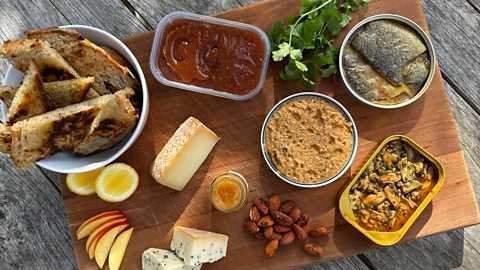 Image source, Ali Hooke
Choose accompaniments carefully
“With tinned fish, you’re really going to want something carby, like rice or potatoes, to go with it. Our favourite is sourdough bread which we use to mop up all the juices and flavours.
“I’d also definitely recommend pickles of some kind – whether it’s standard gherkins or pickled vegetables. We love pickled mustard seeds – they’re on a lot of our boards. You’re going to want a high acid ingredient too, something like a lemon that you can squeeze onto the food. This cuts nicely through the rich flavour and texture of the fish.”
In terms of drinks, Hooke is a big fan of orange wine. “The tang of it goes really well with the fish. It tends to be juicy and have a bit of a funky flavour which is totally different to the taste you’d get from traditional wines. Beer or a dirty martini are also great, though.”
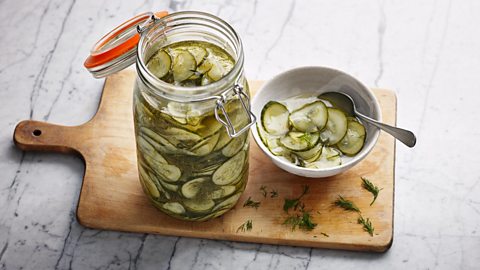
Cucumber and dill fridge pickle
You could make your own pickles: this cucumber version is super simple
Don’t go overboard
When talking about the cost of tinned fish, Hooke points out that “there are types on either ends of the spectrum: some of them are pretty expensive, and some are very cheap.”
Whether you’re pushing the boat out (sorry) or are doing tinned fish night on a budget, you really don’t need to buy lots for your board. “When people see how small the tins are they think they’ll need to buy lots of them to be full, but you just need one. Tinned fish is actually really filling – especially if you’re serving it with bread.
“That means that even if you are buying one of the fancier types of tinned fish, it really doesn’t need to be an expensive meal.
“In my videos you’ll see we have a lot on our boards – but the only reason we do that now is because we have an audience, and there are so many types to work through for them. We try to squeeze as much into each video as we can!”
Everyone must commit to the meal
Okay, we’ll say what you’re thinking: the smell of tinned fish isn’t exactly something you’d associate with romance. In fact, we'd probably go so far as to say it’s a passion killer, no?
“Comments and questions about the smell are common responses to our videos. But when we’re eating it, I honestly don't notice it. In fact, some of it smells very good, especially the tins which have sauces in them.
“We definitely would notice the smell if the empty tins were left lying around, though, and weren’t taken out to the bins. We clean the board and take the garbage out as soon as we’re done to avoid that.
“But if you're not eating the fish – you're just sitting there and not participating while your partner is tucking in – then yes, the smell might be a bit distressing. It's a hard smell. So it’s key that you’re both taking part in the whole experience, then you’re not going to notice the smell on each other.”
How to use tinned fish in cooking
Tinned fish isn’t just great for serving as-is, on boards – it has lots of uses in cooking, too. Bart Van Olphen wrote The Tinned Fish Cookbook and has some top tips for getting the most out of this hot-right-now product.
1. Quality over quantity
“Remember that the quality of tinned fish can vary enormously. I would always opt for the sustainably certified can so that we can continue to enjoy the tastiest fish in the future.” Find options that suit your budget and experiment to work out which you enjoy.
2. Think about what you don’t get from tinned fish
“Take as a starting point that the fish is already prepared for you and is packed with flavour. But what you won’t find in a can of fish is crispiness, sourness, colour. So simply add that. Provide some bite and some sourness (onion, lemon, vinegar, capers) and you are well on your way.”
3. Don’t overcook it
“Canned fish is already prepared so you can add it at the last minute. So, for example, it would make a great addition to an existing vegetable dish.”
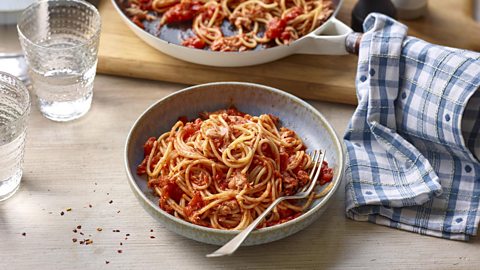
Chilli tuna pasta
This chilli tuna pasta is a great budget dish, you add the tinned tuna at the end of the cooking process
4. Oil or water?
Lots of tinned fish will come in either oil or spring water. Is one better than the other though? “I always use tuna in oil when I’m going to be heating the dish so that the tuna does not dry out as quickly. But if I’m going to be adding an oil – for example mayonnaise – I’d go for tuna in water.”
5. You don’t need to add expensive ingredients
If you’re buying tinned fish because it’s a good budget option, don’t lose sight of that by using expensive add-ons. “There are so many budget recipes which use tinned fish. Dishes such as grilled vegetables with tinned sardines, a nice traditional pasta puttanesca with tuna or anchovies, a leek and sardine tart or quiche with tinned salmon.”
Now make:
- Sweet vegetable, sardine and bean stew
- Sardinesca
- Tuna fishcakes
- Easy crab and sweetcorn chowder
- Tinned salmon pasta bake
Originally published March 2023