

Confusion on the wildcat strikes (2)
- 2 Feb 09, 05:40 PM
"It's very hard to know what's going on here. The Unions say that Total's subcontractors are discriminating against British workers. Total says they aren't. Whom to believe?"
That's the question posed by DisgustedOfMitcham2 in this morning's post.
The government's reply to this is that ACAS will find out the facts, although it's striking that Peter Mandelson appears to have already decided that the company is telling the truth when it says there's no discrimination against British workers.
What's also becoming clear is that there's no agreement on what "discrimination" really means.
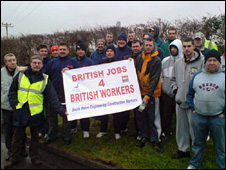 The unions believe that EU law should not simply guarantee that foreign workers get the same legal minimum terms and conditions as British workers. They argue that it should prevent "undercutting" of British workers by giving foreign workers the terms and conditions produced by collective agreements negotiated between unions and employers.
The unions claim that the EU's "posted workers directive" would mean this, if it was implemented properly by the British government. They also argue that recent judgements of the European Court of Justice have limited their right to fight for the directive to be implemented.
The Business Secretary Lord Mandelson begs to differ. In the Lords just now, he argued that "I don't think it's reasonable to seek to change the law in a way, in respect of this European directive which would extend collectively bargained entitlements to all companies and employees in adjacent employment, because that's not in UK law, let alone EU law."
It's not just his cabinet colleague Alan Johnson who appears to take the unions' side. The comments in the Commons of the former cabinet minister Peter Hain and of Labour's former chair Ian McCartney suggest that they do too.
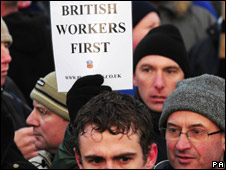
Peter Mandelson is trying to make this dispute purely about the behaviour of Total and his message is, essentially: the company isn't breaking the law, so get back to work. The strikers and many others insist that this dispute is about protecting workers up and down the country.
PS: Brownloather (a name which may tell you something) draws my attention to Peter Oborne's criticism of me in today's Daily Mail for being "gullible" in my coverage of Gordon Brown's promise to deliver "British jobs for British workers". I simply ask you to re-read what I said at the time the phrase was first used, in September 2007:
"Ponder for a second how exactly the same policies or phrases would have been written up had David Cameron delivered them. A 'lurch to the right' anyone? Or, even, 'language normally associated with the far right BNP'?"
 Cabinet minister and former union leader Alan Johnson