

The difference of a year
- 23 Jun 08, 08:59 AM
A year ago, Gordon of the Treasury was packing. He was about to make the longest journey of his life - moving next door from No 11 to No 10.
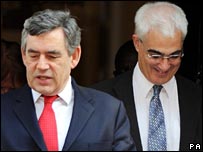 After a decade of being restricted to governing the economy, Gordon Brown was now making plans to govern everything else. He and his closest advisers took for granted that he would carry with him the lexicon of the Brown decade - prudence, stability, no boom and bust. They were preparing to unveil what he would call "a new government with new priorities".
What a difference a year makes. It is the old priorities of an old government that are at the heart of Gordon Brown's new problems. No surprise then that some in No 10 are arguing that a new economic plan should be the centrepiece of an autumn fightback.
They have concluded that the old tunes are sounding dated. They believe that it's no longer enough to declare that the man who steered the economy away from the rocks for 10 years will be able to do so again. Instead, I'm told, the public is to be presented with a new analysis: explaining why the PM is not merely whistling in the wind when he predicts that the British economy will weather the current storm; setting out how future decisions on tax and spending; on the environment, education and skills will help prepare Britain for a better economic future.
Now, this raises a mighty big question. A question highlighted by the fact that a cabinet reshuffle is said to have been pencilled in for around the same time. Does a new economic plan need a new chancellor? It's a question some close to the PM are pondering.
The arguments for a change are simple. Alistair Darling, it's said, has not established himself as a strong independent figure in the City, the country or in Parliament. The last thing the government needs at this time, the argument goes, is a cautious conservative chancellor.
The arguments against begin with sympathy for a man who, many of his colleagues believe, has calmly and stoically taken the rap for the PM's mistakes -whether a Budget dictated by the election that never was or the unwillingness to accept there were losers from scrapping the 10p tax rate.
The debate soon turns, of course, to who would take over - Alan Johnson, some say, would have the popular touch and is English, to boot. So too, David Miliband who's bright enough to easily make the switch from the Foreign Office. Promote either and Gordon Brown would be promoting a man who could soon replace him. Why not then the man he may want to succeed him - his old economic adviser Ed Balls? Blairites are not alone in thinking of many reasons why not.
Darling, an old friend and trusted ally of Brown's, may well survive in his job but a question some are pushing this for the summer is whether Gordon Brown should lay down his friend for his political life.
This is the script of my essay on this morning's Today programme.