Unit 2
The material on this page is designed to help you with revision and preparation for your CCEA GCSE English Language assessments. It applies to Unit 2: Speaking and listening.
- Unit 2 is a controlled assessment unit, worth 20% of your final mark
- This assessment consists of three tasks, to be completed in class:
- Individual presentation and interaction
- Discussion
- Role play
- In each of these three tasks, you will be assessed on your ability to:
- Communicate clearly
- Listen and respond to others’ ideas
- Interact with others
- Create and sustain different roles
Useful guidance for English Language controlled assessments can be found on the CCEA support page – select the Student Guidance tab. For further advice on controlled assessments, please consult your teacher.
Think about your audience and purpose
To help you decide on a style of speaking that is suitable for a particular situation or context you should think about:
- who you are speaking to
- why you are speaking to them
For example, in a conversation with friends you are likely to use a very different style of speaking and listening than you would in a formal presentation to an unfamiliar The group of people a product or service is aimed at..
Ask yourself the following key questions when preparing for speaking and listening:
- Who are your audience?
- How old are they?
- What matters to them?
- What do you want them to do or feel?
- Why should they listen to you?
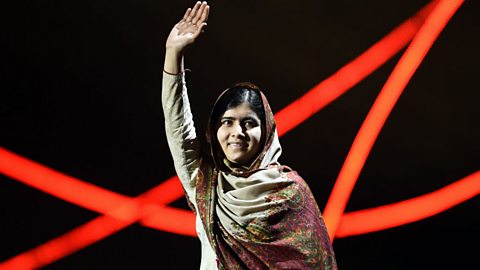
Your answers to these questions should help you focus on how you might best speak to your audience in an interesting and convincing way.
Be clear about your The reason for what you are saying. in presentations and discussions. Is your aim:
- To persuade your audience to do something, eg to stop dropping litter?
- To convince your listeners that your point of view is a fair one to hold?
- To entertain your audience?
- To share important information?
- To give instructions, a report, advice or explanation?
It is a good idea to prepare notes in advance of formal speaking and listening situations and to practise beforehand in front of people.
Use Standard English to make yourself understood
A form of speech that lays claim to a grammatical 'correctness' and clear pronunciation. This is sometimes called 'BBC English'. is a variety of English most easily understood by a wide The group of people a product or service is aimed at.. It isn’t the only or ‘correct’ form of English – there are words unique to regional The language of a particular subset of English speakers - often those living in a particular place - having its own unique diction, vocabulary, spelling and even grammar. and generational differences too.
However, Standard English is most suitable for formal occasions or where the audience is large or unknown. If everyone speaks in a standardised variety of English, we are more likely to understand each other. It is also the form of English rewarded in GCSE Speaking and Listening tasks.
What about informal language?
Standard English is formal – it does not include informal language. We use informal language in situations where Standard English is not necessary or might not be appropriate.
For example, we might use informal language like An informal word used in everyday speech. when we are with our friends or family. Your The particular way a person talks, including their dialect and personal favourite phrases and words. might include slang words and phrases that are particular to your age or social group. For example, think of the following words you might use to describe your sports shoes. Perhaps you would use one of the following:
- sneakers
- daps
- trainers
- runners
Most speakers would understand the word ‘trainers’, but the other words could be considered more informal or slang words.
When using informal language it is also common to use contractions – shortened versions of phrases such as ‘gonna’ for ‘going to’, ‘innit’ for ‘isn’t it’ and ‘I ain’t’ for ‘I am not’. These contractions are not appropriate for formal speaking situations, but it would still be acceptable to use contractions like ‘I’m’ and ‘don’t’.
Here is an example of Catherine Tate’s comedy character Lauren Cooper using informal language to speak to her teacher. Notice how her language seems out of place.
Catherine Tate’s character Lauren Cooper uses colloquial language as she makes fun of her teacher’s accent
Teacher: Lauren, I'm sure you don't like staying behind any more than I do, but until you learn to focus more when you're in class and do the work set for the lesson, you're going to stay behind and do it in your own time.
Lauren Cooper: Are you a Northerner, Miss?
Teacher: Excuse me?
Lauren: You're from the North, innit?
Teacher: Do your work, Lauren.
Lauren: Are you a Northerner though?
Teacher: Why do you ask, Lauren?
Lauren: Cos you speak funny, is it.
Teacher: That's enough.
Lauren: Only asking a question. Can't I ask a question? I'm only asking a question though.
Teacher: I'm from Bristol, Lauren. Does that answer your question?
Lauren: Yeah.
Teacher: Good.
Lauren: Are you a farmer, Miss?
Teacher: Lauren.
Lauren: Are you a farmer, though?
Teacher: Don't be ridiculous!
Lauren: You talk like a farmer.
Teacher: Carry on with your work.
Lauren: Why do you talk like a farmer, though?
Teacher: Lauren, I'm not going to tell you again.
Lauren: Do you live on a farm, Miss?
Teacher: Lauren, be quiet.
Lauren: Miss, are you the farmer's wife?
Teacher: Don't be…
Lauren: Are you the farmer's wife, though?
Teacher: No I'm not!
Lauren: Are you Old MacDonald, Miss?
Teacher: Don't be…
Lauren: Do you know Old MacDonald, Miss?
Teacher: Stop this.
Lauren: Ee-aye-ee-aye-oh, Miss.
Teacher: Stop this nonsense! You know perfectly well I'm not a farmer, now get back to your work immediately.
Lauren: I'm not being funny or nothing, Miss, but you do smell like a farmer.
Teacher: Now that's enough!
Dialect is the form of language used by a group that live in a particular area. If a speaker is using a dialect, they may use different words, spellings or even order their sentences in different ways. For example, in Newcastle (in north-east England) the word 'gadgie' means man.
These non-standard English words and forms are easily understood by certain groups of people, but might be unfamiliar to other groups. Although dialect words can be acceptable in formal English, it's important to think about your audience and The reason for what you are saying. when deciding whether to use them or not.
Terms for analysing spoken language
When you are analysing two pieces of spoken language, you are doing more than just spotting features. You are thinking about how speakers use language to shape meaning and influence their audience. Both what is said and how it is delivered matter.
The terms in the glossaries below will help you describe what you hear, but the key skill is explaining their impact. It is not enough to say that a speaker uses fillers, pauses or informal language – you need to think about why they use them and what effect they have.
Think about how the speaker presents themselves, how they connect with their audience and how their choices influence the message. Strong analysis shows that you understand not just the terms, but the difference they make.
Glossary: Rhetorical devices relating to content
Adjective
A word that describes a noun.
Example: The blue car sat in the long driveway.
Alliteration
Words which have the same starting letter or sound.
Example: Peter Piper picked a peck of pickled peppers.
Anecdote
A short personal story to illustrate a point.
Example: When I was ten, I struggled with reading – until I discovered my love for the Harry Potter books.
Comparative Adjective
An adjective used when comparing two things.
Example: This book is better than the last one.
Direct Address
Speaking directly to the audience.
Example: You have the power to make a difference.
Emotive Language
Words that stir emotions in the listener.
Example: Thousands of innocent lives were lost.
Exaggeration
Overstating something to make a point.
Example: There are miles of shops in the new shopping centre!
Expert Opinion
Referencing someone with authority in a particular area.
Example: Dr Smith, a leading psychologist, says this method works.
Facts and Statistics
Using data or factual information to support a point.
Example: 90% of students improved their grades after study camp.
Flattery
Being complimentary to your audience to gain their support.
Example: An intelligent audience like yourselves will understand the problem.
Hyperbole
An extreme form of exaggeration used for dramatic effect.
Example: I have told you this a million times before!
Inclusive Pronoun
Pronouns that include the audience such as we and us.
Example: We all can see what is happening.
Metaphor
Saying something is something else to create imagery.
Example: Time is a thief.
Onomatopoeia
Words that imitate sounds.
Example: The loud tick-tock of the old grandfather clock.
Personification
Giving human traits to non-human things.
Example: The wind whispered in the trees.
Promises/Incentive
Offering a benefit or bonus to persuade the listener.
Example: Sign up today and get a free trial.
Pun
A play on words for effect, often humorous.
Example: I used to be a baker, but I couldn’t make enough dough.
Repetition
Repeating words or phrases for emphasis.
Example: We must act now. We must act together. We must act before it is too late.
Rhetorical Question
A question asked for effect, which does not require an answer.
Example: Who would say no to ending world poverty?
Rule of Three (or Triple)
Ideas or words which are grouped in threes for impact.
Example: This plan is smart, simple and sustainable.
Simile
Comparing two things using like or as.
Example: She was as cold as ice.
Superlative Adjective
An adjective used to describe the extreme of three or more things.
Example: She is the fastest runner in the county.
Quiz: Rhetorical devices
Body language
Communication is not just about the words you say. It is also about how you say those words (eg the tone and volume of your voice) and the way you look, stand, sit and move in relation to your listeners. This is what is meant by body language.
You can enhance or undermine anything you say in face-to-face communication depending on how you use your body language. Imagine two people, Kara and Jordan, both saying “That’s great!”. Kara is smiling, has her arms open and is looking at you as she says this. Jordan is frowning, has his arms folded and is looking at his feet. Notice how the use of body language results in two very different interpretations and outcomes of the attempted communication.
Be aware of your body language when you are speaking and listening. You show your interest in or dislike of a topic with your:
- eye contact
- posture
- gestures
Eye contact
Make eye contact with your listeners, but not for too long.
Making frequent but not overly intense eye contact when you speak will reassure your listener that you are interested in their response. In everyday conversation we naturally look at the people we talk to. It would seem strange if you were speaking to one person, while looking at somebody else.
It’s the same for all face-to-face situations when you use spoken language. You need to look at the people you are speaking to. You shouldn’t stare intently though as that is likely to make your listeners uncomfortable.
In one-to-one situations eye contact can be helpful to show that you are focused on a particular aspect of the conversation. It shows that you have something important to say at that moment and also that you care about what the other person is saying.
If you are presenting to a larger audience, you can move your gaze across your listeners as you talk, making only very brief eye contact with individuals, holding for maybe a second or so, before moving on. This will help your listeners to feel included.
Posture
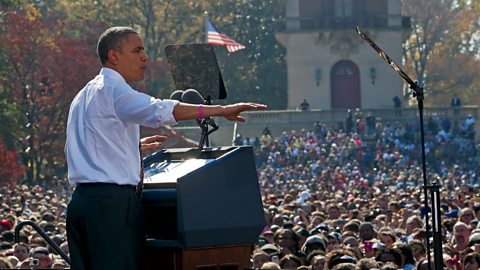
We give clues about what we are thinking by the way we sit or stand. That doesn’t mean that everyone who sits upright is interested or that everyone who slumps is bored. But paying attention to posture can help us communicate a message more clearly.
Posture is usually interpreted at a subconscious level. Here are some examples of posture with some generally accepted meanings:
| Posture | Meaning |
|---|---|
| Leaning slightly towards a speaker | Suggests interest in a topic |
| Tilting head to one side | Suggests you are listening |
| Standing with both feet on the ground | Suggests confidence |
| Standing with weight on one foot | Suggests uncertainty |
You can use your own posture to your advantage when you are in a discussion or giving a presentation. Show that you are interested and engaged with a speaker by leaning slightly towards them and tilting your head to one side. Feel the difference yourself, for example, when you fold your arms and sit back in your chair.
To appear more confident when delivering a speech or presentation:
- plant your feet firmly on the ground, about hip distance apart
- roll your shoulders back
- keep your chin up
- keep your arms relaxed and by your side, unless you are making specific gestures
Even if you don’t feel confident on the inside, this posture will go some way to convincing your audience that you know what you’re talking about.
Watch how the One Show hosts and their guests Michael Palin and Sam Smith adopt confident postures
Matt Baker: So 22, incredible success. We’ve worked it out: you were born 50 years apart. Just to confirm Sam, what is your date of birth?
Michael Palin: So he’s four.
Sam Smith: 1992.
Michael Palin: May 1992? You’re a Taurean.
Sam Smith: Yes.
Michael Palin: I was May 1943.
Sam Smith: Wow, amazing. May babies.
Michael Palin: But I can’t sing. You can.
Alex Jones: Can you remember, Michael, where you were on the day that Sam was born? It’s quite a random question.
Michael Palin: I would be travelling probably.
Alex Jones: Well luckily we’ve got your diary. You were in the North Pole and you had a bit of a tricky time. We’ve got a picture here.
Sam Smith: On my birthday?
Alex Jones: Yes, on your birthday.
Michael Palin: That's the North Pole and we were dropped from a plane. Well, we weren't dropped; the plane landed on an ice floe that was cracking up. It was late in the season and we probably shouldn't have landed.
Gestures
Gestures are movements that we make naturally when we speak. Some people use lots of gestures and ‘talk with their hands’. Others use more subtle gestures.
Not all gestures are universal and some have different meanings according to your Describes the way of life, behaviours and beliefs of a particular group of people..
Here are some common gestures that you might recognise:
| Gesture | Meaning |
|---|---|
| Open hands, palms facing down | Suggests a calm control |
| Arms folded | Suggests disagreement |
| Pointing | Suggests blame |
| Nodding | Suggests agreement |
| Holding the chin | Suggests listening closely or contemplating |
You can often understand a conversation, at least in part, from gestures alone. Watching a television conversation with the sound off, you can often still understand what’s going on in general. Gestures indicate emotion and that carries a great deal of information.
When you are delivering a presentation or speech, think about how you can use gestures and facial expressions to emphasise certain points you want to make. Plan in advance where gestures will be effective and practise your talk as if you are rehearsing for a play.
In this clip, notice how the politicians’ gestures speak as loudly as their words.
An analysis of body language from the first British televised election debates
Newsnight presenter Kirsty Wark: Joining me now are the TV critic AA Gill and the body language expert Judi James. Judi, just looking at the body language, particularly, first of all, having to stand behind a lectern. How did they do in all that?
Judi James: I think they did better than I thought. I thought it was going to look like the Weakest Link. In actual fact, Cameron, I don't know if you noticed, he actually stood back from the lectern, which, it may sound small, but it was quite breath-taking. It was a little bit daring and I think it gave him a slightly higher status look.
Kirsty Wark: He stands back, where Gordon Brown tended to sort of move towards the lectern, almost like a minister, didn't he?
Judi James: One does. You just would hold anything. And that was the problem because it also meant that Brown appeared quite lecturing, whereas Cameron seemed to connect a lot more from that position. He created a triangle, which made him look like the most powerful person.
Kirsty Wark: And how they used their hands - I noticed, of the three men, the only one who put his hand nonchalantly in his pocket was Nick Clegg.
Judi James: This is his look at the moment. He ends up with both hands in his pockets at the end, which actually should be a desire to hide, but I think he was going for this "I'm different because I play with my hankie in my pocket." Some of Brown's gestures, he did a lot all the way through of what looked like praying hands. This has been compared to a job interview. You don't do praying hands at a job interview. It looks desperate for the job. He combined that with a fig leaf, which is a very defensive male gesture. Whereas Cameron was definitely channelling most of the American presidents, the good ones.
Kirsty Wark: Of course, this lectern limits their movement, they couldn't walk about, they couldn't approach the audience. Was it theatrical in any way, do you think?
AA Gill: No, I think, in terms of just television, it looks very old fashioned. Television has really moved on a lot since Kennedy and Nixon and we've seen a lot of our politicians. The way they look and the way they talk doesn't come as a surprise. It's not like you're seeing someone you haven't seen before or have only heard on radio or seen in newspapers. And this particular format looks incredibly mannered when we get Question Time every week or there are a million other shows made in studios. I think that the rules make it worse. I think, just in terms of the power and the positioning, you can see why prime ministers have always turned this down, have never done this before, because Brown looked like he was the underdog talking to a prime minister.
Controlling your voice
The meaning of your words is affected by how you choose to use your voice.
For example, you might whisper if you want to say something that only one person should hear, shout loudly if you’re trying to get someone’s attention. You might use a When someone says the opposite of what they really mean in order to mock or insult. tone with a friend and a polite tone with someone you respect. You might speak slowly in some situations and quickly in others.
Quiz: Speaking and Listening delivery techniques
More help with your English Language
English Language revision resources. revision-guide
Get ready for your English Language exams with help from Bitesize.

English Language past papers
CCEA past papers and mark schemes, plus top tips to help you prepare for your English Language GCSE.
More on Unit 2: Speaking and listening
Find out more by working through a topic
- count2 of 4

- count3 of 4

- count4 of 4