Who were the Ancient Sumerians?
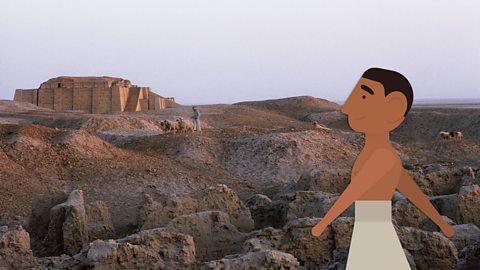
Ancient Sumer was one of the first major civilisations. This means the Ancient Sumerians were a group of people who lived together with their own cities, culture and ways of life.
Some of the cities in Ancient Sumer had as many as 80,000 people living within them.
The Ancient Sumerians lived in separate city-states. A city-state is a city that acts like its own country by having its own rules, laws and culture. They were often at war with each other.
In Ancient Sumer people came up with lots of ideas such as writing, mathematics and farming techniques, many of which people still use today.
Important words
Important words about Ancient Sumer.
| Keyword | Definition |
|---|---|
| City-state | A city that acts like its own country, having its own rules, laws and culture. |
| Civilisation | A group of people living together with their own cities, culture and ways of life. |
| Crops | Plants that are grown to produce food, such as grains, fruits or vegetables. |
| Epic | Something long, impressive or extraordinary. |
| Neolithic | The ‘new’ Stone Age, when people began to settle in one place and farm. |
Watch: An introduction to Ancient Sumer
Watch the video to learn more about Ancient Sumerian civilisation.
Narrator: Hello, future people of the UK.
Would you like to visit me at the dawn of civilisation in ancient Sumer?
Well, to do that, you’ve got to travel back in time.
Back before the Vikings, before the Romans, and keep going back, back, back, before Stonehenge was even built.
Right… Now aim between those two rivers that run through modern-day Iraq.
YAWNS
Good morning. I am Uri and…I’m afraid I’ve only just got up. And yes, I sleep on the roof. It’s cooler. Hmm… I wonder what time it is? Oh no! Look at the sundial.
I’ve slept in again. I’m going to be late for school. We invented 60-minute clocks, though I wish they came with alarms like your ones. Actually, invention is our big thing.
Come on, I’ll show you what else we’ve come up with. First up is city living because this Uruk, the first city ever. We’ve got streets, shops and houses. We even use the grid system for our roads and buildings, just like you still do.
We invented all this well before the ancient Egyptians. It all started when we stopped hunter-gathering food and began growing it instead. With the abundance of water and good soil, we found we could grow almost anything here. That’s why they call it ‘the fertile crescent.’
Soon, we had more crops than we could possibly eat. This meant we had time to do other stuff instead. That’s when the inventing began! We thought of lots of stuff to make our lives easier.
Better ways of farming…sailboats, games, and even skyscrapers ten storeys high which have lasted into your time.
We also invented the first schools, and our teachers are very strict. Yikes! That reminds me, I’m late!
Luckily, we’ve invented wheels, too. They’re great for carrying goods for long distances and faster than walking. Giddy-up!
With so much going on, this fast-paced city life can get really confusing, so we started keeping records and became one of the first people to start writing.
Paper doesn’t exist yet, but we use clay tablets, like this, which we mark with…um…Oh bother. I’ve left it at home. Quick, down to the river.
We don’t have pens, we use sharpened reeds instead. Just one more perk of living near the water.
Phew, I made it just in time! This is my school. Well, it’s just a bench. But I’m lucky to be here because most people in our city don’t ever get to learn the secret of writing.
I can show you though. We push the reed into the clay and the different combinations of marks make words. Our written records will last into your time. They’ll tell you what life was like here and how, eventually our crops will dry out and the population will shrink, spelling the end of the Sumerian Empire. And all this? Well, it’ll be history.
When was Ancient Sumer?
Ancient Sumerian civilisation began in around 5300BC and ended in around 1940BC.
Ancient Sumer started as a Neolithic civilisation, which means it began in the ‘new’ Stone Age, and later developed through the Bronze Age, when people made tools and objects from metal.
Over time, the civilisation weakened when city rulers began fighting with each other.
Flooding was common and there were some large floods between around 3500BC and 2900BC. They would have made it hard to grow crops which are plants that are grown to produce food, such as grains, fruits or vegetables.
The civilisation ended after Sumer was invaded by the Elamites who came from modern-day Iran.
Watch: How did Sumer become one of the first civilisations?
Discover how Ancient Sumer became one of the world’s first civilisations.
Around 6,000 years ago, in Ancient Sumer, new ways of living appeared. People farmed differently, built cities, and invented writing. Sumer became one of the world's first civilisations.
In Sumer, people found new ways to grow crops. One of these was irrigation – using ditches to bring river water to their fields. With more food, more people lived together, and towns and cities grew.
These cities had houses, palaces and markets. They also had large buildings called ziggurats where priests worship their gods. To stay organised, the people of Sumer invented a type of writing called cuneiform, as well as their own number system. These were used to share messages and to record trade.
Cuneiform also meant they could record laws – rules written down for people to follow. One, called the Code of Ur-Nammu, shows how people in ancient Sumer tried to keep their cities fair.
Ancient Sumer was where people first began to write stories, make laws, and build great cities. Sumer is often known today as the cradle of civilisation – a place where new ideas shaped how people lived together, not just then, but for thousands of years.
Where was Ancient Sumer?
Ancient Sumer was in the southern part of a place called Mesopotamia.
Most of the area now falls in modern-day Iraq.
Cities were along the Tigris and Euphrates rivers.
This was similar to Ancient Egypt, the Indus Valley and the Shang Dynasty, as Ancient Sumer who all lived near large rivers.
People used the rivers to travel and transport goods and to help grow crops to eat and trade.
Some of the famous cities were called: Ur, Uruk, Eridu, and Larsa.
What were Ancient Sumerian cities like?
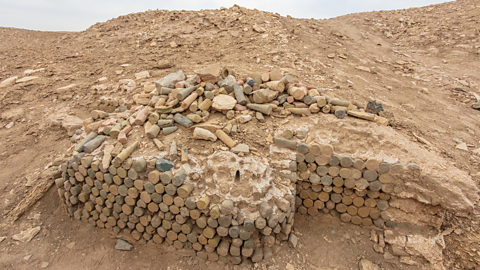
Each city had its own ruler.
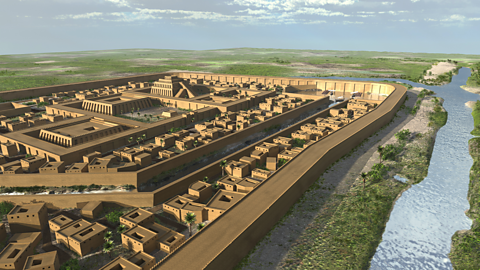
Cities were surrounded by walls to protect them from attack.
Each city had a temple in its centre called a ziggurat, they were tall so people could be closer to the gods in the sky.
Houses were made from mud bricks and had a central courtyard, which was an open space inside the home where children could play.
Ancient Sumerian people were some of the first to have schools.
The wheel, writing, and the 60 minute clock are all thought to have been invented by the Ancient Sumerians.
Watch: How did people live in Ancient Sumer?
Discover how we know what everyday life over 5,00 years ago was like in the busy cities and farms of Ancient Sumer.
In Ancient Sumer, people began farming, trading far and wide, and building busy cities. Today, the objects they left behind help us understand what life was like.
Farmers grew food, while potters, weavers, and traders made and exchanged goods. There were also scribes – people who wrote on clay tablets by making wedge-shaped marks called cuneiform.
Each city had its own ziggurat – a large temple where priests could worship. Cities also had houses, palaces for their leaders, and busy markets for trade.
That trade linked Sumer to distant lands like Egypt and the Indus Valley. Traders carried goods such as wool, cloth, and grain to Egypt, and they came back with items like copper to make tools.
But people didn't just make tools. Archaeologists have discovered toys in Sumer, suggesting there were children who had time to play. They've also found evidence that some boys from wealthy families were taught to read and write, and have even found children's handwriting on clay tablets.
Thanks to these objects, and the writings people left behind, we know about everyday life in Ancient Sumer. Farming, trade, and religion helped turn small communities into some of the world's first towns and cities.
How do we know about Ancient Sumer?
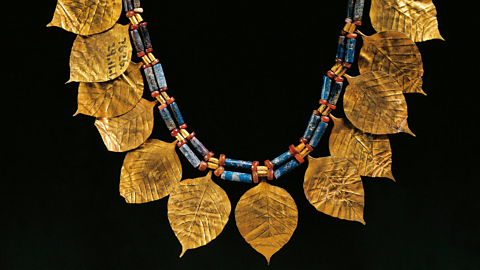
Archaeologists have found objects that tell us about Ancient Sumer life, rulers and beliefs.
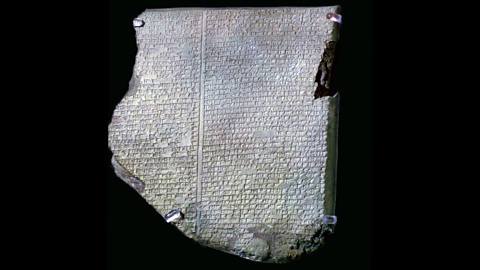
Image caption, The 'Epic of Gilgamesh' is a collection of stories written about a superhuman king called Gilgamesh. They were written thousands of years ago on clay tablets.
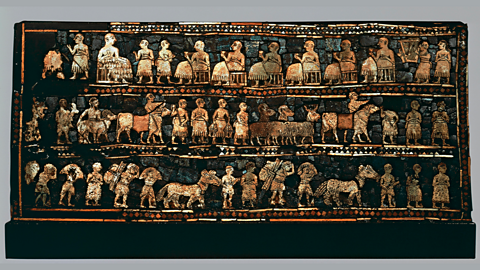
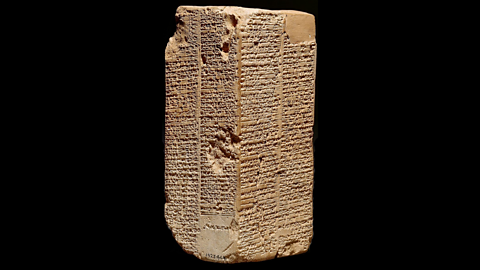
1 of 3
Think like a historian

Have a look at the thinking points below and think about your answer to the questions. You could even write it down on a piece of paper or discuss it with somebody else if you want to.
Why might Ancient Sumer have been able to grow like it did?
Why are artefacts found from Ancient Sumer so important?
How did the Ancient Sumerians affect us today?
Perhaps you thought about where Ancient Sumer was. Ancient Sumer was near two large rivers. They would have given the people water to grow plants and crops and to clean themselves and their clothes, They might also have used water for cooking with.
Finding artefacts from Ancient Sumer helps us understand more about the people who lived there. Did you think about how artifacts tells us about their kings, the stories and events that mattered to them and their everyday lives? We wouldn’t know about that without finding artefacts!
Maybe you thought about some Ancient Sumerian ideas and inventions. Did you remember that they are believed to have created a way of measuring time using 60 minutes, which we still use today? They also created the wheel, which we use in lots of different types of transport.
Activity: Quiz – Ancient Sumer
Let's find out what you know about Ancient Sumer.
Grown-ups corner
Are you a parent, carer or teacher?
Take a look at some of the links below on KS2 History which are packed full of knowledge, videos, quizzes and activities.
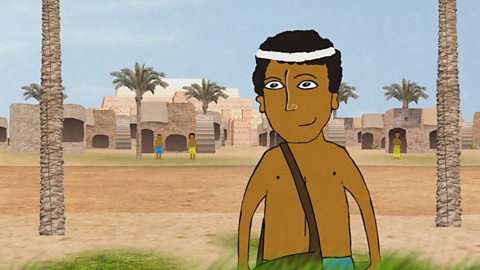
KS2 History: Introducing Ancient Sumer
BBC Bitesize for Teachers
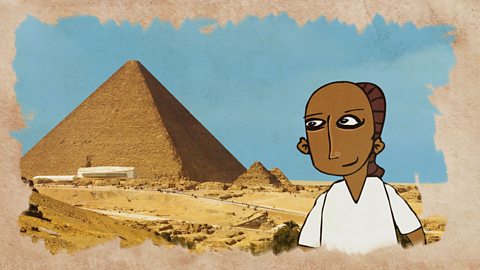
KS2 History: Non-European Societies
BBC Bitesize for Teachers
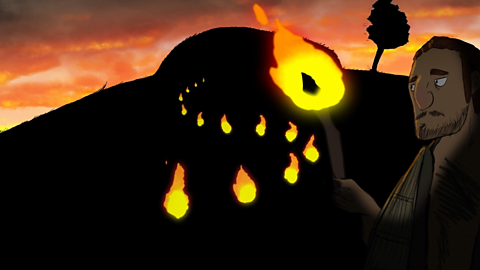
KS2 History: New Stone Age
BBC Bitesize for Teachers
Horrible Histories: Raid and Trade game! game
Play Horrible Histories: Raid and Trade KS2 History