Unit 3, Task 2
The material on this page is designed to help you with revision and preparation for your CCEA GCSE English Language exams and assessments. It applies to Unit 3, Task 2: The study of written language.
- Unit 3 is a controlled assessment unit, worth 20% of your final mark
- The controlled assessment is split into two tasks, each worth an equal number of marks, to be completed in class
- Task 2: The study of written language, requires the completion of a written response to a literary text or texts – your teacher will choose the material you will study and respond to
- The themes for this task change each year – ask your teacher for your theme, or check the CCEA website for controlled assessment themes
- In this task, you will be assessed on your ability to:
- Read and understand texts, selecting material appropriate to purpose, collating from different sources and making comparisons and cross-references as appropriate
- Develop and sustain interpretations of writers’ ideas and perspectives
- Explain and evaluate how writers use linguistic, structural and presentational features to achieve effects and engage and influence the reader
Useful guidance for English Language controlled assessments can be found on the CCEA support page – select the Student Guidance tab. For further advice on controlled assessments, please consult your teacher.
INTERIM SPECIFICATION – NOTE FOR YEAR 11 PUPILS
If you are in Year 12 and completing your CCEA English Language GCSE in summer 2027, the above information is correct.
However, if you're in Year 11 and began studying for your CCEA English Language GCSE in September 2026, an interim specification has been introduced.
Unit 3: Studying Spoken and Written Language (controlled assessment) has been removed. Unit 3 is now Personal or Creative Writing and Reading Literary and Non-fiction Texts, assessed by a written exam.
Bitesize material is available on these topics, but will remain labelled as Unit 4 until exams under the current specification are complete in November 2027.
Key points about setting
- Setting means the time and place where a story happens, and writers use it to create atmosphere and support the themes of the text.
- Writers can use techniques like pathetic fallacy, detailed description and historical context to make the setting feel more powerful or emotional.
- Setting can reveal a lot about characters and situations, for example the dark streets in Dr Jekyll and Mr Hyde suggest secrecy and immorality.
- In texts like The Great Gatsby, the setting helps the reader picture the world of the story and understand ideas such as wealth, glamour and excess.
Understanding setting
The setting of a text is the place and time used within the text. This may be:
- in the past, present day or the future
- a time of day
- a particular time of year
- a specific geographical location – such as a named city or country
- a type of place or event – like a school or a wedding
Setting is an important part of a how a text achieves its effect. It can echo the themes of the The sequence of events in a plot; a story.. For example, the dark streets of Victorian London echo the theme of The state of being immoral, corrupt or evil. in Dr Jekyll and Mr Hyde.
The time of day or year when a text is set also adds to its effect. For example, a school at night is a very different place to a school during the day. A ghost story would probably work better at night as it would add a sense of uncertainty and fear and create more tension for the reader.
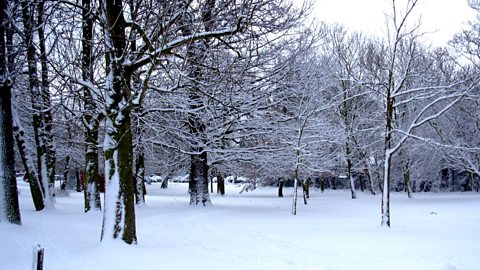
The writer may use specific techniques to create a particular effect. For example, the writer could use Technique where the environment (usually the weather) reflects the emotions of the main character. to give emphasis to a character’s emotions: “The memory of that afternoon lay heavy upon her. All around the snow smothered the landscape.” In this description, the character’s negative emotional state is reflected by the weather.
Historical context is important when understanding the setting of a piece of fiction.
A writer has chosen to use a particular point in history for a reason. A reader may make certain judgements and assumptions about this historical setting. For example, a reader might assume that a piece of fiction set during World War Two will be serious and moving. The writer could meet these expectations or surprise the reader in some way.
Questions to focus on setting:
- What does the reader learn about this place and time?
- How is this place and time important to theme and character?
- What techniques does the writer use to create atmosphere?
- How does the language influence the reader’s response to this setting?
How setting is used
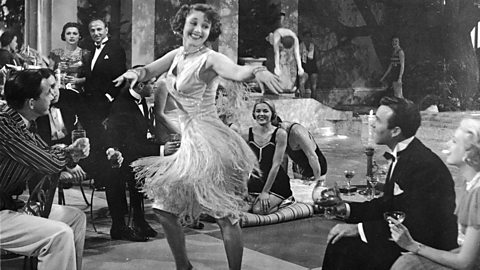
In this extract from F Scott Fitzgerald’s The Great Gatsby, the narrator’s description of his neighbour’s house parties establishes an atmosphere of luxury and glamour:
In his blue gardens men and girls came and went like moths among the whisperings and the champagne and the stars. At high tide in the afternoon I watched his guests diving from the tower of his raft, or taking the sun on the hot sand of his beach while his two motor-boats slit the waters of the Sound, drawing A wide, wooden board used for a type of water-skiing (popular in the 1920s). over A waterfall. of foam. On weekends his Rolls-Royce became an omnibus, bearing parties to and from the city between nine in the morning and long past midnight, while his station wagon scampered like a brisk yellow bug to meet all trains.
The Great Gatsby (Chapter 3), F Scott Fitzgerald
Example analysis
- Several Old-fashioned, or no longer in everyday use. words suggest that this setting is in the past: “…omnibus… motor-boats…aquaplanes…”
- The author’s description of the setting establishes an atmosphere of wealth and indulgence: “champagne…his beach…Rolls-Royce…motor-boats.”
- The author presents the The teller of a story; the voice in a text that describes or narrates the events of the plot. The narrator is often either a character in the story, or an authorial voice who gives a commentary on events but doesn't take part. as an observer of this setting: he is an outsider looking in.
- The setting is described in a Has the feel of a film way, with the narrator sweeping his eyes over several locations: the garden, the raft, the beach and the water.
- This sense of movement from one setting to another establishes a feeling of energy. This is also suggested by the use of phrases like “came and went…to and from…scampered.”
- There is also a contrast between the setting of the gardens at night (whispering…blue…stars) and the afternoon at the beach (sun…hot…slit the waters).
- The author uses to create a strong link between one of the characters and this setting: “…his gardens…his guests…his raft…his two motor-boats…his Rolls-Royce…his station wagon…” Although we don’t know who ‘he’ is in this extract, the reader can see that he owns this world of luxury and pleasure.
Quiz: Setting in literary texts
More help with your English Language
English Language revision resources. revision-guide
Get ready for your English Language exams with help from Bitesize.

English Language past papers
CCEA past papers and mark schemes, plus top tips to help you prepare for your English Language GCSE.

More on Unit 3: Studying written language
Find out more by working through a topic
- count3 of 7

- count4 of 7
- count5 of 7

- count6 of 7