Talking about hobbies
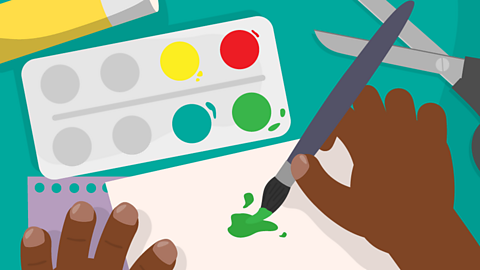
Many of the verbs or action words that you use to describe your hobbies in French end in -er in the infinitive.
A verb infinitive is the basic form of a verb. For example, 'to sing' is the infinitive form of a verb. You can recognise an infinitive in English as it begins with to.
In French, you can spot an infinitive by looking at the end of the verb. All French infinitives end in either -er, -ir or -re.
For example, the infinitive of the verb 'to sing' is Check your connection, refresh the page and try again. in French. As it ends in -er, it is called an -er verb.
Here are some other regular -er verbs that you can use:
| French | English |
|---|---|
| Check your connection, refresh the page and try again. | to sing |
| Check your connection, refresh the page and try again. | to dance |
| Check your connection, refresh the page and try again. | to draw |
| Check your connection, refresh the page and try again. | to listen to music |
| Check your connection, refresh the page and try again. | to play |
| Check your connection, refresh the page and try again. | to swim |
| Check your connection, refresh the page and try again. | to watch television |
Regular -er verbs
In French, the spelling of a verb changes depending on who is doing the action. All the above verbs are regular which means that they follow the same pattern of spelling changes at the end of the verb.
Once you learn how to say and write one of them, it will help you say and write others.
To use the verbs above, you remove the -er from the infinitive of the verb to make the stem and add the following endings:
| Subject pronoun | Ending |
|---|---|
| je or j’ before a vowel (I) | -e |
| tu (you) | -es |
| il (he) | -e |
| elle (she) | -e |
So Check your connection, refresh the page and try again. (to play) becomes Check your connection, refresh the page and try again. (I play).
For example:
Check your connection, refresh the page and try again. – I play
Check your connection, refresh the page and try again. – You play
Check your connection, refresh the page and try again. – She plays
Check your connection, refresh the page and try again. – He plays
Did you notice that the verbs all sound the same? This is because e and s on the end of a word are silent.
Here’s a table to help you to work out what the ending should be when you’re writing about your hobbies.
This uses the verb Check your connection, refresh the page and try again. (to dance) as an example, but this pattern works with all regular -er verbs.
| Subject pronoun | Stem | Ending | Example | English |
|---|---|---|---|---|
| je | dans | e | Check your connection, refresh the page and try again. | I dance |
| tu | dans | es | Check your connection, refresh the page and try again. | you dance |
| elle | dans | e | Check your connection, refresh the page and try again. | she dances |
| il | dans | e | Check your connection, refresh the page and try again. | he dances |
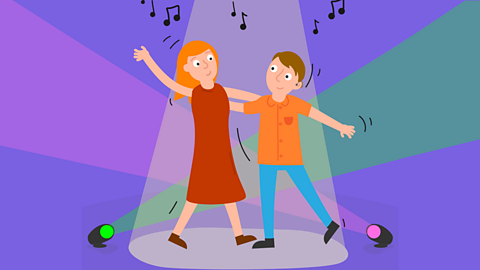
You can talk about what you do:
Check your connection, refresh the page and try again. – I dance
Check your connection, refresh the page and try again. – I draw
And what you don’t:
Check your connection, refresh the page and try again. – I don’t dance
Check your connection, refresh the page and try again. – I don’t draw
Did you notice that to say what you don’t do, you add ne or n’ (before a vowel) before the verb and pas after it?
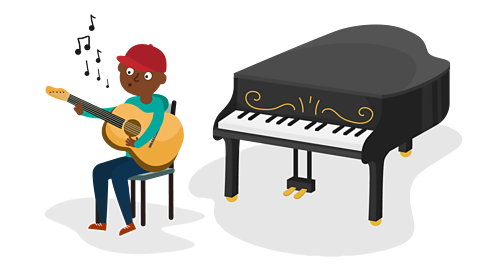
Did you know?
If you’re talking about playing an instrument, you use the phrase jouer de (to play).
The de changes its spelling depending on whether the instrument is masculine or feminine.
Before masculine nouns, it is du and before feminine nouns, it is de la.
| French | English |
|---|---|
| Check your connection, refresh the page and try again. | to play the guitar |
| Check your connection, refresh the page and try again. | to play the piano |
Talking about sport
If you’re talking about playing a sport or a computer game, you use the phrase jouer à.
The à changes depending on whether the noun is masculine, feminine or plural.
Most sports nouns are masculine so we use au. As ‘computer games’ are plural, we use aux.
| French | English |
|---|---|
| Check your connection, refresh the page and try again. | to play basketball |
| Check your connection, refresh the page and try again. | to play football |
| Check your connection, refresh the page and try again. | to play computer games |
How to use the verb ‘faire’ in French
To say that you play sport, you need the phrase Check your connection, refresh the page and try again..
Faire is an irregular verb. Irregular verbs don’t follow particular patterns like regular verbs do, so you need to memorise them.
Use the table below to help you:
| French | English |
|---|---|
| Check your connection, refresh the page and try again. | I play sport |
| Check your connection, refresh the page and try again. | You play sport |
| Check your connection, refresh the page and try again. | She plays sport |
| Check your connection, refresh the page and try again. | He plays sport |
Did you notice that all the verbs for je, tu, elle and il all sound the same? That is because the letters s and t on the end of the word are silent.
You can also use faire to say:
Check your connection, refresh the page and try again. – I ride a bike
Check your connection, refresh the page and try again. – I ski
Check your connection, refresh the page and try again. – I surf
What you like doing
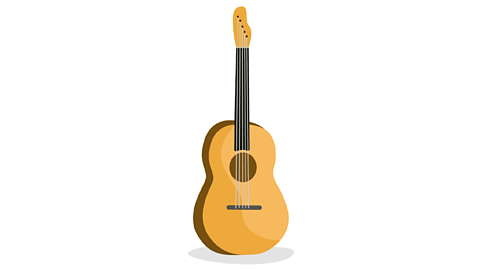
If you want to talk about what you like doing in your spare time, you can use the verb Check your connection, refresh the page and try again. – to like.
It is a regular -er verb and you use it with the infinitive of a verb.
Check your connection, refresh the page and try again. – I like to dance
Check your connection, refresh the page and try again. – I like to draw
Check your connection, refresh the page and try again. – I like to listen to music
Check your connection, refresh the page and try again. – I like to play tennis
Check your connection, refresh the page and try again. – I like to swim
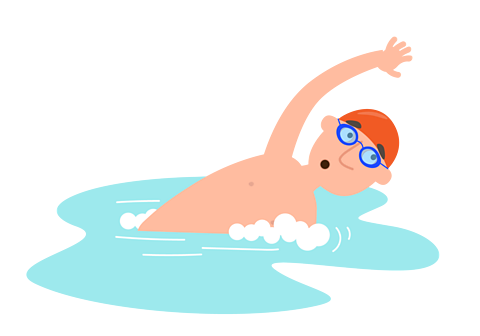
To ask whether someone else likes a certain activity, you use the tu (you) form of aimer which is Check your connection, refresh the page and try again.. Then you add the verb for the activity in the infinitive, for example Check your connection, refresh the page and try again..
Then you use rising intonation at the end of the statement. This means that your voice goes up at the end of a sentence, turning it into a question:
Check your connection, refresh the page and try again. – Do you like dancing?
Check your connection, refresh the page and try again. – Do you like swimming?
You can also ask:
Check your connection, refresh the page and try again. – What do you like to do as a hobby?
What you want to do
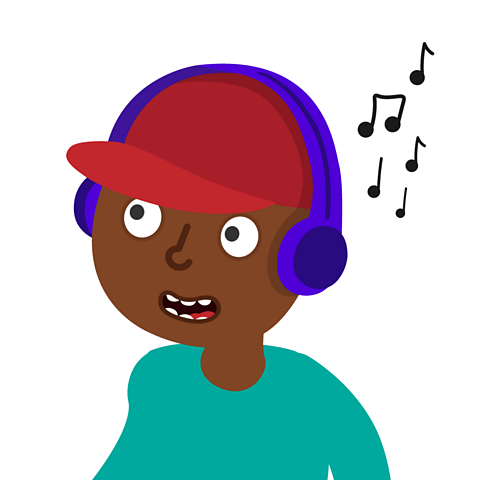
You can also talk about what you want to do. You need the verb Check your connection, refresh the page and try again. - ‘to want to’.
Vouloir is an irregular verb and it is followed by the infinitive of a verb.
Look at the endings of the verb below:
Check your connection, refresh the page and try again. – I want to dance
Check your connection, refresh the page and try again. – You want to dance
Check your connection, refresh the page and try again. – She wants to dance
Check your connection, refresh the page and try again. – He wants to dance
Did you notice that the different forms of ‘want’ all sound the same?
This is because the letters x and t are silent on the end of the words.
To change these phrases to a question, use rising intonation like this:
Check your connection, refresh the page and try again. – Do you want to dance?
You can ask other questions.
Check your connection, refresh the page and try again. – Do you want to swim?
Check your connection, refresh the page and try again. – Do you want to listen to music?
Key French sounds
Below are some important French sounds that you have heard in this topic. Try practising them yourself out loud.
e before one consonant
The letter e at the start of the word Check your connection, refresh the page and try again. sounds like er at the end of 'mother'.
The letter e makes this sound when followed by one consonant. When followed by two consonants, it makes a different sound.
Check your connection, refresh the page and try again. - to watch
Also the same sound as an ‘e’ in a one syllable word
é, er
Many of the verbs to describe hobbies end in -er. The sound for these letters at the end of a word is a short, sharp sound, which you might use to attract someone's attention. é, -es, -ez and et also make the same sound.
Check your connection, refresh the page and try again. – to play
Check your connection, refresh the page and try again. – to draw
Check your connection, refresh the page and try again. – to listen
Also the same sound as -er, -es, -ez and et
gu before e, i or y
Gu before these vowels make the English g sound.
Check your connection, refresh the page and try again. – the guitar
Don’t forget that the e at the end of the word is silent.
When written before e, i or y
Quiz
Play Dash and Blink: Forgotten French! game
Construct simple phrases and develop an understanding of vocabulary and grammar with this KS2 French game.

More on French speaking
Find out more by working through a topic
- count8 of 12
- count9 of 12

- count10 of 12

- count11 of 12