Describing your pets
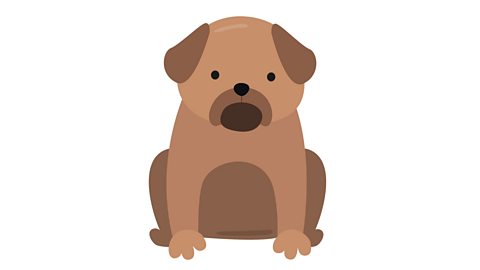
If you want to describe what pets you have, you can use the verb Check your connection, refresh the page and try again. (to have).
If you want to say ‘I have’, you say Check your connection, refresh the page and try again., for example:
Check your connection, refresh the page and try again. - I have a dog
Try using tengo to create a sentence with the animals below:
| Spanish | English |
|---|---|
| Check your connection, refresh the page and try again. | a dog |
| Check your connection, refresh the page and try again. | a cat |
| Check your connection, refresh the page and try again. | a horse |
| Check your connection, refresh the page and try again. | a mouse |
The ‘e’ sound
The word ‘remember’ in English has three different ‘e’ sounds - ‘ee’, ‘eh’ and ‘er’.
Unlike English, it is important to know that the ‘e’ sound is always pronounced the same way in Spanish.
For example, Check your connection, refresh the page and try again. (an elephant) has three e’s that all sound the same.
Here are some more examples of the ‘e’ sound in Spanish:
| Spanish | English |
|---|---|
| Check your connection, refresh the page and try again. | a dog |
| Check your connection, refresh the page and try again. | a rabbit |
| Check your connection, refresh the page and try again. | a fish |
Using colours in Spanish

You can also use colours to describe your pets, for example:
Check your connection, refresh the page and try again. – I have a black dog
Check your connection, refresh the page and try again. – I have an orange cat
Check your connection, refresh the page and try again. – I have a white mouse
Describing your favourite animal in Spanish
As well as your pets at home, you can also try describing your favourite animal in Spanish.
To ask somebody about their favourite animal in Spanish, you can say:
Check your connection, refresh the page and try again. – What is your favourite animal?
You can start your answer with:
Check your connection, refresh the page and try again. – My favourite animal is…
Try adding some of these animals to the sentence:
| Spanish | English |
|---|---|
| Check your connection, refresh the page and try again. | an elephant |
| Check your connection, refresh the page and try again. | a giraffe |
| Check your connection, refresh the page and try again. | a lion |
| Check your connection, refresh the page and try again. | a monkey |
| Check your connection, refresh the page and try again. | a fish |
| Check your connection, refresh the page and try again. | a snake |
Giving a reason why in Spanish
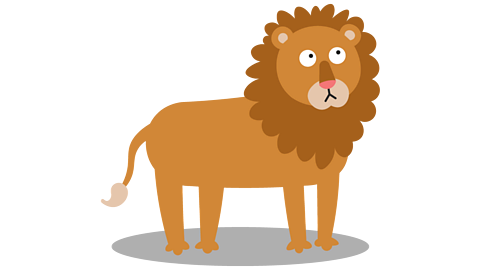
You can add more detail to your sentence to say why the animal is your favourite.
To give a reason and to say ‘because’ you can add the conjunctionCheck your connection, refresh the page and try again. (because), for example:
Check your connection, refresh the page and try again. – My favourite animal is a lion because it’s fierce
Take a look at the adjectives below and try to extend your sentence:
| Spanish | English |
|---|---|
| Check your connection, refresh the page and try again. | fierce |
| Check your connection, refresh the page and try again. | strong |
| Check your connection, refresh the page and try again. | big |
| Check your connection, refresh the page and try again. | intelligent |
| Check your connection, refresh the page and try again. | dangerous |
| Check your connection, refresh the page and try again. | small |
| Check your connection, refresh the page and try again. | friendly |
Quiz
Play Dash and Blink: Vanished Spanish! game
Construct simple phrases and develop an understanding of vocabulary and grammar with this KS2 Spanish game.

More on Spanish speaking
Find out more by working through a topic
- count3 of 8

- count4 of 8

- count5 of 8

- count6 of 8