Quick version
The passing of the Act of Union in 1707 led to significant political impacts in Scotland.
- The Scottish Privy Council was replaced by a Scottish Secretary of State in London.
- The Westminster House of Lords became the Court of Appeals for Scottish legal cases.
- Some Scots feared miscarriage of justice since English lords had a poor grasp of Scottish laws.
- In 1713, a parliamentary motion to reverse the Act of Union was only narrowly defeated.
The Act of Union enforced a confirmation of the right of succession of the Protestant House of Hanover and banned Catholic monarchs from ascending to the throne. This angered supporters of the exiled Stuarts.
- After the passing of the Act, James Francis Edward Stuart, (son of the exiled James VII and II), led a French-backed Jacobite rising in 1708. Bad weather and the British Royal Navy ended the rising.
- After Queen Anne died in 1714, George of Hanover became King George I.
- In 1715, the Stuart claimant to the throne, James Francis Edward Stuart led another French-backed Jacobite invasion.
- The Earl of Mar, a respected Scottish lord, mobilised support for the Stuarts.
- Episcopalian Scots in the North-east supported the Stuarts.
- Other supporters wanted an end to the Act of Union.
- The 1715 Jacobite rising failed due to lack of support.
Learn in more depth
The 1707 Act of Union led to profound political changes and challenges for Scotland.
While Union led to new economic opportunities and military protection, it also divided the nation and led to armed attempts to overthrow the monarch and restore Scotland's independence.
Political effects of the Union
Scottish Secretary of State
Scotland was governed differently after Union. The Scottish Privy Council was abolished in 1708. A new position of Scottish Secretary of State in London was created.
Feelings of injustice
Some English and Scottish politicians felt that the other’s country benefited more from Union.
Scots legal experts were frustrated that from 1712 the House of Lords in London was the Court of Appeal for Scottish cases. This led to “miscarriages of justice” caused by a lack of understanding of Scots law by English judges.
Scots landowners with English titles were angry in 1711 when they were prevented from taking their seats in the House of Lords and claiming the financial privileges that came with it.
Attempts to reverse Union
In the aftermath of union in 1707, there were outbreaks of protest in Scottish cities.
In Edinburgh, mobs gathered outside of parliament to protest the passing of the Act. In Glasgow, copies of the articles of union were publicly burned in the streets.
In 1713, with the economic advantages of Union still to be felt across the country, there was a proposal in Parliament to reverse the Act of Union, which was only narrowly defeated.
This led to British Government, although dominated by English ministers, taking increased care not to offend Scotland in the future.
The Jacobite Risings
The passing of the Act of Union in 1707 banned Catholics from succeeding to the throne. This effectively prohibited a return to power for the exiled Stuarts.
The Act also legitimised the Presbyterian church as the established faith in Scotland. This alienated Episcopalians in the north east of Scotland.
For both Catholics and Episcopalians, the return of the Stuarts was desirable as they would repeal the Act of Union.
Protests against the union in towns in England and Wales led Scottish Jacobites to assume that there was wider support for a return of the Stuarts.
Scottish Jacobites also believed that military support from Scotland's old ally France would give their cause a serious chance of success.
The 1708 Jacobite Rising
In 1708 there was an attempted Jacobite rising by James Francis Edward Stuart (son of James VII and II).
In a plan supported by the French, there was an attempt to land 5,000 soldiers in the North-east of Scotland. However, bad weather and the Royal Navy stopped the invasion.
The failure of the 1708 rebellion led to increased determination amongst anti-Hanoverians for a successful rising in the future.
The 1715 Jacobite Rising
Video - the 1715 Jacobite Rising
6th September 1715. The Jacobite standard is raised as rebels plan to place a Stuart king back on the thrones of Scotland, England, and Ireland. One of the chief causes of the rebellion was the Act of Union.
As part of Union, the Act of Settlement stated that the monarch must be Protestant, effectively banning Stuarts from the throne. This angered Jacobite and Episcopalian supporters of the Stuart cause.
And there were other problems with Union: the economic benefits were slow to appear, and many Scottish merchants struggled with English competition and higher taxes, such as the hated “Malt Tax” of 1713.
Scotland had limited representation in a Parliament run from London, leading many Scots to feel disenfranchised.
The Union gave Westminster legal authority over Scottish appeals. English judges were now in charge of implementing Scots Law, which in some cases led to miscarriages of justice.
When Queen Anne died in 1714, George I of Hanover became king.
George was unpopular and many disaffected Scots turned to the Jacobite cause, seeing the return of a Stuart monarch as the best opportunity to end the Union.
Due to its remote nature and difficult terrain, the government found it difficult to control the Highlands, so The Jacobites were the supporters of King James VII (of Scotland) and II (of England) and his heirs. opposition to union in the Highlands continued. The English Treason Law was applied in Scotland from 1709 onwards.
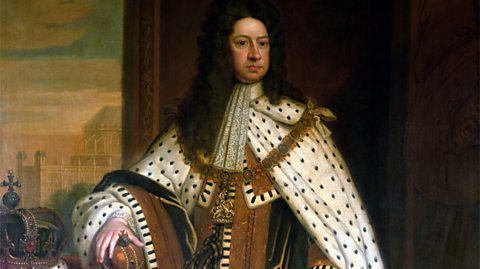
In 1714, Queen Anne died and succession fell to her nearest Protestant relative, George of Hanover.
In 1715, there was an attempted rising by Jacobites against the Hanoverian succession. This became known as 'the 15'.
Jacobites longed for a restoration of the Stuart dynasty and they wanted to put the son of James VII (James II of England), James Francis Edward Stuart (nicknamed 'The Old Pretender') on the throne.
From 1707 they were supported by Scottish anti-Union groups. This was because a Stuart monarchy made the reversal of Union more likely.
The Jacobites favoured an Episcopalian Church with bishops. This reduced the potential size of support for their cause in Scotland which was mainly Presbyterian.
Nevertheless, with the Country Party held in low esteem, Jacobites were the leaders of anti-Union sentiment after 1707.
Jacobite political support
Some peers and MPs kept links with the Stuarts for personal gain. They believed that if one day James Frances Edward Stuart were to return to Scotland with a successful invasion plan, then they would be better placed to be given powerful jobs if they had been seen to support him during his time in exile.
George I, who became King in 1714 upon Anne’s death, was unpopular. This led to an increase in support for the Jacobites, with many people realising that they did not approve of the Hanoverian succession.
Military confidence
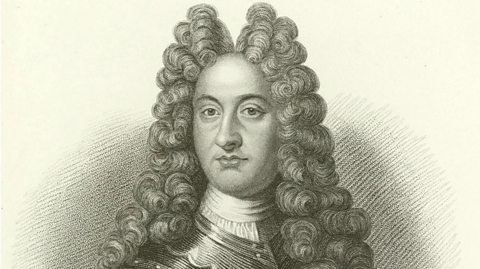
The Earl of Mar and other Jacobite leaders played a significant role in generating support for the Jacobite rising of 1715.
Mar organised a gathering of Jacobite clans at Braemar and told them of the weaknesses of Scottish military defences, which would make invasion easier.
- Scotland had miles of unprotected coastline and very few garrisons of soldiers.
- There was a lack of expenditure on arms and ammunition for the British Army in Scotland.
- The prospect of French military support motivated many to believe success was possible.
The Jacobite cause was already strengthened by support from the Episcopalian Church in the North-east of Scotland. Ministers issued Jacobite propaganda which stressed the advantages of the Stuarts in restoring Episcopalianism.
Poverty in parts of Scotland led to people believing that the economy would be better if the union with England was reversed and Scotland was independent.
Test your knowledge
Quiz
Recap what you have learned
The passing of the Act of Union in 1707 led to significant political impacts in Scotland.
- The Scottish Privy Council was replaced by a Scottish Secretary of State in London.
- The Westminster House of Lords became the Court of Appeals for Scottish legal cases.
- Some Scots feared miscarriage of justice since English lords had a poor grasp of Scottish laws.
- In 1713, a parliamentary motion to reverse the Act of Union was only narrowly defeated.
The Act of Union enforced a confirmation of the right of succession of the Protestant House of Hanover and banned Catholic monarchs from ascending to the throne. This angered supporters of the exiled Stuarts.
- After the passing of the Act, James Francis Edward Stuart, (son of the exiled James VII and II), led a French-backed Jacobite rising in 1708. Bad weather and the British Royal Navy ended the rising.
- After Queen Anne died in 1714, George of Hanover became King George I.
- In 1715, the Stuart claimant to the throne, James Francis Edward Stuart led another French-backed Jacobite invasion.
- The Earl of Mar, a respected Scottish lord, mobilised support for the Stuarts.
- Episcopalian Scots in the North-east supported the Stuarts.
- Other supporters wanted an end to the Act of Union.
- The 1715 Jacobite rising failed due to lack of support.
More on The Treaty of Union
Find out more by working through a topic
- count8 of 8

- count1 of 8

- count3 of 8


