Key points
Overview
Kid is a dramatic monologue spoken by Robin, Batman’s former sidekick. Robin explains why he has left Batman behind and is trying to build his own life. The poem is humorous, but it also explores the serious process of growing up and becoming independent.
Themes
The poem explores growing up, independence, heroes and role models, identity, responsibility and the move from childhood to adulthood. Robin learns that he must move beyond Batman’s influence and create his own future.
Tone and voice
The tone is confident, triumphant and humorous, but it can also seem bitter and mocking. Robin speaks in the first person, giving readers a direct insight into his thoughts and feelings.
Context
Simon Armitage was born in Yorkshire in 1963 and often uses everyday language, slang and humour in his poetry. The poem is based on the comic book characters Batman and Robin. Armitage imagines Robin growing up, leaving Batman behind and developing an identity of his own. The poem also references the popular 1960s Batman television series.
Form and structure
The poem is a dramatic monologue written in a single stanza. It contains 24 lines and is made up of a few long sentences, creating the feeling that Robin is saying everything he wants to say at once. Most lines end with a similar "-er" sound, creating a sense of pattern even though there is no regular rhyme scheme.
Poetic devices to spot
Allusion – references to Batman, Robin and the 1960s television series help establish the speaker’s identity.
Colloquial language – everyday slang and informal expressions create a conversational tone.
Idiom – phrases such as "let the cat out" and "turned the corner" help Robin sound older and more experienced.
Metaphor – "I'm not playing ball boy any longer" shows Robin rejecting his old supporting role.
Consonance – repeated "-er" sounds at the end of lines create a sense of structure.
Internal rhyme – words within lines rhyme with each other, adding humour and energy.
Enjambment – ideas continue across lines, helping Robin’s speech sound natural and energetic.
First person voice – makes the poem feel personal and allows readers to understand Robin’s perspective.
Kid
by Simon Armitage
Batman, big shot, when you gave the order
to grow up, then let me loose to wander
leeward, freely through the wild blue yonder
as you liked to say, or ditched me, rather,
in the gutter … well, I turned the corner.
Now I've scotched that 'he was like a father
to me' rumour, sacked it, blown the cover
on that 'he was like an elder brother'
story, let the cat out on that caper
with the married woman, how you took her
downtown on expenses in the motor.
Holy robin-redbreast-nest-egg-shocker!
Holy roll-me-over-in the-clover,
I'm not playing ball boy any longer
Batman, now I've doffed that off-the-shoulder
Sherwood-Forest-green and scarlet number
for a pair of jeans and crew-neck jumper;
now I'm taller, harder, stronger, older.
Batman, it makes a marvellous picture:
you without a shadow, stewing over
chicken giblets in the pressure cooker,
next to nothing in the walk-in larder,
punching the palm of your hand all winter,
you baby, now I'm the real boy wonder.
A link to this poem is available in the CCEA Poetry Anthology which can be downloaded from the CCEA website.
The BBC is not responsible for the contents of any other sites listed.
Summary
Title: A lone single-syllable noun associated with youth and childishness; the term is Everyday language., and the word is so short it sounds almost dismissive, like being dismissed as “just a kid”. The speaker is not identifiable from the title, which could show his lack of identity when he was the ‘kid’ in Batman’s shadow, or could serve to show how Robin’s particular situation can still apply at least partly to a lot of other ‘kids’ who lose a hero as they grow up.
Themes: Growing up, heroes and role models, care and neglect, individual perspectives, self-discovery and personal identity, childhood and adulthood, responsibility.
Tone: Triumphant, at times bitter or slightly spiteful, reflective, slightly contemptuous, mocking, confident, outspoken, possibly showing off a little.
Speaker: A first person speaker in the The voice adopted by an author for a particular purpose, this voice does not necessarily reflect the author's true thoughts. It can also mean a mask that someone presents to the world as their real character ('persona' is the Latin word for an actor's mask). of Robin, the former ‘Boy Wonder’ sidekick of the iconic comic book hero, Batman.

Applicable context
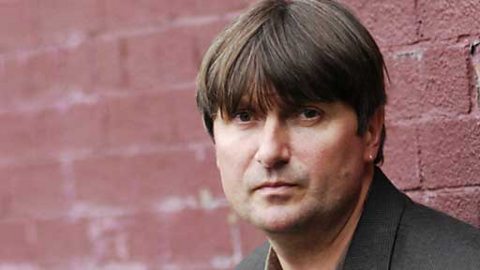
Simon Armitage is an award-winning poet, writer and broadcaster who was born in Yorkshire in 1963. He came from a humble background, which is partly reflected in the accessible and everyday language used in his poems. His interest in different dialects and slang often shows up in his work, as well as well as puns, slang and other wordplay.
Around a year after the successful 1939 creation of Batman as a lead comic book hero for DC Comics, the creators Bill Finger and Bob Kane decided the character needed a sidekick – a kind of Watson figure to Batman’s Sherlock Holmes. Robin was primarily introduced so Batman would have someone to ‘talk to’ in explaining his ideas and observations at crime scenes he investigated in the comic stories, instead of talking to himself. The character was therefore only created in the first place so that Batman could explain things to him; the idea that that character could later ‘grow up’, take on a life of his own and move beyond Batman’s dysfunctional life is humorous. More seriously, it could also reflect the idea that people’s identities and individuality can develop as they grow, and that young people can outgrow their heroes, no matter how talented or impressive they are.
Batman’s popularity in comic books extended to other media, and in 1966 an American TV adaptation arrived. The character costumes and sets were done in a bright, cartoonish pop-art style and the writing was full of deadpan humour, with the characters consistently taking ridiculous situations very seriously. It proved very popular with younger audiences and had a huge impact on popular culture. In the UK, it was shown on TV many times beyond its original 1960s air date, often as part of Saturday and Sunday morning scheduling aimed at children; as they grew up, people of Simon Armitage’s age and younger would have been very familiar with the show and many of its features, including the Batman character’s habit of “punching” his own palm when thinking aloud, and Robin’s use of ‘Holy’ exclamations such as “Holy Mackerel!”. Armitage To imitate the style of something for a comical effect. both of these features in his poem.
Form and structure
The poem is a A poem in which the speaker addresses the reader directly. A dramatic monologue usually involves a fictional speaker who may not necessarily speak the views of the poet. delivered by the The voice adopted by an author for a particular purpose, this voice does not necessarily reflect the author's true thoughts. It can also mean a mask that someone presents to the world as their real character ('persona' is the Latin word for an actor's mask). of Robin, Batman’s sidekick, and presented in a single A grouped set of lines within a poem.. Robin talks about how he has separated from Batman and is learning to lead his own, independent life. In the process he publicises some of Batman's secrets so that we see the 'superhero' in a new light.
The poem is often humorous, but has a serious message too. It addresses the theme of coming of age as it follows Robin’s attempts to come to terms with his own maturity, and the impact this will have on his relationship with Batman. At the end Robin is stronger and more mature. There are 24 lines altogether, but within that structure the poem is presented as just a few long sentences, giving the sense that Robin is blurting everything out – he wants to get all of these feelings off his chest in one go and show Batman he doesn’t need him any more. The single stanza helps to express this; it’s Robin’s chance to say his piece and he has lots to fit into that one speech.
There isn’t a regular rhyme scheme, but each line ends in an "-er" sound, using repeated The repetition of similar consonant sounds in nearby words. at the end of each line to create an imperfect but still present sense of regularity. This mimics how Robin is stepping away and trying to create his own sense of order in his life – he hasn’t got everything perfectly arranged yet but he is starting to impose his own structure on his identity instead of fitting into what Batman wanted him to be. The rhymes aren’t perfect, and neither is Robin’s process of growing up, but the regularly repeated sounds show how he is learning to regulate his own life now. There are also a few instances of internal rhyme, where words close to each other rhyme; examples include “redbreast” and “nest”, “over” and “clover” or “doffed” and “off”. These can make the language sound more playful or even more deliberately chosen, depending on whether the reader thinks of Robin’s tone as being light and carefree or more serious and spiteful. Some of the rhymes occur as part of the tabloid headlines Robin quotes – tabloid newspapers often use puns, rhymes and Marked by alliteration - the repetition of a sound at the beginning of consecutive words, such as ‘the big, bold, blue sea' to make headlines more catchy, so here the internal rhyme helps to mimic tabloid language more accurately.
The The rhythm of a line of poetry based on how many syllables it has and where they are stressed or emphasised – likes beats in music. doesn’t have a regular pattern of emphasis in the syllables but the lines are written in A line of poetry that has five metric feet or beats in it., meaning there are ten beats per line. This gives a kind of consistency throughout, showing the progress Robin has made in organising his own life, but lacks the steadiness and evenness of exact metre, which shows he is still somewhat immature and has some more growing to do.
Language and poetic methods
A quick reference - often to an image, character or place - from a work of literature or music or mythology.: Armitage introduces Robin through a number of allusions that eventually make it clear who is speaking, even though he does not say his name. The fact he addresses the poem directly to “Batman” immediately suggests Robin’s identity; this is confirmed by his references to a “robin-redbreast”, the use of the word “Holy” at the start of two consecutive lines, mocking his character’s exclamations, and the “Sherwood-Forest-green and scarlet number” which was his character’s brightly-coloured costume on the 1960s TV show (“Sherwood Forest” is itself an allusion to Robin Hood, another beloved hero for young boys). The last line consolidates his identity – Robin was referred to in the TV show as the ‘Boy Wonder’, and in the poem the speaker alludes to this nickname: “now I'm the real boy wonder”. These clues help the reader work out who is talking, but they also show that Robin is now more confident in his identity. The allusions further show the former closeness between the two, as Robin has no need to introduce himself to his former mentor. This highlights how their relationship was once close before it broke down.
Everyday language.language: Armitage often uses ‘everyday’ or colloquial terms in his poems, and Kid contains various types of slang in Robin’s speech. For example, "wander leeward" (line 2) is naval slang, a kind of grand official jargon what shows how Batman framed the breakup of their partnership; Robin contrasts this in his version of the breakup with the much less grand slang “ditched me”, showing his sense of being harshly abandoned. Armitage also uses British slang, the ordinary word “motor” (line 11) for the fantastical Batmobile – this could show Robin is genuinely no longer impressed by Batman’s amazing gadgets, or at least that he wants to sound as if he is unimpressed, creating a dismissive tone. His two mocking tabloid headlines include the phrase “roll-me-over-in-the-clover” as a colloquial Polite or neutral words or expressions used to refer to things which people may find upsetting or embarrassing to talk about. (a more polite phrase used for something unpleasant or offensive) for sex. Robin is ridiculing the fact that the 'good guy' Batman had an affair with a married woman; the phrase is comically inappropriate and a little silly, but very typical of tabloid-style language which tries to catch attention by being lively, funny and cheeky. He certainly uses a wide range of different informal terms in his speech, and the mixture of styles adds humour. It also perhaps helps to illustrate the growing up process – Robin himself is trying out a mixture of things as he continues to forge his own identity.
Holy robin-redbreast-nest-egg-shocker!
Holy roll-me-over-in the-clover,
A series of words together or phrase that convey a certain meaning that does not reflect the meanings of the words separately. An example is "kicked the bucket".: Use of idioms, or common and easily recognisable sayings, is another way Robin tries to show he is more grown up. Phrases like “let the cat out”, “turned the corner” or “blown the cover on that… story” are actually metaphors because they don’t mean what they say literally. For example, ‘Let the cat out of the bag’ doesn’t mean releasing an actual cat but is metaphorically about releasing a secret instead. These metaphorical idioms convey commonly understood meanings among those who have grown familiar with them. This kind of understanding is usually common to adults and gained through casual conversation – Robin uses idioms to sound casual, informed and mature, signifying to Batman how grown-up he now is.
A metaphor is a word or a phrase used for dramatic effect, to describe something as if it were something else.: In line 14 Robin declares “I'm not playing ball boy any longer”, using the imagery of a tennis match in which the ball boy dutifully waits at the side of the court to pick up and throw back balls the tennis star has hit. Robin is saying he will no longer work for or with Batman, staying on the sidelines while Batman gains all the glory. The fact this metaphor contains references to “playing” and “boy” is also significant – Robin considers himself a grown up now and no longer a child who plays. Another metaphor occurs when he imagines Batman “without a shadow” in line 20. This image refers to Robin himself, who was expected to ‘shadow’ Batman by following him wherever he went, but also suggests the idea that Robin was ‘overshadowed’ by Batman and has now freed himself to walk his own path. In the final line, Robin shows his contempt for how Batman has turned out, calling him “You baby” – a long way from the important-sounding “big shot” in the first line. This final metaphor highlights Batman’s actual helplessness and neediness; Robin’s pejorative name-calling is itself a little childish perhaps, but it shows how fully Batman’s status is diminished in Robin’s eyes, and how pathetic and childish Robin now finds the life of the hero.
The repetition of similar consonant sounds in nearby words.: The use of consonance means every line ends in ends with "-er", using repetition of the sound to create some resonance. It doesn’t quite create the perfect order of a regular rhyme scheme, but gives a kind of marker throughout that shows how Robin is trying to give his life its own structure – his life isn’t fully arranged in perfect rhythm and rhyme yet but he is building his own identity for himself, without Batman’s influence. Consonance also creates a few internal rhymes, such as “redbreast” and “nest”, “over” and “clover” or “doffed” and “off”. These give a little playfulness to the language, and could show that Robin has thought carefully about what he will say to Batman, wanting to get his feelings of resentment and hurt off his chest as forcefully and fully as possible.
This is not a list of every method or notable use of language and structure in Kid.
Look at the poem again. Can you find any of the following?
Enjambment
The use of Check your connection, refresh the page and try again. throughout keeps Robin’s words flowing – he has a lot to say to his former mentor and he wants to say it all. The enjambment also increases the pace of the poem, as we are only allowed short pauses for breath – this helps to convey the energy Robin has now that he is free of Batman.
Asyndeton
Robin uses a list of comparatives to show Batman how much progress he has made for himself: “now I’m taller, harder, stronger, older”. The list of traits is further emphasised by Armitage’s use of Check your connection, refresh the page and try again., in which conjunctions like ‘and’ are left out between words and phrases they might usually connect. In this list there is no final ‘and’ to end the list and give a sense of closure, which makes it seem as though the list could be never-ending – Robin has changed so much, he suggests, that he could just go on forever about all the ways in which he is now a more mature and capable adult.
Alliteration
The opening line “Batman, big shot” uses solid, plosive ‘b’ sounds together to give the impression of Robin sounding forceful as he says it. This could be a way of conveying Batman’s power in the opening line, but it could equally be showing Robin speaking scornfully, almost spitting. By the time he gets to the end of the poem, short alliterative phrases like “next to nothing” with its nasal, almost whiny ‘n’ sounds, and the plosive ‘p’ sounds in “punching the palm of your hand” suggest Robin is enjoying the image he creates of how lost Batman is without him.
What other poems could I compare with Kid?
Piano – Robin has endured hardship and feels he has become a stronger, more capable grown-up as a result, which makes for a good contrast with the emotionally vulnerable speaker in Piano who misses the innocent past.
Catrin – the speaker ‘detaching’ himself from an older mentor and making an independent life for himself in Kid could provide a useful comparison to the parent’s view of the child’s growing independence in Catrin.
In Mrs Tilscher's Class – a poem which contains a similar theme of growing up and the difficulties involved in it, albeit in different circumstances.
Example answer
Below is a demonstration of how to use the material in this section to answer an example essay question. The answer below is not a full essay, but only an extract of a longer answer showing some of the points that could be made.
Q: How does Armitage illustrate the character of the speaker in Kid?
A: Armitage’s Kid is a humorous poem, but there is a serious message behind the comedy. It encourages us to consider whether heroes and hero-worship can really sustain young people growing up. However marvellous the admired person may be, a young person has to learn to be independent - "taller, harder, stronger, older" (line 18) - and to live their own life. Armitage explores this idea through a A poem in which the speaker addresses the reader directly. A dramatic monologue usually involves a fictional speaker who may not necessarily speak the views of the poet. delivered to the iconic comic book superhero Batman by Robin, his former sidekick. Robin’s The 'I' or 'we' used by a narrator who is a participant in a narrative, in contrast to the third person - 'he', 'she' or 'they' - of a narrator who is not directly involved. perspective and direct address to Batman make the poem a believable account of his personal experience, and Armitage creates a strong sense of who Robin has now become (or who he wants Batman to believe he has become, at least) – a person in his own right who no longer needs or admires his former hero and mentor. Armitage illustrates the The voice adopted by an author for a particular purpose, this voice does not necessarily reflect the author's true thoughts. It can also mean a mask that someone presents to the world as their real character ('persona' is the Latin word for an actor's mask). of Robin as a character who is now more mature but still a little childish; still trying out aspects of his new identity, but who has very clearly rejected his role model and is now determined to create his own path in life.
Robin was literally created in the original DC comic books in the 1940s to just be a sounding board for Batman – someone the main hero could explain things to. The Robin of the poem is clearly shown as someone who is no longer content with such an unimportant role. He states “I'm not playing ball boy any longer”, using the imagery of a tennis match in which the ball boy dutifully waits at the side of the court to pick up and throw back balls the tennis star has hit. Robin is saying he will no longer work for or with Batman, staying on the sidelines while Batman gains all the glory. The fact this A metaphor is a word or a phrase used for dramatic effect, to describe something as if it were something else. contains references to “playing” and “boy” is also significant – Robin considers himself a grown up now and no longer a child who plays. Another metaphor occurs when he imagines Batman “without a shadow” in line 20. This image refers to Robin himself, who was expected to ‘shadow’ Batman by following him wherever he went, but also suggests the idea that Robin was ‘overshadowed’ by Batman and has now freed himself to walk his own path. This shows the character of the speaker to be someone who has rejected a role on the sidelines and chosen to live his own life, suggesting he is determined and fairly brave.
This essay could go on to make the following points, backed up by evidence from the poem and detailed analysis of that evidence:
- Armitage uses Everyday language. language and idioms to show Robin has moved away from his earlier ways of speaking to become more casual and informal, trying to show he has learned a lot and attempting to reflect this in his speech; this shows he is perhaps trying a little hard but has definitely made progress on his own.
- Armitage uses A poetic device where a sentence continues beyond the end of the line or verse. throughout the single A grouped set of lines within a poem. of the poem, conveying a sense of Robin trying to get everything off his chest as he talks to Batman, and creating a faster pace to give a sense of the energy he has now he is free of Batman – this illustrates the speaker as someone who has a lot to say, perhaps because he was hurt by Batman’s earlier rejection, and who is keen to show off how far he has come.
- Armitage creates an imperfect rhyme scheme through use of The repetition of similar consonant sounds in nearby words., giving a sense that Robin is in the process of creating a new The way the poet has organised the poem on the page eg number of stanzas, lines per stanza, breaks in between lines and stanzas. for his life and hasn’t yet finished but has managed to create some order. This shows he isn’t fully mature yet, particularly since he can sometimes be childish (name-calling in the last line, for example) or have a slightly bitter tone, but shows he is standing up for himself and living his own life at last.
Test yourself
More Simon Armitage
The Poet Laureate Has Gone to His Shed. collection
Poet Laureate Simon Armitage talks to guests about life, language and music in his shed.
Simon Armitage reads the BBC's centenary poem. video
Poet Laureate Simon Armitage’s poem Transmission Report was broadcast on The One Show to mark 100 years of the BBC.

Bookclub. audio
Poet Simon Armitage joins James Naughtie and readers to discuss his translation of the Middle English epic Sir Gawain and the Green Knight.
More on Anthology One: Identity
Find out more by working through a topic
- count2 of 12

- count3 of 12

- count4 of 12

- count5 of 12