How do we know about the Indus Valley?
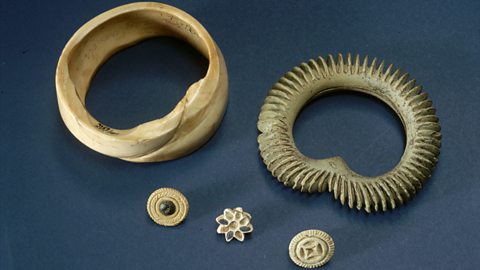
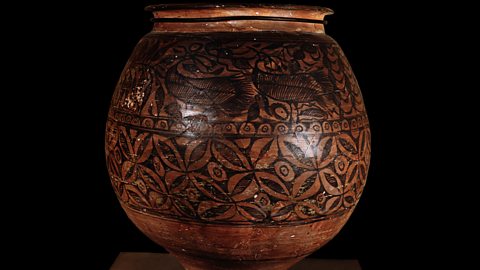
Most of what we know about the Indus people is from art and well-crafted items that have been found. They made toys and small figures of people and animals, using metal and clay.
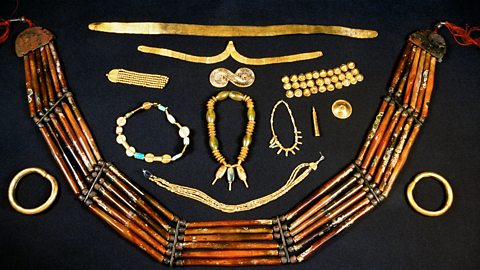
Image caption, The Indus people made incredible jewellery. These pieces are made from gold and a coloured mineral stone called agate.
1 of 3
Important words for the Indus civilisation
| Keyword | Definition |
|---|---|
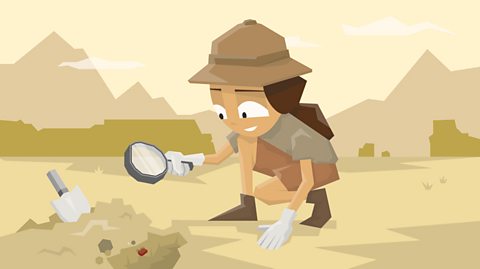
| Archaeologist | A person who who digs up and uncovers artefacts to help understand the past. |
| Dignitary | Someone who is important and well-respected. |
| Seals | Small stones that had pictures and writing on, usually showing where, when or who made or sold something. |
| Sacred | Something that is very special, often because it is important in to a religion. |
What does Indus Valley writing tell us?
The Indus people wrote on soft clay using pointed sticks or by scratching marks onto stone and metal.
People wrote the first line from right to left, the second line from left to right, and so on.
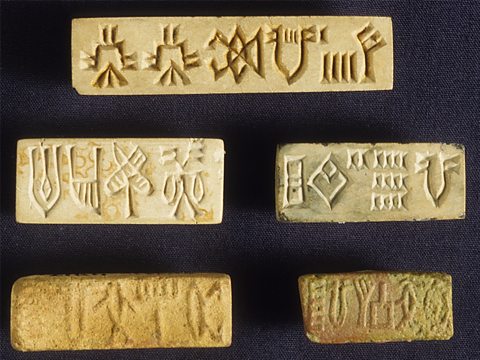
Indus Valley writing used at least 400 picture-signs.
They were not letters like in our alphabet.
The longest bit of writing found has only 26 characters.
No one knows what language the Indus people spoke, and no one has yet been able to read their writing.
Watch: What has been found from the Indus Valley?
Find out what artefacts have been discovered in the ruins of Mohenjo-Daro
When Mohenjo-Daro was first excavated by Sir John Marshall and a team of Indian archaeologists in the 1920s, they revealed to the world a vast, buried, forgotten city.
A major find for Mohenjo-Daro was a stone statue – the Priest King.
Archaeologists have suggested that he could have been an important ruler, or a religious leader, or even a resident foreign dignitary.
He has a headband which looks similar to gold ones found elsewhere in the region.
So, we know they had access to precious metals, and the skills and technology to work the metals.
There have been lots of artefacts found at Mohenjo-Daro, which can help to build up a picture of how people lived.
What do these artefacts tell you?
Can we tell what the Indus people believed?
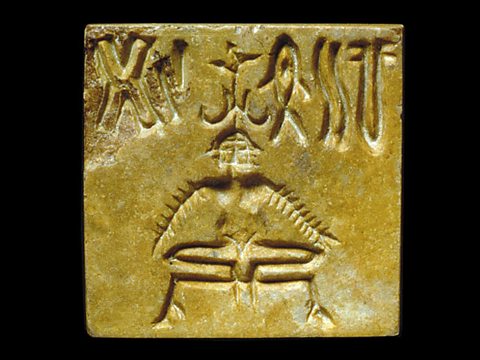
- Pictures on seals and other artefacts show what look like figures of gods.
- Seals were thought to have been used to show when or where something was made or who made it. These could have been used for trading or for important people making decisions.
- The pipal or fig tree is shown on many seals, and is still a sacred tree for many Buddhists and Hindus.
- Many people believe the 'great bath' found in Mohenjo-Daro suggests the Indus people held beliefs about purity.
- Some people think that the Indus religion shaped early Hindu beliefs.
What happened when Indus people died?
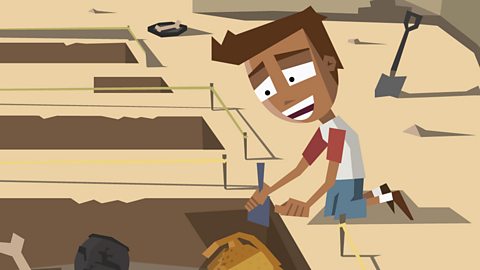
Indus Valley people were buried with clay pots and clay figures, as well as beads.
Putting these items in graves may mean that they believed in life after death.
This would mean they could use these belongings again.
Think like a historian
Have a look at the thinking points below and think about your answer to each question. You could even write them down on a piece of paper or discuss them with somebody else if you want to.
Why is it important that we look for clues about the Indus Valley civilisation?
What do the artefacts that have already been found tell us about the Indus people?
Why do some historians think that the Indus people believed in an afterlife?
You may have thought that it is important that we look for clues so that we can find out more about the Indus people. As we can’t read their writing yet, we need as many artefacts as we can find to help explain more about their ways of life.
Perhaps you thought that their detailed jewellery tells us that they were skilled people who thought the jewellery was important. The pots also tell us that they were skilled craftspeople but also used some items for everyday uses like storing water or food.
Did you remember that some skeletons were found that had pots, clay figures and beads buried with them in their graves? This might have been for the people to take with them into the afterlife. However, it’s also possible that these objects were simply special to them in life, or things they had made or bought and were buried with because they mattered to them.
Activity: Quiz – Indus Valley artefacts
Let's find out what you know about Indus Valley artefacts in this quiz.
Grown-ups corner
Are you a parent, carer or teacher?
Take a look at some of the links below on KS2 History which are packed full of knowledge, videos, quizzes and activities.
How do we know so much about Ancient Egypt?
KS2 History
What were Maya inventions like?
KS2 History
Horrible Histories: Raid and Trade game! game
Play Horrible Histories: Raid and Trade KS2 History
More on Indus Valley
Find out more by working through a topic
- count4 of 4
- count1 of 4
- count2 of 4