Pakal: The great Maya king
K'inich Janaab Pakal was one of the most well-known rulers in the ancient Maya civilisation.
He became the king of a city called Palenque at the age of 12 and ruled for 68 years. This made him one of the longest ruling kings in Maya history.
As king, he ordered the construction of many buildings and made many temples and palaces bigger.
Important words for the Maya civilisation
| Keyword | Definition |
|---|---|
| Archaeologist | People who dig up and uncover artefacts to help understand the past. |
| Funerary mask | A mask used to cover the face of a dead person when they are buried. |
| Monument | Something which is built to remember a person or event. |
| Parades | A special event where a group of people march together for a great show or display. |
| Regent | A person who rules a country when the king or queen is unable to. |
| Reign | The time a king or queen rules a country. |
| Sacrifice | Offering something valuable, such as food or an animal, to a god. In some past civilisations, this could even include a human life. |
How do we know about Pakal the Great?
Why is Pakal famous?
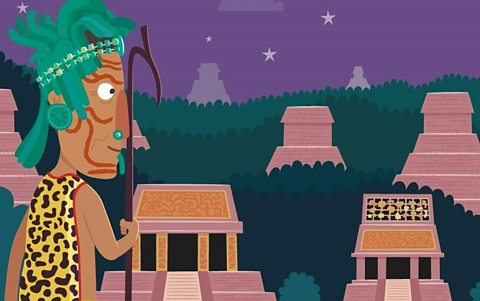
Each of the ancient Maya cities was ruled by a different king or queen. The Maya believed these rulers had to keep the gods happy.
To achieve this, the rulers offered sacrifices (sometimes human), conducted mass prayers and held parades through their cities.
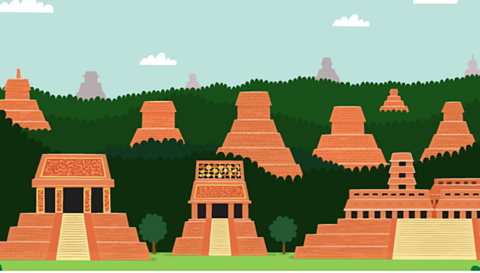
One of the most famous Maya rulers was K'inich Janaab Pakal, whom we know today as Pakal the Great. He was king of Palenque, or Lakamha (in modern Mexico).
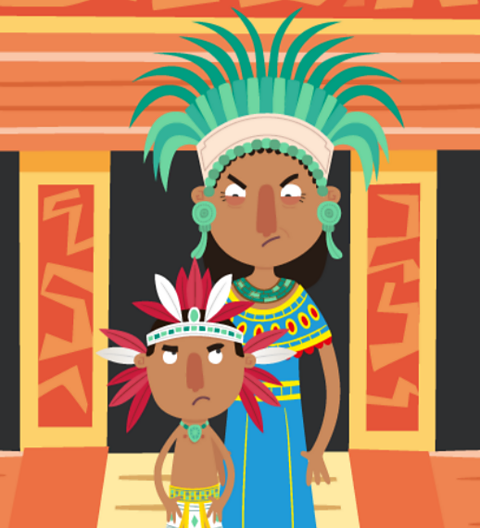
The name Pakal means shield in classic Maya language. He became king at the age of 12, but his mother, Lady Sak K’uk, was queen before him and continued as regent until he was a grown adult.
Pakal ruled for 68 years from 615-683 AD, the fifth longest of any monarch in history.
During his reign Pakal made palaces bigger and built temples and monuments.
Pakal also ruled the city of Palenque at the same time the Anglo-Saxons were completing their famous ship burial at Sutton Hoo in Suffolk, England.
What was in Pakal’s tomb?
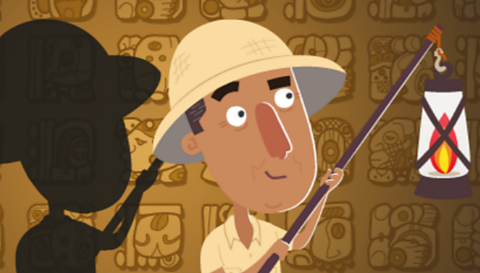
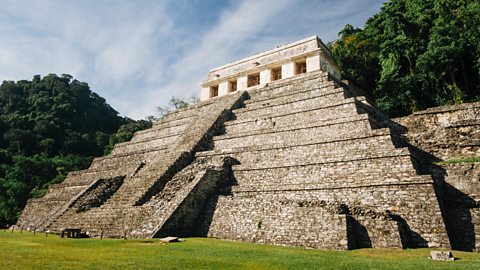
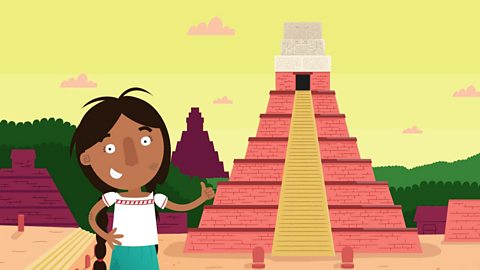
Pakal was buried in a large sarcophagus (stone coffin) in the largest of Palenque’s pyramids, known as the Temple of the Inscriptions.
The secret opening of the tomb was not discovered until 1948 by Mexican archaeologist Alberto Ruz Lhuillier and even then, it took four years to uncover. It finally opened in 1952.
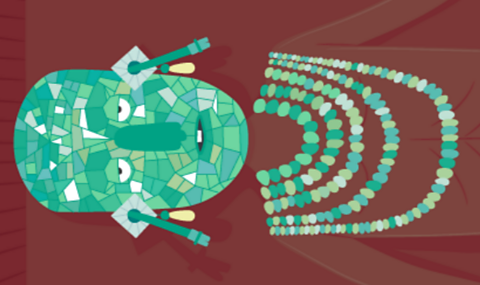
The skeletal remains inside the coffin still had the jade funerary mask and bead necklaces.
The large sarcophagus lid is unique Classic Maya art. It shows Pakal resting on the open jaws of a serpent, showing the way to the realm of the dead.
Think like a historian
Have a look at the thinking points below and think about your answer to each question. You could even write them down on a piece of paper or discuss them with somebody else if you want to.
Pakal’s mother acted as regent when he first became king. What do you think was the impact of this was on the city and the people of Palenque?
Why do you think the discovery of Pakal’s tomb was so significant?
What can be learnt about the Maya people from the artwork on Pakal’s sarcophagus (stone coffin) lid?
Did you think that the city would have remained strong and organised until Pakal was old enough to rule on his own? This could have helped make sure the Maya people still had confidence in their rulers. Maybe you thought that if the city was still seen as strong by other Maya kings this could have kept it safe from attack.
Did you think that the tomb and its contents gave archaeologists a lot of information to learn about the famous Maya king and his reign? Perhaps you thought it helped archaeologists understand how powerful, wealthy and influential Pakal was. It also allowed them to understand more about the Maya people and their beliefs.
Maybe you thought that the artwork shows what the Maya people believed about death and the journey to the afterlife. Did you think that the artwork helps people understand the different religious beliefs of the Maya? It shows Pakal resting on the open jaws of the serpent to reach the realm of the dead.
Activities
Activity 1: Explore Pakal's tomb
Activity 2: Quiz – Pakal the Great
Let's find out what you know about Pakal the Great in this quiz.
Grown-ups corner
Are you a parent, carer or teacher?
Take a look at some of the links below on KS2 History which are packed full of knowledge, videos, quizzes and activities.
History Explorer: Secrets through time. game
KS2 History
Who was Tutankhamun?
KS2 History
Who was Alfred the Great?
KS2 History
Horrible Histories: Raid and Trade game! game
Play Horrible Histories: Raid and Trade KS2 History
More on Maya Civilisation
Find out more by working through a topic
- count10 of 10
- count1 of 10
- count3 of 10