How did trade connect different countries?
During the Islamic civilisation, merchants (people who buy and sell goods) bought and sold many different goods from across the world.
These included valuable items like silk, spices and paper, as well as everyday products like cotton and books.
Goods came from all over the world, including from Africa, China, Europe and India.
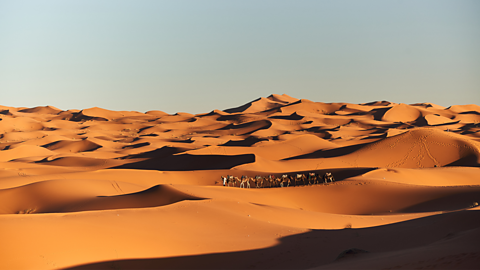
They travelled along the Silk Road (a network of trade routes connecting Asia, the Middle East and Europe) by camel caravans (a long line of camels, each carrying heavy loads of goods) across deserts and mountains or by ships called dhows along sea routes.
The goods traded show how connected these regions were and how trade (buying or selling goods) helped people share not only products but also skills and knowledge.
Important words
Important words on early Islamic civilisation.
| Keyword | Definition |
|---|---|
| Archaeologist | A person who studies the past. |
| Cultures | A shared way of life for a group of people. It includes what people think, how they communicate and their beliefs. |
| House of Wisdom | A well-known library and learning centre in Baghdad during the Islamic Golden Age. |
| Merchants | People who buy and sell goods. |
| Scholars | A person who studies a subject and often teaches others about it. |
| Silk Road | A network of trade routes connecting Asia, the Middle East and Europe. |
| Trade | Buying or selling goods. |
Watch: What role did trade play in the early Islamic civilisation?
Explore the role trade played in the early Islamic civilisation.
Over a thousand years ago, Islamic traders traveled across deserts and seas to buy and sell goods. Trade made their civilisation richer and connected it to other people and places.
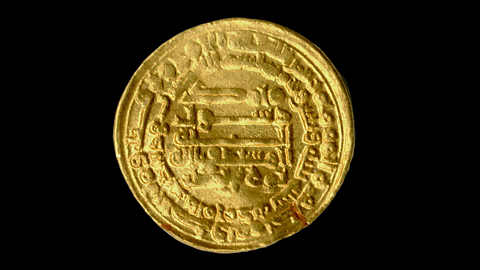
Many goods were traded, such as shiny glass lamps, silks, and spices like cinnamon and aromatic pepper. Coins from the Islamic civilisation have been discovered all over Europe and North Africa; they even reached the Vikings.
But trade wasn't only about goods. Traders also carried ideas. One was a number system from India that used ‘zero’ – an idea that made new kinds of maths possible.
Traders moved along the Silk Roads. These were not just one path, but lots of routes over land and sea. Along these routes, Islam spread and became the main religion in many places.
The city of Baghdad, part of the Islamic civilisation, was on the Silk Roads. It stood between East and West, joining Africa, Asia, and Europe, making it a busy trade centre.
So, what happened when ancient Islamic traders crossed deserts and seas? They carried goods, wealth, and knowledge. Together, these helped create a civilisation with objects and ideas we still use and study today.
Slideshow: What goods were traded?
During the Islamic Civilisation, merchants traded a huge range of items, including:
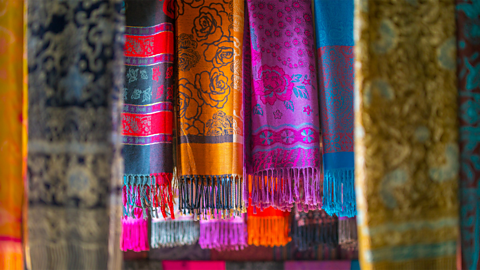
Image caption, Silk
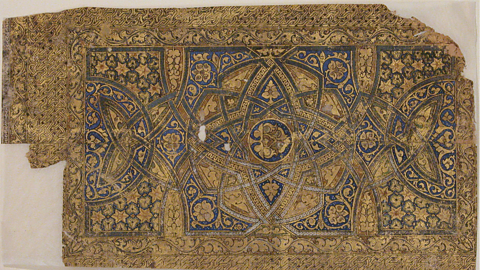
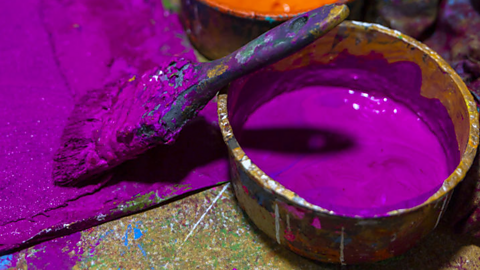
Silk from China was very valuable because it was beautiful and soft It was traded across long distances and worn by the wealthy.
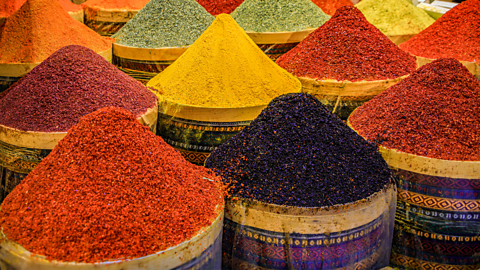
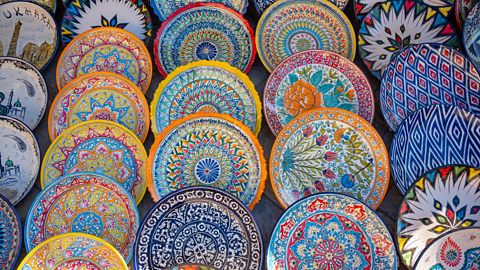
1 of 9
Where did goods come from?
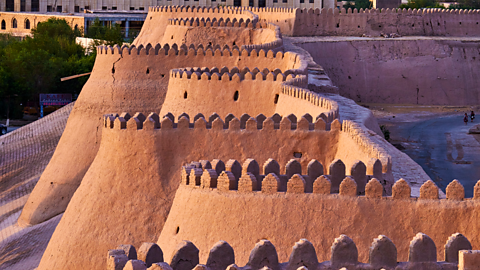
Goods came from many regions across the world.
They travelled along the Silk Road (a network of trade routes connecting Asia, the Middle East and Europe).
Some goods were carried by camels across deserts and mountains.
Others travelled by ships called dhows along sea routes.
Many different products were traded across the Islamic world.
The table below shows some of the popular goods commonly traded from each region:
| Country | Goods |
|---|---|
| Africa | Gold, salt and ivory. |
| China | Silk, porcelain, ink and paper. |
| Europe | Wine, wool and metal tools. |
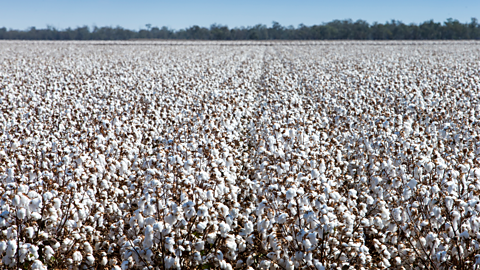
| India | Spices (cinnamon, pepper), gemstones, cotton and coconuts. |
What was the Silk Road?
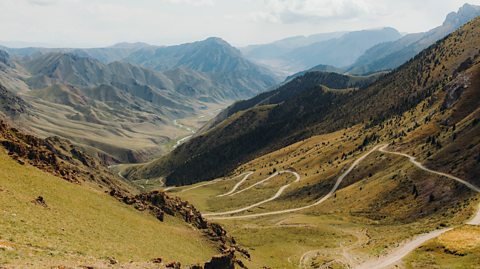
The Silk Road was not one road, but many roads.
It was a network of trade routes that included both land and sea.
These roads joined China, Europe, India and the Middle East.
It was called the Silk Road because silk was one of the most valuable goods carried along it.
The city of Baghdad was on the Silk Road.
Merchants from Baghdad travelled thousands of miles along the Silk Road to trade in China and other regions.
How did the Silk Road connect people?
The Silk Road linked many different cultures (a way of life for a group of people), languages and religions.
As traders moved from place to place, they shared more than just goods they:
- exchanged new ideas
- shared stories, languages and scientific knowledge
- passed on inventions
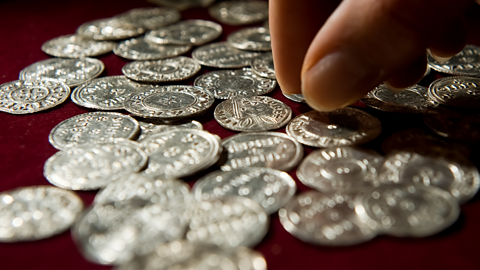
Archaeologists have discovered coins from the Islamic Civilisation all over Europe and North Africa.
Islamic coins were even found in Viking treasures, like the Vale of York Hoard, found in Harrogate.
This doesn’t mean Islamic traders were in Yorkshire.
The coins were passed along through many different merchants and trade networks, showing archaeologists how far Islamic goods could travel.
What ideas were shared?
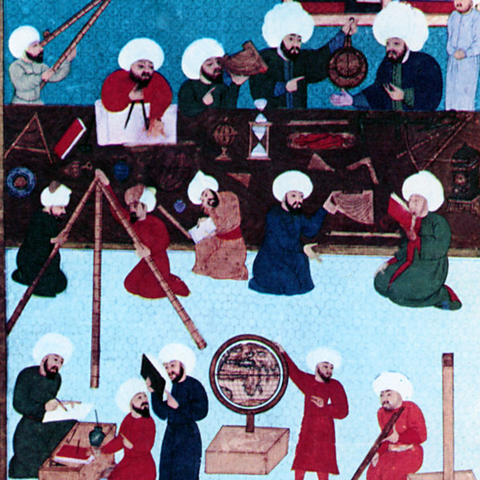
Ideas about topics such as science, mathematics and medicine were shared.
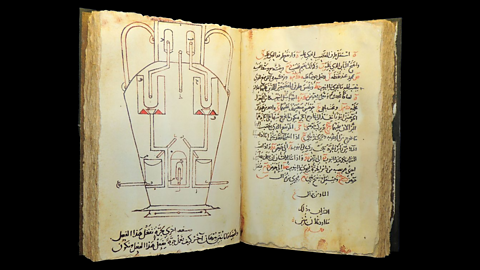
The Bayt Al-Hikma, or House of Wisdom, in Baghdad was an academy where people from far and wide came to study.
Scholars (a person who studies a subject and often teaches others about it) translated ancient Roman and Greek texts into Arabic, changing the words from one language to another so more people could read and understand them.
Texts were filled with important information.
Here are some of the ideas that were shared during this time:
Decimal point
The decimal number system began in India. Scholars developed it further by using symbols for decimal fractions. These ideas later spread to Europe and became the decimal point we use today.
Study of light
Euclid (a Greek mathematician) explained how light travels and how we see. Scholars in the Islamic Civilisation translated his book. One well-known scholar, Ibn al-Haytham, did experiments and wrote his own book about light and sight.
Compasses
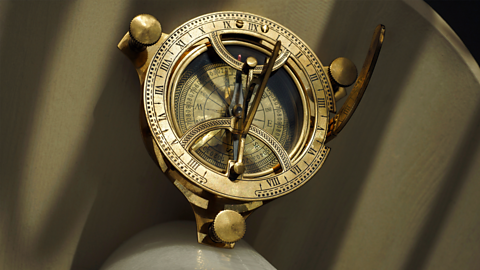
The Chinese compass was introduced to the Islamic world by the 13th century. Muslim scholars and sailors improved its design. Famous navigators, like Ahmad ibn Mājid, used it to travel safely across oceans, helping them explore faraway places.
Why did Baghdad become the centre of trade?
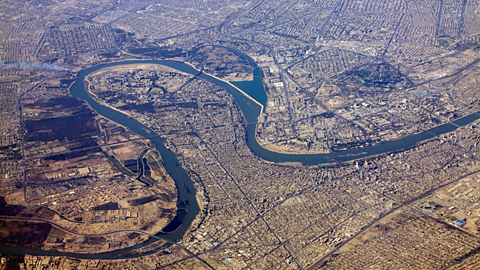
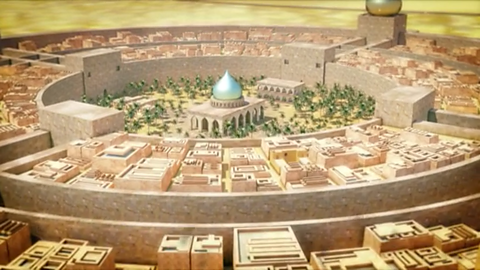
Baghdad (in the present-day country of Iraq) was built on the banks of the Tigris River.
It’s location made it easy to travel to and trade with other parts of the Empire.
It's position on the Silk Road, which connected Asia, Africa and Europe, meant ships, caravans and travellers could easily reach the city.
Scholars who visited Baghdad could learn at the House of Wisdom and spread knowledge.
Many important trade routes passed through the city.
Boats carried goods like food, cloth and books.
Trade brought books, ideas and scholars from different places, making Baghdad not only a place for trading goods, but also a centre of learning.
How did trade affect the early Islamic Civilisation?
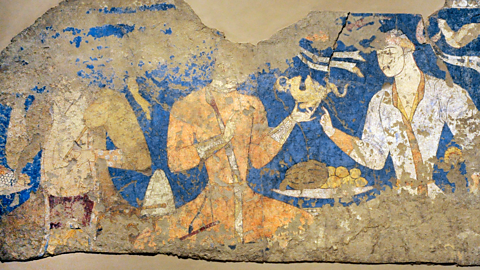
Trade was very important for the Islamic Civilisation, it connected cities in Asia, Africa and Europe, including Baghdad, Damascus and Cairo.
Merchants bought and sold goods like silk, spices and cotton.
Knowledge, science and inventions were also shared, helping the Islamic world grow in mathematics, medicine, science and art.
Islamic cities became busy, rich and important places where people from different cultures could share their languages and religion.
Think like a historian

Have a look at the thinking points below and think about your answer to each question. You could even write them down on a piece of paper or discuss them with somebody else if you want to.
What goods did India and China trade?
Why did each country trade these items?
How did the Silk Road help people from different countries share ideas, languages and goods?
Did you think about the different items that were traded? China traded silk, porcelain, ink and paper. While India traded spices like cinnamon and pepper, gemstones, cotton and coconuts. Both countries traded valuable goods that were in demand in other regions.
Each country had different resources: China had silkworms and materials for silk and paper, while India had spices, cotton and coconuts. Things such as the weather and the land influenced what could be produced and grown.
Perhaps you thought about how the Silk Road connected many countries, including China, India, the Middle East and Europe.
Merchants and travellers carried goods across long distances. As they travelled, they shared ideas, stories, languages, religions and knowledge. Scholars translated texts from Greek and Roman works into Arabic, spreading knowledge about mathematics, medicine and science. Inventions like the compass travelled along the Silk Road, helping other cultures learn and improve them. This shows that the Silk Road was more than just a place to trade goods. It was a way for people to share ideas, knowledge and culture.
Activity: Quiz
Grown-ups corner
Are you a parent, carer or teacher?
Take a look at some of the links below on KS2 History which are packed full of knowledge, videos, quizzes and activities.
KS2 History: Non-European Societies
BBC Bitesize for Teachers
Baghdad in AD900
BBC Bitesize for Teachers
KS2 History: Introducing Ancient Sumer
BBC Bitesize for Teachers
Horrible Histories: Raid and Trade game! game
Play Horrible Histories: Raid and Trade KS2 History
More on Islamic civilisation
Find out more by working through a topic
- count1 of 11
- count3 of 11