Photography techniques
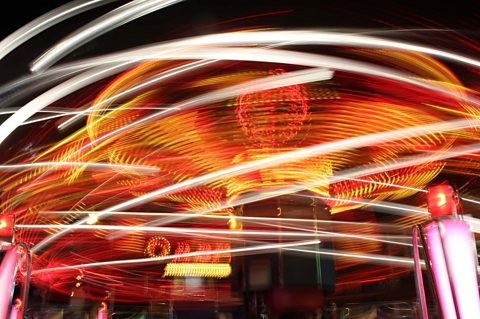
In both traditional and digital photography, you can experiment by exploring aperture, shutter speed and focus. These can change the look and feel of your images and create specific effects, including slow motion, and can capture movement in more detail.
Aperture
The aperture refers to the size of the iris (hole) within the lens. The bigger the hole, the more light gets into the camera.
Aperture is measured in F-stops. A low number like F1.8 or F2.1 means a wider aperture. F16 would be a smaller aperture.
A wider aperture (a low F-stop) means less of the image is in focus. It also means a faster shutter speed can be used.
A Bitesize video guide to aperture settings.
Shutter speed
This is how quickly the shutter opens and closes. The longer the shutter speed, the more light gets into the camera.
A short shutter speed will freeze things without much motion, so you can photograph fast moving things like cars or animals.
A long shutter speed would capture movement, and the image would look blurred. This is useful to show movement or speed.
A Bitesize video guide to effects with shutter speeds.
ISO settings
ISO settings are about the light sensitivity of the digital chip or film.
The higher the ISO the more sensitive the chip becomes, meaning that you can take a photograph when there is less light. However, at higher ISO settings an image is more likely to be affected by digital noise or grain (this can also be a desired effect).
An ISO of 200 is the average daylight setting.
