Exam practice
GCSE Chemistry: exam-style quiz by topic
Try this quiz based on GCSE Chemistry past papers. Choose the topic you would like to revise and answer the questions.
GCSE Chemistry: exam-style questions
GCSE interactive tests based on past papers to get you ready for your chemistry exams. Topics include the periodic table, equations and more.

GCSE Chemistry: quick-fire questions
Use our interactive quiz to understand how the chemistry GCSE exams work. Revise topics such as the periodic table and equations.

GCSE Chemistry: using past papers effectively
Boost your confidence for the chemistry exam with step-by-step worked examples, tailored tips, and practice questions.

- Guide Number10 Guides
Video playlists
- Video Number1 Video

- Video Number7 Videos
- Video Number6 Videos
- Video Number2 Videos

- Video Number4 Videos
- Video Number6 Videos
- Video Number6 Videos
- Video Number5 Videos
Podcasts
Atomic structure and the periodic table
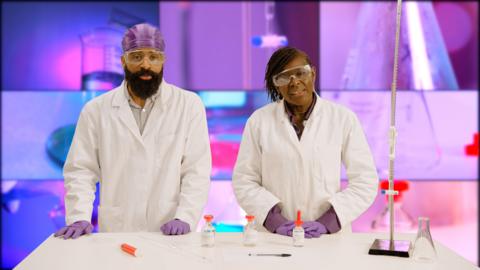
Learn about atomic structure and the periodic table for your GCSE chemistry exam, with Dr Sunayana Bhargava and Tulela Pea.
Bonding, structure and properties
Learn about bonding, structure and properties of matter for your GCSE chemistry exam, with Dr Sunayana Bhargava and Tulela Pea.
Chemical changes
Dr Sunayana Bhargava and Tulela Pea take you through what you need to know about chemical changes for your GCSE chemistry exam.
Science exam techniques
Learn all about science exam techniques for your GCSE science exams with Dr Alex Lathbridge.
Particles
Particle model - Cambridge OCR Gateway
Kinetic theory models the arrangement and movement of particles in solids, liquids and gases. It explains properties of substances in these different states, and what happens during changes of state.
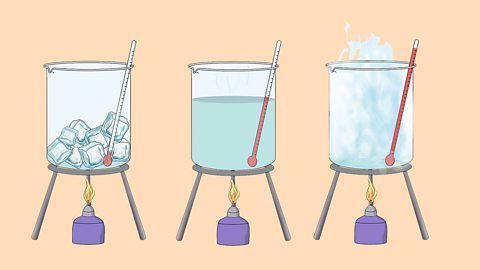
Changes of state: interactive activity - Cambridge OCR Gateway
Want to know what happens when materials melt, evaporate and boil? Find out with this interactive activity designed for the GCSE OCR Gateway chemistry specification.
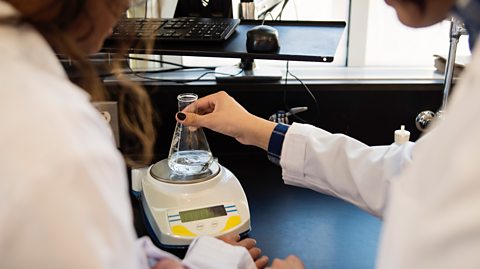
Atomic structure - Cambridge OCR Gateway
Atoms consist of a nucleus containing protons and neutrons, surrounded by electrons in shells. The numbers of particles in an atom can be calculated from its atomic number and mass number.
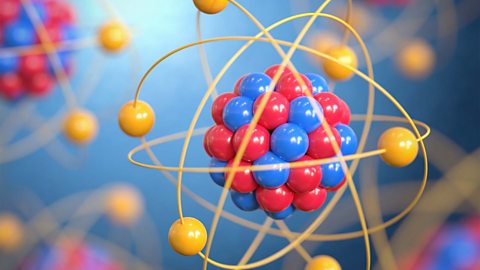
QUIZ: Atomic structure
This interactive quiz is for GCSE Chemistry (single science) students studying atomic structure. Test your knowledge of atomic models, atomic number and calculating atomic mass.
Sample exam questions - Cambridge OCR Gateway
Understanding how to approach exam questions helps to boost exam performance. Question types will include multiple choice, structured, mathematical and practical questions.

Elements, compounds and mixtures
Separating mixtures - Cambridge OCR Gateway
There are different ways to separate mixtures, for example by filtration, crystallisation, distillation, or chromatography. The method chosen depends upon the type of mixture.

QUIZ: Pure substances and mixtures
This interactive quiz is for GCSE Chemistry (single science) students studying pure substances and mixtures. Test your knowledge of filtration, crystallisation and distillation.
Periodic table - Cambridge OCR Gateway
Mendeleev made an early periodic table. In the modern table, elements are put in order of atomic number into periods and groups. Electron arrangements model how electrons are arranged in atoms.
QUIZ: The periodic table
This interactive quiz is for GCSE Chemistry (single science) students studying the periodic table. Test you knowledge of elements and Mendeleev’s early periodic table.
Chemical bonding - Cambridge OCR Gateway
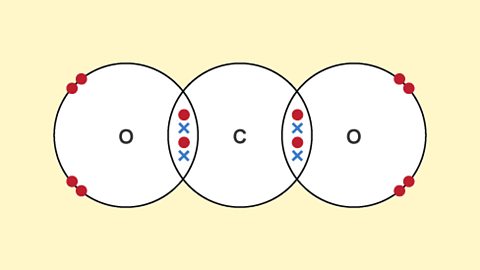
Ionic bonds, covalent bonds and metallic bonds are examples of chemical bonds. The structure and bonding in a substance are modelled in different ways, including dot and cross diagrams.
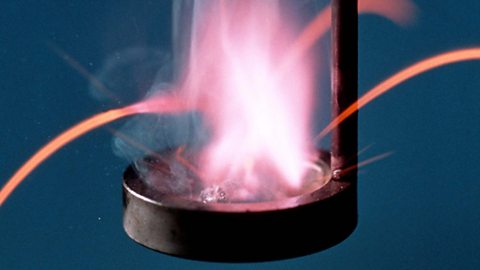
Properties of materials - Cambridge OCR Gateway
Carbon atoms can form four covalent bonds. This is why they can form many different organic substances, such as diamond, graphite and fullerenes. Different substances have different bulk properties.
Nanoparticles - Cambridge OCR Gateway
Nanoparticles are 1 nm to 100 nm in size. They have very large surface area to volume ratios. The properties of nanoparticulate substances are different from those of the same substance in bulk.
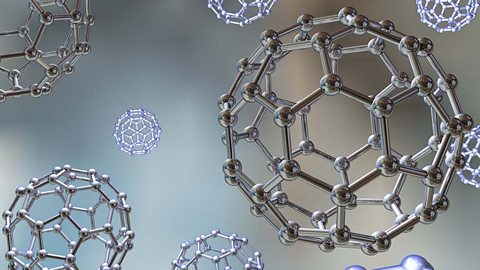
QUIZ: Nanoscience
This interactive quiz is for GCSE Chemistry (single science) students studying nanoscience. Answer questions about nanoparticles and the properties of Nanoparticulate materials.
Sample exam questions - Cambridge OCR Gateway
Understanding how to approach exam questions helps to boost exam performance. Question types will include multiple choice, structured, mathematical and practical questions.
Chemical reactions
Introducing chemical reactions - Cambridge OCR Gateway
Chemists use symbols and formulae to represent elements, ions and compounds. Chemical equations model the changes that happen in chemical reactions.

The mole and Avogadro's constant - Cambridge OCR Gateway
What is the mole and Avogadro's constant? The mole is the unit for amount of substance. The number of particles in a substance can be found using the Avogadro constant. The mass of product depends upon the mass of limiting reactant.

Energetics - Cambridge OCR Gateway
Exothermic reactions in solution give out energy and the temperature increases, while endothermic reactions take in energy and the temperature decreases. Bonds are broken and made in reactions.
Types of chemical reactions - Cambridge OCR Gateway
Oxidation is the gain of oxygen and reduction is the loss of oxygen. Neutralisation is the reaction between an acid and a base. Acids react with metals, bases and carbonates to produce salts.

QUIZ: Acids, alkalis and salts (1)
This interactive quiz is for GCSE Chemistry (single science) students studying acids, alkalis and salts. Test your knowledge on neutralisation, reactions with acids and solutions.
QUIZ: Acids, alkalis and salts (2)
This interactive quiz is for GCSE Chemistry (single science) students studying acids, alkalis and salts. Test your knowledge of indicators, reactions and chemical equations.
Electrolysis - Cambridge OCR Gateway
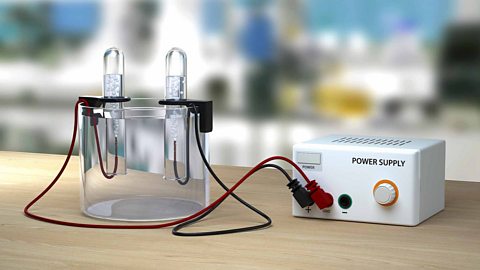
Electrolysis involves using electricity to break down electrolytes to form elements. The products of electrolysis can be predicted for a given electrolyte. Copper can be purified using electrolysis.
Sample exam questions - chemical reactions - Cambridge OCR Gateway
Understanding how to approach exam questions helps to boost exam performance. Question types will include multiple choice, structured, mathematical and practical questions.
Predicting and identifying reactions and products
Chemical reactions of metals and non-metals
Group 1 contains reactive metals, group 7 contains reactive non-metals and group 0 contains unreactive non-metals. Reactivity increases down group 1 but up group 7. Many metals are transition metals.
Identifying products - Cambridge OCR Gateway
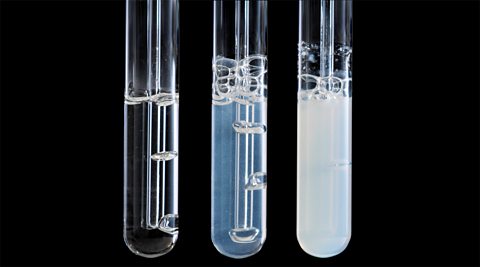
Laboratory tests are used to detect and identify gases and ions. Instrumental methods of analysis are faster, more accurate and more sensitive than these simple chemical tests.
Sample exam questions - purifying and identifying - OCR Gateway
Understanding how to approach exam questions helps to boost exam performance. Question types will include multiple choice, structured, mathematical and practical questions.
Monitoring and controlling chemical reactions
Monitoring chemical reactions - Cambridge OCR Gateway
The percentage yield shows how much product is obtained compared to the maximum possible mass. The atom economy of a reaction gives the percentage of atoms in reactants that form a desired product.
Monitoring chemical reactions - Higher - Cambridge OCR Gateway
Calculations involving the mole can be used to determine unknown concentrations, volumes and masses in reactions. One mole of any gas occupies 24 dm3 at room temperature and pressure.

Controlling chemical reactions - Cambridge OCR Gateway
The greater the frequency of successful collisions between reactant particles, the greater the reaction rate. Temperature, concentration, pressure and the use of catalysts affect reaction rate.
Equilibria - Cambridge OCR Gateway
Chemical reactions are reversible and may reach a dynamic equilibrium. The direction of some reversible reactions is altered by changing the reaction conditions.

Sample exam questions - monitoring chemical reactions - OCR Gateway
Understanding how to approach exam questions helps to boost exam performance. Question types will include multiple choice, structured, mathematical and practical questions.
Global challenges
Improving processes and products - Cambridge OCR Gateway
Most metals are extracted from ores. Iron and aluminium are extracted in different ways because they differ in reactivity. Life-cycle assessments analyse the environmental impact of products.
Making fertiliser - Cambridge OCR Gateway
Fertilisers contain elements needed for plant growth. They are made in different ways in the lab and in industry. Reaction conditions are chosen to get an acceptable yield in an acceptable time.
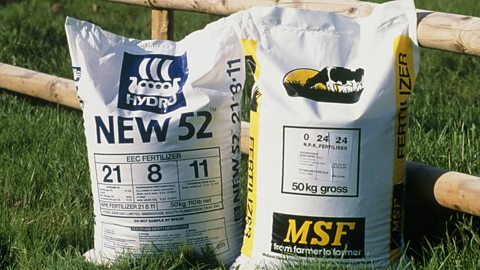
QUIZ: Fertilisers
This interactive quiz is for GCSE Chemistry (single science) students studying fertilisers. Test your knowledge of the Harber process and making ammonium.
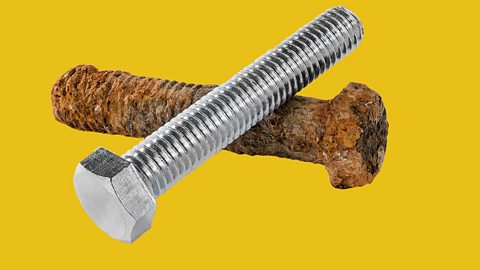
Corrosion of metals
Rusting can be prevented by keeping oxygen and water away, and by sacrificial protection. An alloy is a mixture of elements, including at least one metal. Different alloys have different properties.
Materials for different uses - Cambridge OCR Gateway
Materials include glass and clay ceramics, polymers, metals and composite materials. They have different physical properties, which make them suitable for different uses.
Sample exam questions - global challenges - Cambridge OCR Gateway
Understanding how to approach exam questions helps to boost exam performance. Question types will include multiple choice, structured, mathematical and practical questions.
Organic chemistry
Fuel - Cambridge OCR Gateway
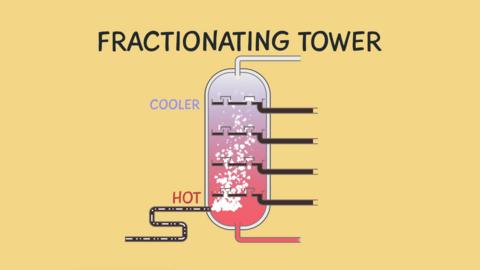
Crude oil is a finite resource. Petrol and other fuels are produced from it by fractional distillation. These fuels are non-renewable resources. Cracking helps match supply of fractions with demand.
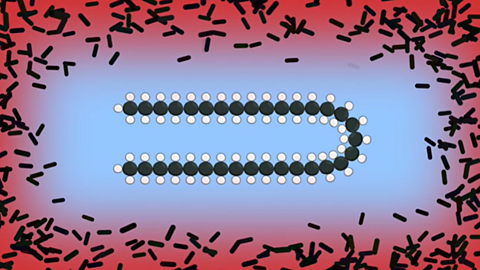
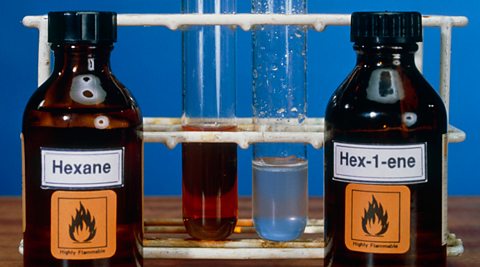
Organic compounds - Cambridge OCR Gateway
The alkanes, alkenes, alcohols and carboxylic acids are four different homologous series of organic compounds. Their different chemical properties are due to their characteristic functional groups.
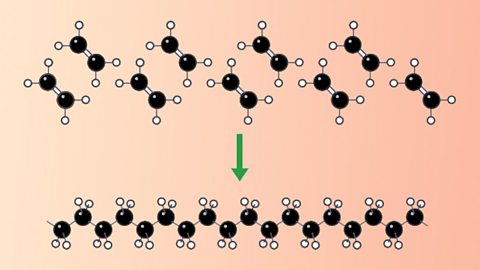
Polymers - Cambridge OCR Gateway
Addition polymers are made from molecules containing C=C bonds. Polymers have different uses that depend on their properties. DNA, starch and proteins are biological polymers.
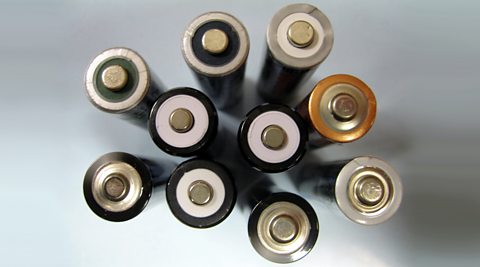
Chemical cells and fuel cells - Cambridge OCR Gateway
A chemical cell produces a voltage until one of the reactants is used up. In a hydrogen-oxygen fuel cell, hydrogen and oxygen are used to produce a voltage, and water is the only product.
Sample exam questions - organic chemistry - Cambridge OCR Gateway
Understanding how to approach exam questions helps to boost exam performance. Question types will include multiple choice, structured, mathematical and practical questions.
Interpreting and reacting with Earth systems
The atmosphere - Cambridge OCR Gateway
Earth’s early atmosphere probably had less oxygen than now, but more carbon dioxide and water. Increases in greenhouse gases are leading to climate change.
Sample exam questions - interacting with Earth systems - OCR G
Understanding how to approach exam questions helps to boost exam performance. Question types will include multiple choice, structured, mathematical and practical questions.
Practical skills
Planning an experiment
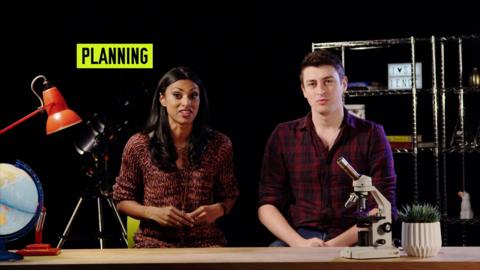
Scientific investigations have several stages - planning, collecting data, analysing data and evaluation. It is important to understand how to carry out each stage of the investigation.

Revision resources
How to revise for your chemistry exams
Get ready for the GCSE chemistry exams with these interactive resources from BBC Bitesize.
Links
- External linkExternal link
- SubscriptionSubscription
- External linkExternal link
- External linkExternal link
- External linkExternal link
