Welcome to The Regenerators.
Plastic can be a problem - Summary
Plastic is used in many of the products we rely on every day, but it can cause problems when it becomes waste. In this KS1 explainer from The Regenerators, pupils discover why plastic lasts so long in the environment and explore the actions people can take to reduce plastic pollution.
In this video, students will learn:
- Why plastic is commonly used in everyday products.
- Why plastic takes a long time to break down in the environment.
- How plastic pollution can affect wildlife and oceans.
- What recycling is and how it works.
- How reducing, reusing and recycling can help reduce waste.
Classroom video - Plastic pollution
Plastic can be a problem
Our explainers are engaging, collage-style animations which explain many of the issues and themes around sustainability.
This video is a fun, concise answer to the question: What is the problem with plastic? It is the perfect springboard for classroom discussions.
Narrator: Plastic is useful and we use it everyday.
It's found in games, clothes, drinks bottles, bags computers, phones, food trays, signs, pipes, multicoloured plastic bananas… err what? Well yeah, the point is we use plastic A LOT!
Plastic can be made in to anything and it's super strong. But that also makes it really difficult to break down if it gets into the environment
Over time, a real banana will turn brown, rot and break down into the soil. A multicoloured plastic banana, like this, could take hundreds and hundreds of years to break down. And even then, it's still plastic just in smaller bits.
So what do we do with our plastic? Well, we can throw it in the bin and it gets collected by a lorry. But with so much plastic around, Some of it, unfortunately, ends up in the sea.
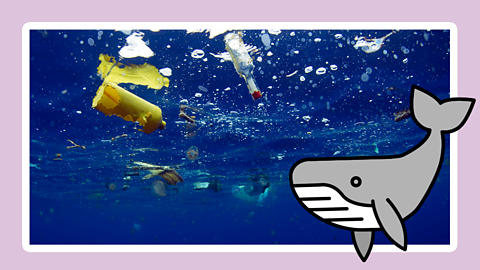
The sea creatures can confuse those colourful plastics with a tasty meal, or even get trapped in plastic waste. But plastic doesn't only end up in the ocean. Sometimes that waste plastic is burnt. Which pollutes our air and harms wildlife. Or we dump it somewhere and pretend it doesn't exist.
We need to make a change together. We can use less plastic to start with. I never should have bought this plastic banana.
The best thing we can do is reuse it.
A plastic drinking bottle makes a great… Plastic drinking bottle. Or we can use it for something else, like turning it into a planter for your garden. But if we can't reuse it, we can recycle it.
Recycling is taking waste and turning it into useful materials for something else.
We can send the waste plastic to recycling centres. Here it's sorted, shredded and used to make new things. This can be expensive and difficult, but it does mean some old plastic can become new bags, rugs, plant pots, dog collars even shoes.
We can help the planet because we're reusing what we already have. Use less plastic, make less waste and no more 400 year old bananas in the sea.
Quick facts about plastic
- Plastic is used in many everyday items, including bottles, bags, phones and food packaging.
- Plastic can take hundreds of years to break down.
- Sea creatures can mistake plastic waste for food or become trapped in it.
- Recycling turns waste materials into useful materials that can be used again.
- Recycled plastic can be used to make new products, including bags, plant pots and shoes.
Let's discuss: What are some simple ways we could use less plastic in our everyday lives?
More resources for this video can be found in the Green Classroom: What is ocean pollution? lesson page.
Learn more about sustainability
Explore more lessons and content from around The Regenerators.
What is ocean pollution?
GREEN CLASSROOM
Plastic Problems
REGENERATORS POETRY
Videos for teachers
GREEN CLASSROOM
More from The Regenerators
BBC BITESIZE