The Eurovision hall of fame is huge
Austria will welcome the Eurovision Song Contest in 2026 after singer JJ won the trophy in Switzerland last year in memorable style. Now in its 70th year, Eurovision has seen generations of performers from across Europe and beyond take to its famous stage.
When the winner is crowned this year, they’ll be hoping their song and story will be enough to earn them a place as one of the most unforgettable entries in Eurovision history. Whoever they are, they’ll be doing well to capture the imagination in the same way these acts did - just some of those who lingered in our memories long after the voting ended.
To celebrate seven decades of Eurovision, BBC Bitesize takes a closer look at just five acts from Eurovision history and why they will never be forgotten. You can find out more below!
France Gall (1965)
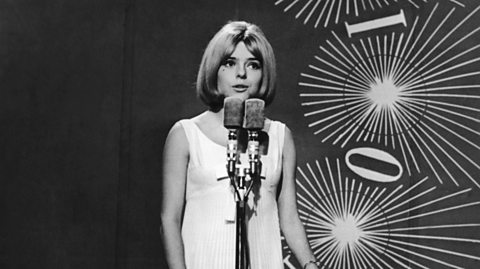
For the first nine years of the Eurovision Song Contest, it was difficult for any entrant with an uptempo number (a song with a fast beat) to stop a ballad in its tracks. Even Italy’s future global smash Volare (aka Nel Blu Dipinto di Blu) finished third to a French love song in 1958.
That all changed in 1965 when Luxembourg took the trophy with a piece of pure pop. Performed in French by 17-year-old France Gall, Poupee de Cire, Poupee de Son (Wax Doll, Rag Doll) was written by the acclaimed composer, Serge Gainsbourg.
It was a prime example of the yé-yé style which had gained popularity in southern Europe in the early 1960s - also known as ‘bubblegum pop’ with its similarity to British and American beat music. It has gone on to become an evergreen hit, with bands as diverse as Belle and Sebastian and Arcade Fire performing cover versions in their live shows.
Sandie Shaw (1967)
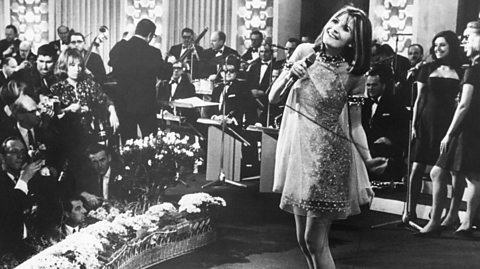
The United Kingdom ‘got’ what Eurovision was fairly quickly. Although our debut entry in 1957, the operatic song All, sung by Patricia Bredin, finished a disappointing seventh out of 10 songs, things improved on our second attempt.
Having skipped the 1958 event, we came back strong in 1959 with Sing Little Birdie, sung by the husband and wife team of Pearl Carr and Teddy Johnson. Uptempo, chirpy and easy to remember, it finished second in Cannes, with the runner-up spot becoming a frequent placing for the UK over the next few years.
When Sandie Shaw showed up in Vienna in 1967 to sing Puppet On a String for Le Royaume Uni, the UK’s Eurovision track record included five second places, with three-in-a-row from 1959 to 1961. It was common in this era for the BBC to choose a singer first and the public to then pick the song they would sing at the contest.
Sandie was the first UK act the BBC selected who represented the Swinging London vibe of the 1960s and the move paid off - finally. Singing her carnival-style song barefoot, Sandie ended the evening on 47 points, more than twice as many as her closest rival Ireland. Puppet On a String was the first Eurovision song to top the UK charts, staying at number one for three weeks.
ABBA (1974)
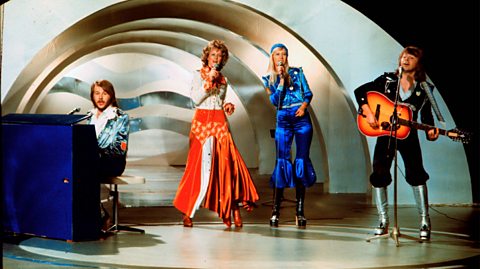
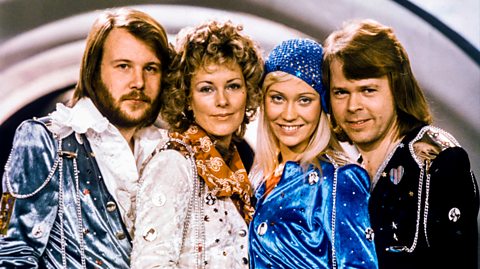
Many acts have seen their career helped along by an appearance at the Eurovision Song Contest, but it was ABBA who most effectively used the opportunity as a springboard to international chart success.
From 1973 to 1976, competing countries could perform in whatever language they wished (a practice reintroduced in 1999 and still in place today). Outside of these years, an entry had to be sung in one of the nation’s official languages. ABBA had performed their song, Waterloo, in Swedish at the national heat but in Brighton, the lyrics were changed to English.
Their conductor dressed as Napoleon in keeping with the song’s theme and the whole package proved irresistible to (most) juries. Agnetha, Benny, Björn and Anni-Frid were on their way to the top of the charts - even though the UK judges didn’t award them a single point.
Dana International (1998)
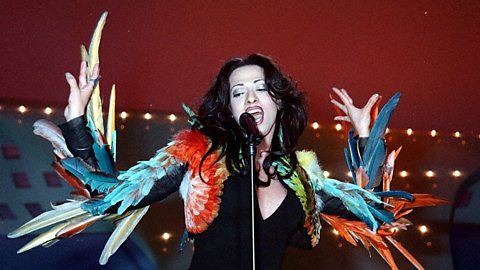
In 1998, the UK was preparing to host Eurovision for the first time in 16 years following Katrina and the Waves’ victory in Dublin the previous year. Before the competition got underway at Birmingham’s National Indoor Arena, one of the acts generating much publicity was Israel’s Dana International.
Dana became the first transgender woman to win the competition. Her song, Diva, namechecked famous women including Aphrodite and Cleopatra. Dana's selection as a Eurovision act proved a controversial choice for some of the more conservative parts of Israeli society, but she also had many supporters cheering her on.
Any controversy didn’t appear to have an impact on the viewers ringing in to vote on the night. The voting was close and came down to the final country to be called in - in the end Dana finished six points ahead of the UK’s Imaani and she continues to be an LGBTQ+ icon to this day.
Daði & Gagnamagnið (2020)
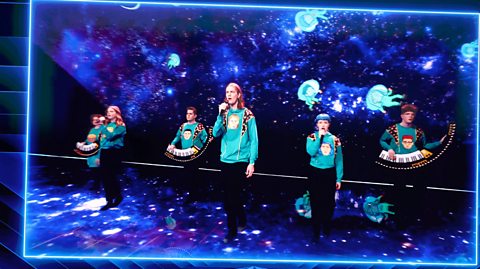
The Covid pandemic meant 2020 was the first year since its launch that Eurovision didn’t take place. That didn’t stop Daði Freyr from Iceland getting one of the contest’s biggest hits in years, even though his entry, Think About Things, was never performed at Eurovision itself.
Alongside his band Gagnamagnið, Daði came up with a lo-fi look for the synth-inspired song which could have come straight from the Stranger Things soundtrack. Green jumpers bearing 8-bit graphic depictions of each band member gave the group a distinctive identity, while the swaying motions of the dance routine made Think About Things a TikTok hit. It became so popular, BBC Radio 1 made it their Tune of the Week in the June, while Jamie Laing and Karen Hauer danced the Cha Cha Cha to it in Strictly Come Dancing.
Daði’s Eurovision story didn't end there. Like many of Eurovision’s class of 2020, he returned for 2021 with a new song - 10 Years. Prior to the semi-final Iceland was due to perform in, contest organisers confirmed that a member of the group had tested positive for Covid-19. It means footage filmed at rehearsals was used instead of a live performance while Daði and the rest of the Icelandic delegation remained in quarantine. They still qualified for the final, finishing fourth.
When is Eurovision 2026 and who is representing the UK?
The 70th Eurovision Song Contest will be held in Vienna, Austria in 2026. Representing the UK is experimental musician popular content creator LOOK MUM NO COMPUTER who will perform song Eins, Zwei, Drei’ which means ‘one, two, three’ in German.
There are also a number of famous faces competing for the Eurovision title this year. Finland’s entry features a collaboration between world renowned classical violinist Linda Lampenius and singer Pete Parkkonen. Global superstar Delta Goodrem will take to the stage representing Australia and San Marino have also recruited Culture Club frontman Boy George to perform alongside SENHIT.
The 2026 Grand Final of the Eurovision Song Contest will take place in Wiener Stadthalle, Vienna, on Saturday 16 May. The Semi-Finals will take place on Tuesday 12 and Thursday 14 May.
The Grand Final and the Semi Finals will be broadcast live on BBC One and iPlayer, plus via BBC Radio 2 and BBC Sounds. Television presenter Graham Norton will also return to provide the BBC One TV commentary for the Grand Final.
Celebrate 70 years of Eurovision with BBC History. Let's delve into the past to share brilliant moments from the famous song contest through time.
This article was published in May 2021 and updated in May 2026.
