Everything you should know about April Fools' Day
Spring has sprung, the equinox has been and gone, and April Fools' Day is now on the horizon!
A firm favourite for kids right across the country, April Fools' is as good a chance as any to have a little fun at the expense of a friend or family member.
Whether it's an elaborate prank, or a more subtle form of trick, people will be well underway with planning their April Fools' Day showings - but what actually is April Fools', and why do we celebrate it?
Well, here at BBC Bitesize, we've taken a look at some of the internet's biggest April Fools' Day questions, to delve into what it is, when to expect it and how it came to be in the first place.
What is April Fools' Day?
April Fools' Day is an annual opportunity to get one over on your nearest and dearest, playing harmless pranks, jokes and tricks on the people in your life in an effort to make them 'the April fool'.
The tradition has been celebrated in the UK for centuries now, and is upheld in a number of different countries across the globe, including places like Japan and France - sometimes under a different name.
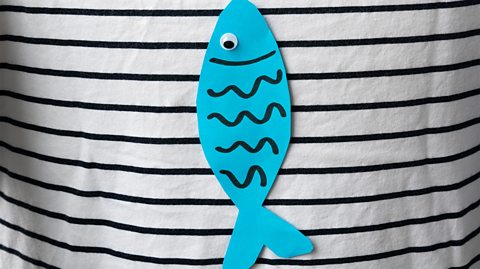
In France, they call it 'Poisson d’Avril', which translates as 'the April fish', referring to a paper fish that children stick to one another's backs to mark the day!
When is April Fools' Day 2026?
This year, April Fools' Day will take place on Wednesday 1 April, just four days ahead of Easter Sunday!
The date of April Fools' Day stays the same year to year, with the beginning of April always carrying a suitable amount of mischief and mayhem. There is some debate, however, whether the date itself actually aligns with the tradition's history.
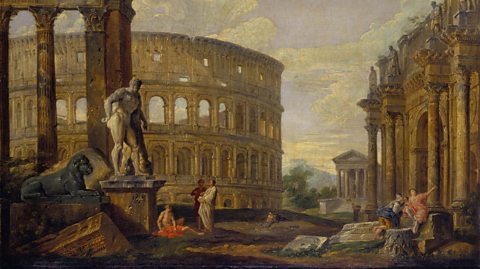
Some believe April Fools' Day is derived from events in the calendar, specifically the beginning of a new season. In Roman times, people celebrated 'renewal festivals', big celebrations that would take place to mark the beginning of a new year or season. As part of these events, normal life was thrown out of the window, with some believing this gave rise to the kind of chaos we've all grown to love during April Fools'.
Others believe the April date comes from a shifting of the calendar, specifically around the date of the spring equinox. The spring equinox takes place in March, and is regarded by many as the beginning of spring. Once upon a time, the start of spring, when people could begin planting flowers, was seen as the start of the new year, before this was shifted to January.
As such, some speculate that those who continued to celebrate the new year in late-March, as opposed to January, were seen as fools, having pranks and jokes played on them as a result - thus ushering in the tradition of the April Fool.
Where does April Fools' Day come from?
The origin of April Fools' Day is, perhaps fittingly, unclear. Different historians subscribe to different theories as to the tradition's origin, with some of these theories dating back as far as Ancient Rome!
As far as British folklore goes, it's said that the tradition reaches all the way back to the 13th Century, and a Nottinghamshire village called Gotham.
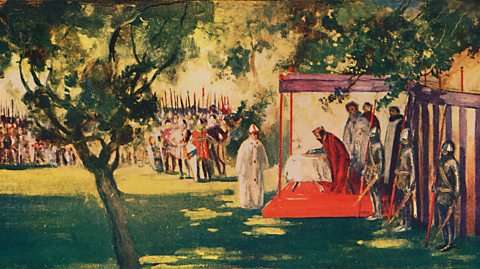
According to legend, the then-monarch King John had decided to acquire some of the land of Gotham to use as space for a hunting lodge, sending some of his men to the town for a look-see. Naturally, the townsfolk weren't too happy about this arrangement, hatching a plan for when the king's men arrived.
Instead of a sleepy rural village perfect for a hunting lodge, the king's men arrived to see the townsfolk engaging in all manner of madness, such as trying to drown a fish! As such, they advised the king to find an alternate spot for his lodge, believing the people of Gotham to be totally mad. Ever since then, as far as this tale is concerned, we've celebrated April Fools' as a commemoration of their trickery.
This isn't the only theory, however. Some historians believe the tradition arose in 16th Century France, relating to a change in calendar that moved the new year from spring to January, whilst others believe its roots lie in the Ancient Roman celebration 'Hilaria'.
What time does April Fools' Day end?
While this can be something of a contentious topic, it's generally accepted that April Fools' Day comes to an end at noon on 1 April.
The idea is that after midday, all pranks and tricks are revealed to the unlucky victims, and that anyone who plays a prank after this time becomes the April Fool themselves.
It's thought that this rule dates back all the way to 1851, written in a passage of a British journal, which said that anyone who played a trick after noon should be told; "April Fools' gone past, You're the biggest fool at last."
Three famous April Fools' Day pranks
If you're gearing up for an April Fools' Day prank of your own, it might do you good to read up on some of the all-time classics. From imagined islands to ambitious alterations, these are three of the most iconic April Fools' gags of all time!
1. Big Ben turns into Digital Dave
In 1980, the BBC Overseas Service (now called the World Service) announced to listeners that Big Ben's bongs were going digital, with the iconic clock face being replaced by a digital variant. Sadly, this joke didn't go down as intended, with the BBC having to apologise for a number of days afterwards.
2. A spaghetti tree?
In 1957, investigative series Panorama ran a piece about trees in Switzerland that could supposedly 'grow spaghetti'. Unsurprisingly, the story was false, with Panorama forced to come clean about the joke when viewers called in to ask how they could grow spaghetti trees of their own.
3. An imaginary island
In 1977, British newspaper The Guardian published a travel guide to the island of San Serriffe. Made up of two separate islands, Upper Caisse and Lower Caisse, San Serriffe was formed in the shape of a semi-colon and was, if you couldn't tell, totally made up!
Read more about these April Fools' pranks and many more with this article from BBC Bitesize.
