'That's so Y2K'
On social media, trends come and go so quickly that often it can be hard to keep up. If it’s not a new dance to learn with friends, it could be users feeling nostalgic about an era, AI-generated videos, or a new term, phrase or slang being regularly used.
More recently, many people online have become familiar with ‘Y2K’ and the ‘aesthetic’ of that era. But what does Y2K mean and why is it so popular?
Here, BBC Bitesize takes a closer look at its origins and why new audiences are fascinated by it. Find out more below!
What does Y2K mean?
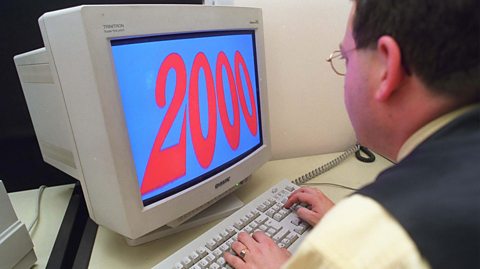
If you’re wondering what Y2K stands for - it is the shorthand way of writing ‘year 2000.’ The ‘Y’ stands for year, ‘2’ stands for the number two and ‘K’ stands for kilo/thousand.
Its meaning has evolved over time, but the term is said to have first been used when referring to a computer flaw known as the ‘Y2K bug’. In the late 1990s, there was concern that computer systems could crash when the year 2000 arrived, as years were represented in data with only two digits (e.g. ‘00’ for 1900 or ‘99’ for 1999).
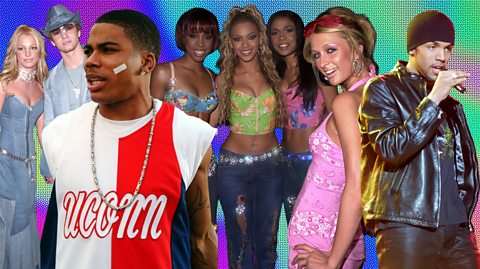
But today, Y2K, or the Y2K aesthetic, generally refers to an era of fashion, music, technology, design and culture from the late 1990s and early 2000s. The specific period differs depending on who you ask – some say the Y2K era refers to the early 2000s, whereas others say it spans from 1997 to 2004.
The era saw the rise of the internet, fashion and tech take on a more futuristic aesthetic and iconic stars emerging in pop culture. The term Y2K has become more widely used in the 2020s, with many reminiscing about that period and different generations discovering what it was all about.
Who grew up in the Y2K era?
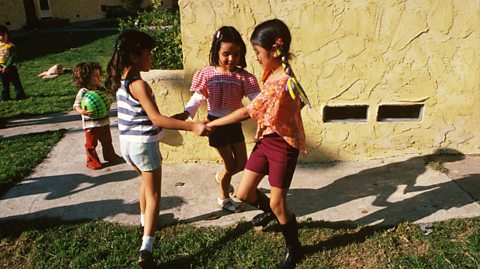
Many generations will remember the Y2K era. But the people who grew up during that time are primarily millennials and some Gen Z.
This generation will remember their childhood and teenage years being a time of great digital advancements like mobile phones and social media and being the first group to grow up with the internet.
Are millennials cringe?
Millennials are often stereotyped, particularly online through memes and internet culture, as being the selfie-generation, loving avocados on toast and at times being, well, a bit cringe. However, this perception has somewhat changed with the nostalgic appreciation of the Y2K era, with many younger generations channelling the fashions, buying retro tech, discovering musicians from the time and more.
The Y2K aesthetic
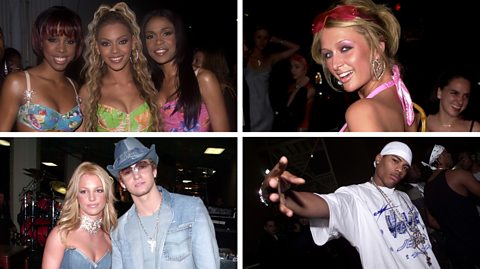
When it comes to the Y2K aesthetic, this mainly refers to fashion during that time, as well as technology, decor, pop culture, and more. But what is Y2K fashion?
Well, there are several memorable trends from that time. In women's fashion, it was an era of low-rise jeans, crop tops, velour tracksuits, tinted aviator sunglasses, strappy sandals, butterfly hair clips, and zig-zag hair partings.
For menswear, there were low-rise baggy jeans, oversized graphic t-shirts, cargo pants, sporty tracksuits, newsboy caps, flashy chains and more. Much of the Y2K style was more retro and futuristic, with metallic tones or holographic materials.
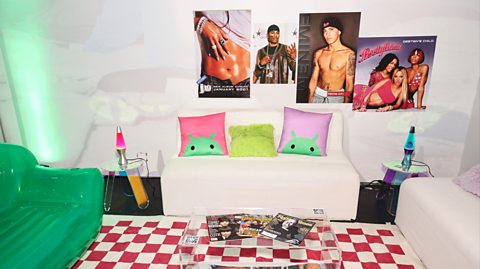
A lot of outfits and accessories were also bright and bold, with icy blues and colours like orange and yellow being popular. In terms of homeware and design, these trends were also apparent.
Many teenagers and children's bedrooms were playful in design with the likes of bean bags, inflatable chairs, disco balls, beaded curtains and vibrant patterns.
Y2K tech and gadgets
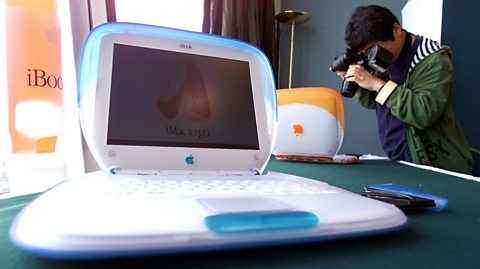
Over two decades ago, technology and gadgets looked very different to how we know them to be today. But several of them have come back into fashion in various forms in recent years.
Y2K was an era of flip phones,chunky laptops, and digital cameras. Often, these items came in futuristic and colourful designs, such as hot pink, lime green or orange and without a doubt stood out from previous technology on the market.
In the early 2000s, popular laptops included the Apple iBook G3 Clamshell and a lot of celebrities were pictured by the paparazzi with Motorola Razr flip phones. The first ever iPod by Apple was also released, revolutionising how we consumed music.
Y2K social media
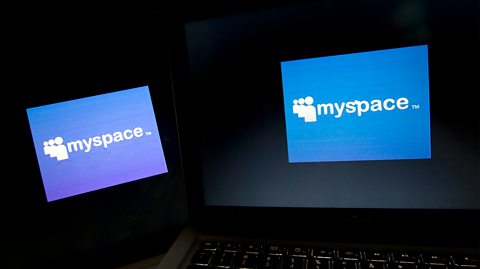
It’s hard to imagine a time without social media – but in the late 90s and early 00s, the big platforms that we know today either didn’t exist or were in the early stages of development. At the time, a lot of people started using email to communicate more as laptops became more popular.
And it was social networking sites like Myspace, launched in 2003, that were popular with young adults. Once one of the biggest social media sites in the world, Myspace users could customise profiles which would feature everything from personal interests to photos and music.
In 2004, Facebook officially launched. But it wasn’t until 2006, slightly outside what some consider the Y2K era, that YouTube and Twitter launched, followed by Instagram in 2010.
Y2K pop culture
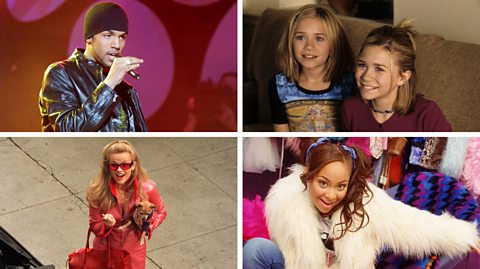
The Y2K era also saw a distinct shift in pop culture. As mentioned, many embraced bold fashions and the rise in internet culture.
But there was also an explosion of new talent on the music scene, iconic films and television shows released, and new reality TV shows that had a huge influence on media and culture.
Dominating the airwaves were genres like pop, R&B, hip-hop and pop-punk from artists like Britney Spears, Destiny’s Child, TLC, Backstreet Boys, *NSYNC, Avril Lavigne and Blink-182. In the UK, the garage music scene also exploded, with artists like Craig David and Artful Dodger releasing chart hits.
Before social media, magazines, often filled with paparazzi photos, were a key source of pop culture news. There were so many celebrities across the industry who fans wanted to know more about, from the Olsen twins to Disney stars like Raven-Symoné and Hilary Duff, and emerging reality 'it girl' stars like Paris Hilton and Nicole Richie.
Several reality TV shows gave viewers a fly-on-the-wall look at the lives of celebrities or focused on social experiments – such as Big Brother, which launched in 2000. In the late 1990s and the early 2000s, films like The Lord of the Rings, Harry Potter, The Matrix, 10 Things I Hate About You and Legally Blonde first hit cinemas, and teen dramas like One Tree Hill and Gilmore Girls were watched by fans across the globe.
Why is Y2K popular?
In recent years, the Y2K term has gained more mainstream usage. But why is Y2K suddenly popular all these years on?
Well, there are a few reasons we can think of. The Y2K popularity is not just driven by the generation who were at the heart of the era feeling nostalgic.
Now more than ever, new audiences are able to access old photographs, television shows, and music online. Through social media platforms, Gen Z influencers have introduced users to the ‘Y2K aesthetic’ and with fashion trends often resurfacing, they have become popular again by numerous celebrities.
With resale apps like Vinted and Depop, younger generations can buy what is now deemed ‘vintage clothing,’ while big fashion brands in the UK and beyond are also following the Y2K wave. On TikTok and Instagram, music or famous film quotes from the time become trends in themselves.
And on streaming platforms, television shows that are now over 20 years old are being discovered by younger generations for the first time. But what do you think?
This article was written in May 2026
