My Writing Life with Neurodiversity
Writers, Kat Rose-Martin and Nk'iru. Njoku share how they deal with deadlines and organise their days whilst managing their neurodiversity.

Earlier this year, BBC Writers held a digital programme for some of the applicants to our Writers' Access Group called Script Essentials. One session was titled, ‘How I Write and The Writing Life’ which featured screenwriters, Kat Rose-Martin and Nk'iru. Njoku who both identify as neurodiverse. The session was chaired by Writers' Access Group alum, Karen Featherstone.
With the amount of high profile writing opportunities available at the moment and their deadlines, we thought it would be helpful to pull an extract from the conversation which contains insights as to how these writers deal with deadlines and organise their days whilst managing their neurodiversity.
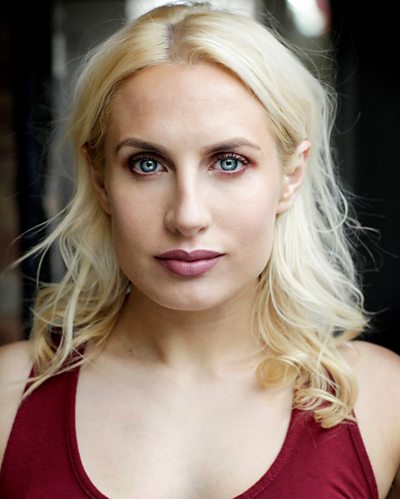
KAT ROSE-MARTIN
So I'm kind of obsessed with work. I love my job, but sometimes I don't switch off. So my partner's very firm with me about ‘leave the room now, close the door, get out’, because otherwise I'd just keep going and keep going. But everything I say now is an attempt to wrangle the chaos that is my brain, like other neurodiverse people will relate. It's just constant carnage. And so I'm really, really meticulous. I work hard to kind of wrangle that. And this is mad what I do, but I literally write down every hour of the day and I write next to it what I'm doing, including if I need to take a shower, walk the dog, eat lunch, because if I don't write it down, it doesn't happen.
I don't work weekends because I think we have to let our brains rest. But sometimes on a weekend, I write down the hours as well just to help, otherwise I just don't know what to do. Like I'll end up just having not eaten, gone to the toilet or done anything and I've just sat staring into space. So that's one thing that I do.
If I'm having a bad brain day, I forgive myself and I walk away. A lot of the work I do is to remove the shame of me going, 'it's not working today. I can't do it'. And to prevent my meltdowns, I just go, ‘it's OK, tomorrow we can do this’. I still battle with that guilt monster. But I'm trying actively to do that. So those are some of the things I do.
I also try to take regular breaks and get outside. I actually work like 6 till four and I sort of do a bit, go to the gym, do another bit, walk the dog, do another bit, have lunch and to just get away from the desk and shake my head up. And that's if I'm typing. If I'm plotting, I'm sitting on my radiator or on the floor, I've got post its out, all sorts of coloured stuff going on. So I try to get away from the desk when I'm plotting because computers are not fun.
KAREN FEATHERSTONE
So interesting isn't it? Hearing how all our different writers have different methods. I'm going to take a leaf out of your book. I think that sounds very organised with saying what you're going to be doing each hour of the day.
Nk'iru. what have you got to say about this? I'm also interested to hear whether anyone uses phantom deadlines, which I use myself. So I'll kid my brain - it doesn't always work - into thinking something you two days before it's due. Just wondering if anyone else does that?
NK’IRU. NJOKU
I definitely do that. It's very important that I do that. I’m at the intersection of ADHD and autism. I have an ADHD diagnosis. I do not have an autism diagnosis. You know, I don't think I need it, but I just know that it's there. My doctors believe it's there. My daughter has autism and she's also blind.
Before I became a mum, I wrote all the time. I didn't have a stop button because again, I was working in long running TV and that was just one job that I did. The other job was in reality TV. So I was always in the studio and my life was just really full on. Then I had my daughter, she was born blind and I knew that things had to change a bit. I had to develop a stop button for myself because, listen, my computer was with me all the time before I had my daughter. It was on the dining table, in the kitchen, it was with me, you know, all the time and I realised that there was no start or stop. I was just always there writing and writing. And when you're leading the team, all the emergencies are on your table, production is calling you, management is calling you, your writers are calling you, someone is saying they can't deliver a script. And so my life was just like that. And then I had my daughter and I knew that I had to just sort of scale back a little bit. I continue doing my work, but I developed a timetable. I was like, listen, I can't take these emails or calls on weekends. I really need my head to be calm.
When I moved from Nigeria to the UK in 2018, I was still head writer of Tinsel. I stopped, I resigned in 2021 and it was very abrupt. I just said, listen, I'm not doing this anymore, you know, and then I stopped because the pressure was too much. So what I do now is I live by my alarms. I have alarms for everything:
Go and write so and so thing at so on the time
Take a shower
Get ready for my daughter to come back from school.
Data da, da, da, da. There are certain hours where I don't pick up my laptop at all. When my daughter is around, I don't pick up my laptop. I'm just with her until she goes to bed. Then I can go back to my laptop. That's how I kind of structure it.
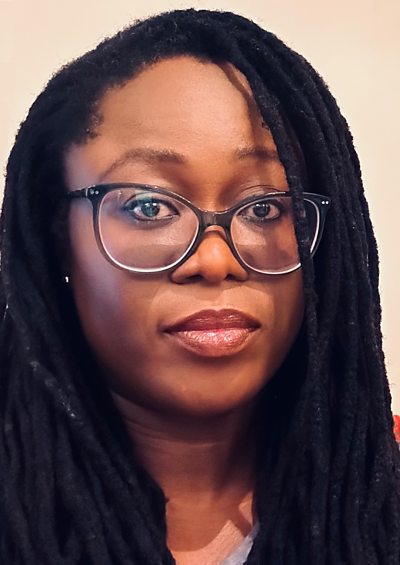
NK'IRU. (CONT'D)
I require deadlines. I hate them, but I require them. So even when I don't have them officially, I give them to myself. And then I have a friend who does accountability for me. She helps me create deadlines and but there's a part of my brain knows that it's a fake deadline, right? So I'll still skirt around it somewhat, but I kind of know that, listen, you have to do this. This production company is asking me to submit this thing. You have to do it. Your agent is going to be embarrassed if you don't do this. So that's how I create that phantom deadline that sometimes works, sometimes doesn't work. But you know, maybe if I miss it, it will be by just a few days but if I didn't have a deadline, I'll just keep going.
So there was a time of production company asked me to send in something and I thought I'd give it to them in three weeks. It wasn't ready in three months because there was no dates. So I have to say to my agent, listen, give me a deadline. It's not your work, but just give me a deadline. Tell me to submit this thing at so-and-so time.
Another thing I do is I vary my working spaces. This is my office. But sometimes I get really anxious when I walk in here. If I know that I'm owing a script debt or I'm supposed to be pitching then I just feel really pressured when I come here. So what I do is I split my work. Say, for the sake of this conversation, I'm writing something that requires 15 scenes. You know, I write 2 scenes here. Then I go to my bedroom. I write two things there. Then I go to my partner's bedroom. I write two things there. I go to the staircase. I sit on the staircase. I write 2 scenes just like that. That's the only way for me to do it because if I stay in one space, the pressure will be too much for me. Then I will not do it down. Move around.
KAREN
I just wanna go on from something that you mentioned, which I think we might all have something to say about in that you have an accountability buddy, I don't personally have that. I just wondered Kat, do you have anything similar? Do you have an accountability buddy or do you have a support group? How important do you find that?
KAT
So I don't have an accountability buddy, like someone who's like, 'ohh, check in on this'. I have to do lists because I mean, the shame cycle for myself, is enough. Often I'm working on Commission, so I'll have a script editor and there's a deadline which holds me accountable.
Also, I use my own development projects as treats. This is to trick the dopamine in my brain. I'm like, 'right, if you work seven or six hours on this, if you get 10 scenes done today, you can spend 30 minutes on your development project'. It’s like a little lollipop, like madness.
I do have writing groups and WhatsApp groups. I've got very close writer friends, one of whom I met on BBC Writers Northern Voices. She's a brilliant writer called Gemma Bedeau and I adore her. And then I've got a writers group of five women who all got together and we all write in comedy. So I've got a few WhatsApp groups where we just check in on each other as humans as well. Like 'I'm feeling rubbish about this' or 'I got rejection today'. 'Oh, that's stupid! They don't know what they're on about. They're missing out!'. It's that level of community. So I always think your kind of horizontal networking and finding your little gang is always is lovely, whether they hold you accountable or whether they're just there to say, 'I've had a bad writing day. GRR!'
The BBC writers Open Call script submission window will be available from 12pm (noon) on Tuesday 5th November to Tuesday 3rd December 2024. For further information and accessibility support - such as a downloadable PDF of the application form - can be found on the Open Call opportunity page.
For other writing opportunities from the wider industry, please visit our Opportunities Page.
The next Writers’ Access Group application window will be announced in Autumn/Winter 2025.
Latest blog posts
More blog postsSearch by Tag:
- Tagged with 20242024
- Tagged with BlogBlog
- Tagged with TipsTips
- Tagged with Writers Access GroupWriters Access Group
