
How to Structure a Solid TV Series
We turned to TV Drama Producer and Script Consultant Yvonne Grace for some advice.

Writing for series television requires a specific skill base and a mindset which involves firstly thinking of the Big Picture – the macro view of the story as a whole, and then honing in on the micro view – the smaller, incremental beats of the series storyline.
The initial spark of inspiration can start with perhaps a group of characters you've always had in your mind, or a place you would like to drill into dramatically, or a theme – perhaps one of loss or new beginnings. There are as many sparks of inspiration as there are writers; fortunately I have yet to come across a writer who is lacking in ideas - but without a solid structure; a skeleton to hold up the bones of the story, your ideas won't land and the inspirational element that made this unique to your voice, will not be heard properly.
This is where structure comes in. Lean into the process of shaping and incrementally beating out your series storyline before you have even considered writing the pilot script. The pilot is the first increment of story along the arc of the series as a whole and a well written pilot – that first 60 minutes – will sell the rest of the series to a potential producer, so planning and outlining everything beforehand will pay dividends in the long run.
The thing to remember about writing a series as opposed to a single piece of drama, is that each episode needs to have a relation to the episode it has picked up from and the one it will hook into. Think of the episodes in your series as train carriages – one hooking on to the next – the whole thing running along the track from the start point, through the midpoint to the landing point.
Television series structure is primarily focused on firstly breaking down the series storyline – or Narrative Throughline as I call it – into incremental parts and then ensuring that all storylines running through the series as a whole, are woven together to create a cohesive piece of series storytelling.
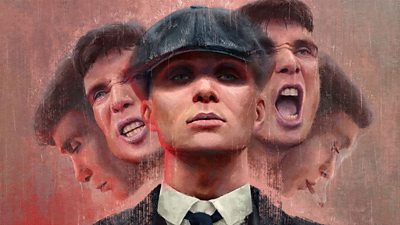
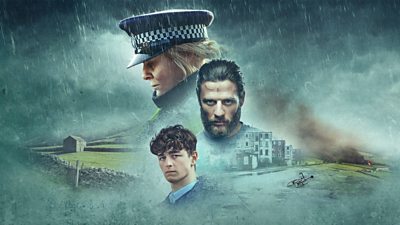
There is never one element sitting alone in television structure, the whole should be linked together. A visual is good to help get this across, so I talk about 'the necklace' in my editorials with writers. The string on which the beads of the necklace all hang, is the Narrative Throughline – the story that links the whole piece together. This, (again in my process at least) is the same as the title of the series. Titles are so important to a well structured television series. The best ones do the first all important job of logging a sense of the world in the audience's mind. Peaky Blinders. Happy Valley. Alma's Not Normal. Detectorists. The beads of the necklace are the individual episodes but all are linked by the series narrative throughline and to each other – they hold the piece together but require the tension and connection of each individual element to make the whole.
The key to creating a strong television series is to make it appear to an audience that there are no obvious joins in the structure – to them it should feel like a seamless telling of a story from episode one to six (and beyond). Only you, the writer, will know where those joins are and how you went about creating them.
Consider firstly how you want to start your series – what is the entry point, the way in? Here you need to focus on who is sitting at the centre of the world you are creating. This can be a single character, a couple, or an ensemble of characters working together to present the stories within the series. Entry point, Midpoint and Landpoint are the focal points of good series structure. That applies to the narrative series throughline and to each individual character's storyline. To create these, good television structural writing requires solid character development.
I don't talk about creating character biographies when I work with writers – I talk about writing character arcs. The arc is a progressive shape, there is a clear jumping off point (when the character starts their story journey through the series) and then the arc builds via a series of trials and errors experienced by this character, until they reach their midpoint. This is the point in the character arc where the writer creates a situation whereby after this point, nothing will be the same for the character – they have come so far, learned so much, but there is still another half of the arc to complete before the character can land, having learned all you (the writer) requires them to learn. Character development is the bedrock to shaping the series structure – one works seamlessly with the other.

If you consider any television series you love to watch or wish you had written, it will most likely contain the elements I have outlined here. Good planning, confident control of the series arc as well as each character arc within the overall series, a connection or hook point between each episode and an overall series structure that has a momentum – a story engine – that once started is hard to stop motoring. All bingeable series have these elements.
So, when you consider your next television series – make sure your world has a strong story engine at its heart and that the story can be told incrementally and episodically via the characters you create. Make sure their individual storylines weave together to create a dynamic whole and that each character who carries significant narrative weight has a strong entry point, midpoint and landing to their individual storyline.
And when in doubt and even if you are not, watch any series written and created by Sally Wainwright – much of her television writing follows the principles I set out here and she is, to my mind, one of the best television writers working today.
About Yvonne Grace
Yvonne is an award-winning television drama producer with 30 years experience in series development and production. She has worked on Coronation Street and EastEnders as a script editor and has produced over 270 hours of television to date – including Holby City (her series was BAFTA nominated) and was responsible for the final incarnation of Crossroads which she Executive Produced. Yvonne has worked with many great television writers including Russell T Davies, Sally Wainwright and Paul Abbott. Script Advice is her script consultancy from which she runs popular training programmes for writers and script editors and works one-on-one with writers to help bring their projects to the market. She has written two best selling books published by Creative Essentials: Writing for Television Series Serials and Soaps and From Creation to Pitch, which are set texts for MA colleges in the UK.
Related Links
- Read more blog posts with tips and adviceOn the BBC Writers blog
- Read Scripts including Happy Valley, Alma's Not Normal, Detectorists and many many moreIn the BBC Writers Script Library
- Watch interview with great writersIn the BBC Writers Be Inspired collection
