
Follow the Money
Ayad Andrews introduces his new Audio Drama, which explores the genesis of the landmark film about the Watergate Scandal, All the President’s Men.

In 1976, America was still reeling from the Watergate scandal. President Nixon had resigned and public faith in its politicians had been shaken to its core. Into this febrile climate arrived All the President’s Men, a film that would become one of the most celebrated American movies of the 20th century.
Ayad Andrews' new drama Follow the Money tells the story behind the creation of the film.
In 1974, as reporters Bob Woodward and Carl Bernstein’s investigation gripped the nation, Robert Redford secured the film rights. He persuaded his friend, Oscar-winning screenwriter William Goldman, to adapt the book while the scandal was still unfolding. But what began as an exciting collaboration soon became a creative battleground.
While Goldman agonised over structure and clarity with the sprawling investigation material, the journalists argued for accuracy and Redford pushed for urgency. As production intensified, Goldman felt less like an artist and more like a machine, churning out draft after draft to satisfy competing visions until he eventually left the project. The film went on to critical acclaim with Goldman winning another Oscar for his work. But the cost was personal, with his friendship with Redford becoming collateral damage.
Listen to Follow the Money now on BBC Sounds
Ayad Andrews explains the drama's development below.
It all began with a speculative email in August 2024.
I had an idea for a radio drama about the making of the 1976 political thriller All the President’s Men, and how its turbulent production ruined the friendship between producer/star Robert Redford and screenwriter William Goldman, one of my heroes. With the film approaching its fiftieth anniversary, I felt I had a good answer to one of the key questions often asked at the pitching stage: why this story now?
I sent the email to CPL, a company with a solid track record in making plays for BBC Radio 4’s Afternoon Drama slot. More specifically, I was targeting their Head of Radio, Liz Anstee, whose recent credits included Turning Point: Mae West, written by Tracy-Ann Oberman, which was up for a BBC Audio Drama Award.
Liz’s reply was encouraging but direct: was I confident I wouldn’t infringe copyright by dramatising what happened, what exactly caused the rift between these two movie legends, and could it sustain a full-length drama? Once I’d answered those questions, and sent a sample script of my writing, Liz went away to consider. By November I had my answer - she was in.
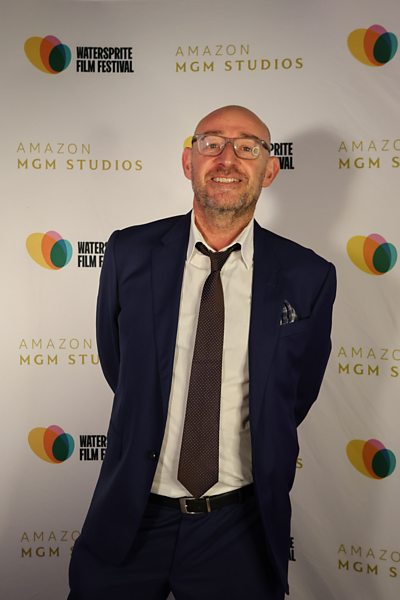
The first stage of the radio drama commissioning process is a 300-word proposal. There’s no room for great detail, but just enough to convey the essence of the story, your credentials, and a suggested cast. I submitted that in March 2025. By mid-July, we learned that Follow the Money had been selected to progress to the next stage.
After a brief celebratory “hurrah!”, I returned to work. The next hurdle was a 1,200-word proposal, this time telling the full story in prose, beat by beat. But with no feedback on the initial submission, I lacked a clear sense of what had appealed to the commissioners. I decided to lean into what I loved most about the story, the clash of Hollywood egos, and trusted that instinct. I had two months.
In October, the final decision came via a delighted phone call: we’d been commissioned as an Afternoon Drama pick for the following year.
Because I’d cheekily requested a transmission date of April 2026, exactly fifty years since the film’s release, and the commissioners agreed, the schedule was tight. My first draft was due by mid-November, after which Liz would begin casting.
I wasn’t starting from scratch as I’d been working on the project for over a year, but turning research into drama is its own challenge. I was writing about real people, and that brings constraints. You can shape events, but you’re running a risk if you invent things wholesale. Not least because the team at BBC Compliance need to review the script first for legal risk assessment. It took four drafts before everyone was satisfied.
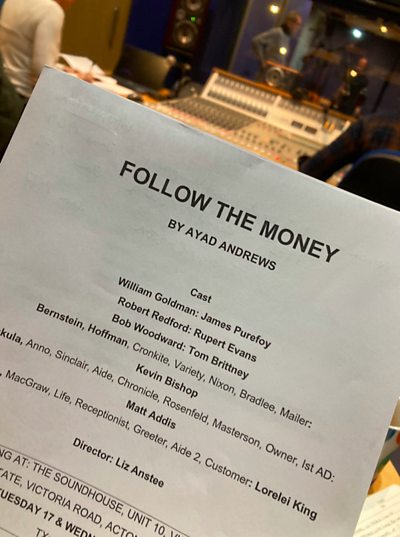
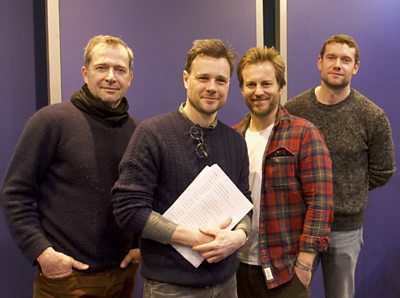
There’s a saying that no script is ever finished, only abandoned. That was definitely true in my case. Left to my own devices, I’d probably still be rewriting. Instead, with the script now locked, a fantastic cast assembled, and a studio booked, we moved into production in mid-February.
What I hadn’t anticipated was the emotion of the recording itself. Sitting in the gallery, watching the actors at work, I felt an unexpected brief sadness about an hour into the first day. Not because anything was wrong, quite the opposite. The cast were clearly enjoying it, as was I. But I knew it would all be over within 48 hours and I was having a blast. If you ever find yourself in that position, savour it. And get everyone to sign a copy of your script - I didn’t, and I regret it. Rookie mistake.
Even after recording, there was still a long way to go. Liz and our sound designer Jon Calver began the detailed work of shaping the final piece: selecting takes, layering sound effects, adding music, and refining the edit to broadcast standard.
Then came an unexpected problem. The Afternoon Drama slot is a strict 44 minutes - bookended in our case by The Archers and Money Box Live. No room to manoeuvre. I thought I’d nailed the page count but our first cut ran 53 minutes; nine minutes had to go. Liz generously gave me the first pass at cutting it down. And I tried, I really did. But it still wasn't enough. I handed the imaginary shears back to Liz and invited her to be ruthless.
The finished drama aired on April 22nd, 2026. I listened live, drink in hand, too anxious to sit down. It brought back the joy of those studio days, and this time I made sure to enjoy every moment.
In truth, this journey didn’t begin in August 2024. It started in September 2019, when I was selected for the BBC Writersroom (now BBC Writers) Drama Room scheme. Since then, other opportunities have come my way, but that first step was crucial. I was in my early fifties when I got that break. There’s a perception that such schemes favour younger writers, and that may be true in some cases, but I can say with certainty I wouldn’t have reached this point without BBC Writers’ support and engagement with my work.
As for Liz’s original question, what caused the rift between those two Hollywood figures, and could it sustain a full drama? I’ll leave you to discover that for yourself.
Related Links
- Listen to Follow the MoneyOn BBC Sounds
- More about Ayad AndrewsOn his agent's website
Latest blog posts
More blog postsSearch by Tag:
- Tagged with BlogBlog
- Tagged with 20262026
- Tagged with Audio DramaAudio Drama
- Tagged with BBC SoundsBBC Sounds
- Tagged with Radio 4Radio 4
