Ever heard of the ‘terrible twos’ or 'threenagers’?
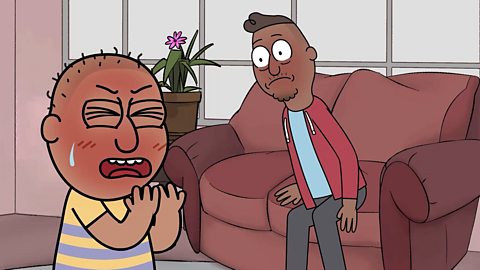
These are just some of the nicknames given to toddlers who can be prone to moodswings and meltdowns, usually when we least want them to.
But these tricky moments are a natural part of young children’s development, as they can’t regulate their emotions in the same way adults do.
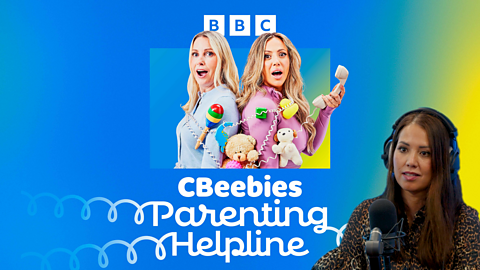
Clinical psychologist Dr Martha Deiros Collado says: “I’m in my 40s and it probably took me until my mid-30s to recognise when I’m angry and state it, rather than show it.
“At age three most children show it - they show it in their behaviour.”
But that doesn’t mean there aren’t things you can do to help your child when they’re feeling angry, sad or frustrated.
In the second episode of CBeebies Parenting Helpline, Dr Martha tells Holly Hagan-Blyth and Charlie Hedges how you can respond to your little one's big emotions, and start to give them the language to express their feelings.
Here are Dr Martha’s seven tips for supporting your child through tears and tantrums…
1. Lower your expectations
It can be hard to lower your expectations, but as Dr Martha explains: children aren’t always able to stay calm or be in control of their emotions – not until their mid-20s and beyond.
“Their brain isn’t developed enough to have a buffer, which is usually at the front of the brain in the pre-frontal cortex.
“This buffer doesn’t actually begin to switch on until puberty.”

2. Name the emotion
“Introduce lots of emotional words," Dr Martha says, to support your child's 'emotional literacy'. “That really should be our first step for children of this age.”
Naming an emotion for your child – e.g. ‘You’re feeling really angry,’ or ‘I could see you were getting frustrated with that game’ – starts the process of your child learning to label their feelings themselves as they grow up.
Presenter Holly recognises this: “Even being able to give [your child] that vocabulary and say, ‘Are you feeling a little bit like this and a little bit like that?’ and recognising it without shame. We could have all done with a bit of that growing up.”
3. Offer children a break
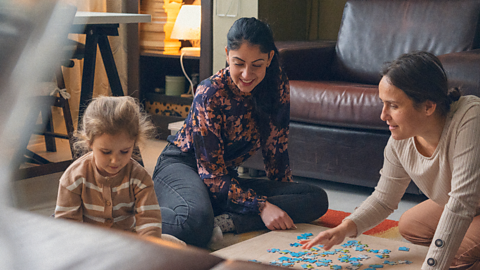
If your child is getting frustrated with an activity – such as completing a puzzle – offer them a break and do something calming, before coming back to the activity when they're ready.
“You want to show your child there are different ways to make this puzzle,” Dr Martha says. “Because often they just [try] one way, and when it doesn’t work they get frustrated.”
4. Try calming distractions
When you’re having a break with your child after they’ve got angry or upset, try something that you think will help to calm them down, whether that’s having a drink, a cuddle, reading a book together, having a dance or anything that strengthens your bond. You know your child best!
Dr Martha adds that drinking a sip of cold water can help regulate the nervous system for both of you.
5. Model getting it wrong
“Bonus tip: and some parents find this really hard… Please mess up!”
Dr Martha explains that, if you do go back to the puzzle later (or whatever activity your child was getting frustrated with), make sure you don’t do it all correctly the first time.
Model getting a puzzle piece in the wrong place or the wrong way round, and then show them how you deal with that situation calmly. It’ll take a lot of repetition but eventually you’ll hear your child acting the way you did when you were faced with a challenge.
6. Give yourself time
If your child is having a tantrum and you find you’re getting more and more frustrated, take a moment for yourself before responding.
Presenter Charlie explains…
“If you step away to get your thoughts where they need to be, it makes everything better. Even going for a wee [helps]!”
Dr Martha continues: “We mirror our kids’ emotions. That’s normal. And when we see our kid feeling frustration, anger, sadness, it kind of comes inside us, and that’s part of co-regulation – that’s a really great thing.
“But we need to remember those feelings are not ours, they're our kids’ and we hold them, we don’t express them back.”
7. Keep a sweet in your pocket!
If you’re feeling wound up by your child’s big emotions, Martha advises: “Get a glass of water, grab a snack if you’re hangry. We’re often not drinking and eating enough – that will make us more irritable and less able to tolerate our kids’ emotions.”
A bonus tip: if you can’t leave your child or the room to gather yourself, Martha recommends carrying a sour sweet or a strong mint in your pocket: “Stick one in your mouth and remind yourself – a mantra can be really helpful – ‘this anger I see is not about me’.”
Dr Martha talks to Charlie and Holly about tantrum trends on social media - and she's not impressed!