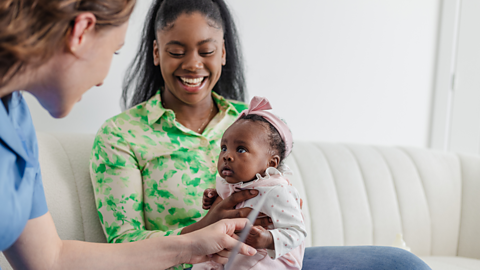
Feeling excited, anxious and nervous is a common emotional response for new dads.
However, if feelings of anxiety or depression become overwhelming or start to affect daily life, it's important to seek help and support from professionals.
Watch our video below for advice from specialist practitioner for fathers, Ruth King.
Corey talks about his mental health when he became a dad
Ruth King, specialist practitioner:
Becoming a dad is a life-changing event. It's understandable to feel that you're excited - but also it's understandable that you'd feel anxious, that you'd feel nervous about that. It's going to change your whole life.
It's important to look after your own well-being, your emotional well-being and your mental health.
Ruth to Corey, (new dad):
It's been a little while since we worked together and I thought it'd be really good to reflect on that journey that you went on. Did you experience a bit of a dip in your mental health, how you were feeling?
Corey:
I remember sort of being sat there at long nights, you know, like especially before Ophelia was born that, you know, I just sat there and looked blankly into a wall and just wouldn't sleep and it just felt like there was this massive sort of, I don't know, weighted blanket on my back and it sort of just kept pulling me down constantly.
Ruth King:
Signs and symptoms are just as unique as the person, but we do know that common symptoms can be negative thoughts, they can be low moods, they can be not looking after yourself and not being able to connect with your baby.
Corey:
The hardest thing for me was to be able to go and be with other dads because I didn't know how they would sort of parent, like how I parented after experiencing a dad group and being able to interact with other dads, you know, my age, older and younger. You're not alone.
Ruth King:
If a dad feels they're struggling, support is readily available. It's important to reach out. In your local area, reach out to the GP and they would be able to provide support that's specifically tailored to working with fathers in that perinatal period.
If you are concerned about your mental health, or the mental health of a partner, you can discuss any issues with your health visitor or a GP.
We spoke to health visitor Rachel Costis for some additional advice…
What might affect a new dad's mental health?
"After a baby's born, much of the attention naturally focuses on the mother and baby's recovery", Rachel says.
"That can leave some new fathers unsure of how best to support their family or feel confident in their new role."
"Many dads are learning as they go. They may be reflecting on their own childhoods, what kind of father they had, what they want to do differently, and the kind of parent they hope to become.
"They may also be supporting a partner who's recovering physically or struggling emotionally. Some men find it difficult to talk about their own mental health because they worry they'll be seen as coping poorly, or taking attention away from their family."
She adds, "I'm glad it's being recognised that fathers can face their own challenges; that doesn't take away from the support mothers need. Both parents can benefit from encouragement, understanding and access to support during the perinatal period."
Many dads are learning as they go."
What are some signs that a new dad is suffering?
Rachel says that there are several signs that a new father may be finding the transition to parenthood particularly difficult.
"Persistent irritability, feeling constantly stressed or overwhelmed, losing interest in things they'd normally enjoy, difficulty sleeping beyond what's expected with a newborn, finding it hard to cope with everyday tasks - these are all signs that someone may need extra support.
"Becoming a parent is physically and emotionally demanding for both parents. Many are coping with sleep deprivation, the pressures of supporting their partner and baby, changes in routine and, for some, the challenge of balancing work with family life.
"It's completely normal to feel overwhelmed in the early days of parenthood. But if those feelings are persistent, worsening, or beginning to affect your daily life, relationships, or the ability to enjoy time with your baby - it's worth reaching out for support."
Rachel emphasises that like any new parent, fathers don't have to cope alone. Speaking to a partner, family member, friend, GP or another healthcare professional can make a real difference.
The NHS have advice about postnatal depression, including for dads.
It's completely normal to feel overwhelmed in the early days of parenthood."
What support is available?
Rachel encourages fathers to seek support if they're finding the transition to parenthood difficult.
"Talking to other dads can make a real difference. Whether it's a local dads' group or simply speaking with friends who have been through the same experience, knowing that others have faced similar challenges can help people feel less isolated and more confident."
Talking to other dads can make a real difference."
If a dad is concerned about his mental health, a good first step is to speak to a health visitor. He can contact the service directly to arrange an appointment or ask for a phone conversation if that's easier.
Health visitors are there to support the whole family, and they can listen, offer advice and help people access further support if needed.
"Asking for help isn't a sign of weakness, it's a positive step towards looking after yourself and your family. The earlier someone reaches out, the easier it can be to get the right support."
Check out our article on the science of fatherhood.
The NHS has guidance about mental health.
BBC Action Line has information and support for mental-health.