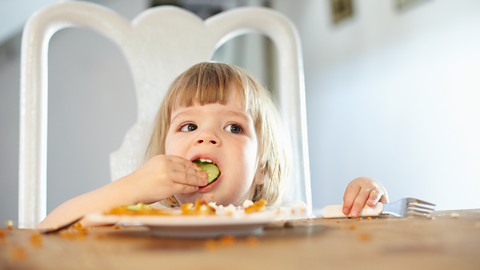
‘Fussy’ or ‘picky’ eating is a typical behaviour in toddlers, particularly from the ages of about 18 months to three years, when a child’s need for greater independence kicks in.
That’s not to say it’s not a stressful time for a parent, but understanding what’s ‘normal’ and having some tips on how to navigate this stage is a good start.
Charlotte Stirling-Reed is a baby and child nutritionist. Her message to parents dealing with fussy eating is: "Please try not to worry too much because it’s very, very typical… It’s a normal part of many children’s development.”
In this episode of the CBeebies Parenting Helpline podcast, Charlotte tells Holly Hagan-Blyth and Charlie Hedges why your child might start to turn their nose up at certain foods and what you can do to help…

1. Allow your child some autonomy
“[Young children] don’t have control over anything else going on in their lives, but something they can control is what they put in their mouths.”
Caller Chloe from Northern Ireland’s two-year-old son has started saying ‘no’ to foods he used to enjoy.
Charlotte says: “There’s actually a phase at around 18 months that they hit called ‘neophobia’, which is the fear of new or unfamiliar foods, and sometimes that can knock on to other foods that they’re a bit more familiar with.”
She advises allowing your child not to eat a food if they’re saying they don’t want to.
“It might sound counterintuitive because, as you’ve said, you’re nervous about them going hungry and not eating the food, but actually what’s really important is allowing them some autonomy around that mealtime.”
Instead she puts a few extra, healthy side dishes she’s made onto the table for her kids, that they can tuck into if they choose to.
2. Get them familiar with different foods
“She’s not going to like everything but she will try it.” Charlie Hedges
“Essentially what children like is familiarity, so the more they become familiar with all these foods the more likely they are to accept them,” Charlotte says.
“Get [your child] involved in a little bit of baking, cooking, reading about food, because all of this – especially for families who do have fussy eaters – can really help them to engage in food a little bit more.”
Charlie adds that with her two-year old: “Just getting her to put the veg in the pot, she’s asking questions, ‘What’s this?', 'What’s that?’ and I do feel like that has helped so much because she will try basically anything now.”
Charlotte agrees: “Cooking with kids is chaos. But it really can make a difference to their enjoyment of food, seeing what it is and where it’s come from and how you put these things together.”

3. What you do at home is most important
Charlotte says don't worry too much if your child goes out to a party and eats lots of cake and biscuits, what matters most is what you serve up at home, and how you approach food.
“They’re literally watching us, observing us, from day one of them starting solids and having food with us.
“I wouldn’t have the conversation about ‘good’ and ‘bad’ food and what’s healthy and what’s not. I’d model it. I’d show them what moderation, balance and variety is, and also try as much as you can to instil a love for food.”
4. A child’s appetite can naturally dip
Charlotte says: “Just like we don’t always have the same appetite every day… it’s exactly the same for our kids.”
It can help to think about what your child has eaten over a week rather than just one day.
Charlotte also suggests ‘responsive feeding’, where you react to your child’s appetite and let them dictate how much they eat: “We set a structure – [having] breakfast, lunch, dinner – we offer it at a time and we choose what foods, but we try and let them decide how much.”
She adds that after the age of one, a child’s growth rate starts to slow a bit, which “can often come with an appetite dip… there are peaks and troughs all the time”.
If your child is active and growing, then they’re probably getting enough food. However, if you’re concerned about your child's limited diet or you think they may have other sensory issues, then it’s always worth discussing it with your GP.

5. Embrace the hacks
Charlie, Holly and Charlotte are all big fans of affordable frozen or tinned fruit and vegetables.
“Sometimes there’s even more nutrition because they’re picked when they’re fresh, they’re frozen at their freshest level," Charlotte says. "And also they’re so useful, they don’t go off, they’re really easy to chuck in foods."
“A tin of chopped tomatoes, a tin of lentils, stir it together, add some frozen veggies to it and ‘voila!’, you’ve got a really healthy, nutrient-dense pasta sauce.
“If you’re in a rush, then things like porridge can be a really good option. Also things like something on toast… beans on toast is a really nutrient-rich option.
“But also I always talk about adding extras at mealtimes. For example things like ground nuts, ground seeds, a handful of frozen fruit - when you’re cooking a dish, a handful of frozen veggies added to it.”
Nutritionist Charlotte Stirling-Reed chats to Holly and Charlie about fussy eating and being positive about food