Sleep during pregnancy can be unpredictable, but getting enough rest is an important part of supporting both your wellbeing and your growing baby. From sudden exhaustion to finding it hard to get comfortable, changes in sleep are common throughout pregnancy.
Watch our video below for advice from midwife and lactation consultant Jyoti Gandecha.
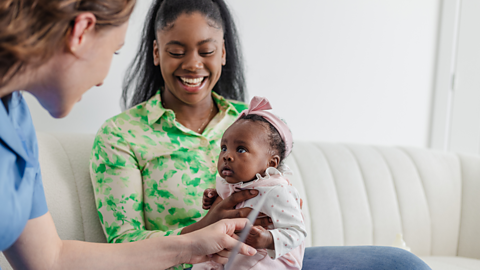
Midwife demonstrating a safe side-sleeping position during pregnancy..
Sleep changes a lot during pregnancy.
It's normal for it to feel challenging.
However, small changes can make a huge difference to your sleep.
This pillow will just wedge underneath your back.
So if you roll a little bit further, that can support your lower back, but also stop you rolling onto your back.
So it creates a little tilt.
So now when you're sleeping your back in general is supported.
If you wake up on your back, don't panic, just roll over onto your side.
The position you fall asleep in matters the most, as that's where you'll spend the longest time.
So, if you lift your right leg up, we're going to put two pillows down and you can see whether you find that comfortable.
We can always remove the pillow.
Yeah, it's a bit high, can I?
Yes.
Okay, that's better.
Great, so this is helping with your hip alignment and supporting your lower back.
We're now going to use a pillow to wedge underneath the bump.
How does that feel?
Yeah, that feels comfortable, thank you.
Perfect. Drink plenty of fluids earlier in the day to avoid toilet trips at night and try to skip caffeine after lunch.
Focus on what feels safe and comfortable for you.
If you're struggling, don't hesitate to contact your midwife.
How does pregnancy affect your sleep?
"During pregnancy, your body is working harder than usual, so feeling tired is completely normal."
Jyoti says: "Sleep is when your body recovers and grows. Pregnant women naturally get more tired, so rest becomes even more important"
How sleep can change during pregnancy
First trimester: Hormonal changes can leave you feeling very tired, even if you're sleeping well at night.
Second trimester: Many people find sleep improves as early pregnancy symptoms ease and they feel more comfortable.
Third trimester: As your baby grows, discomfort, side sleeping and frequent trips to the toilet can make sleep more difficult.
Why is side sleeping recommended?
"From around 28 weeks, sleeping on your side is recommended. Many people start getting used to it from around 24 weeks.”
Jyoti says, “Side sleeping helps maintain good blood flow by reducing pressure on a major vein. The good news is that either side is fine, so focus on finding a comfortable position that works for you.”
What are the most common sleep problems during pregnancy?
Waking up more often than usual is common during pregnancy. Frequent trips to the toilet, finding it hard to get comfortable, baby movements, and heartburn can all affect sleep.
Jyoti explains: "Many women find their baby is more active when they're lying down. Extra movement can make you more aware of your bladder and interrupt your sleep."
Safe sleep myths and worries
“If you wake up on your back after falling asleep on your side, there's no need to panic. Don't worry if it happens. Just roll back onto whichever side feels comfortable and go back to sleep," says Jyoti.
She also reassures parents that side sleeping isn't necessary throughout pregnancy: "A lot of women think they need to sleep on their side from very early on, but that's not true. Most people only start getting used to side sleeping from around 24 weeks."
How can I improve sleep during pregnancy?
Small changes can make a big difference. Supportive pillows under your bump, between your knees or behind your back can help you get comfortable, while gentle exercise, relaxation techniques and a calming bedtime routine may make it easier to unwind.
Jyoti also recommends listening to your body.
If you're tired, it's okay to rest."
When should I speak to my midwife about sleep?
If you're struggling to sleep for a long period or feeling exhausted because you're getting very little rest, speak to your midwife. They can help identify possible causes and offer support or further advice if needed.