| 29 October 2014 |

| |
| BBC Homepage | | |
| |||
| Contact Us | | |
People and PersonalitiesYou are in: Beds Herts and Bucks > People > People and Personalities > Jobson's gone digital! 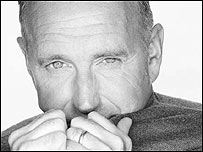 Richard Jobson (Pic: Rankin) Jobson's gone digital!The former Skids frontman turned film maker Richard Jobson, has based himself in Luton to create digital magic! At just 16 years of age, he was the frontman of punk group The Skids and now 30 years later, Richard Jobson is making his way in the world of film - via a TV presenting career. RJ Films is based in Luton's Hat Factory and his latest project premiered there last Thursday (13 Dec 2007). 'Am I Digital' is a series of short films, written and directed by Jobson, that mix science fiction, kung fu and Manga style action and are aimed specifically at the download market. The project, which saw RJ Films collaborate with Screen East, brought together a team of creative professionals with a wide range of production and post production skills and experiences, but has also engaged many young people in the town who participated as film extras. Many of the team will continue to work together at the Hat Factory on other projects in the near future - hopefully with further investment by Screen East. Sony Entertainment has been so impressed with this cutting edge production that they will showcase the films on the PS3 platform which connects with over five million people worldwide. Richard told us all about the project and how his approach to his film is similar to his approach to his music. Can you tell us more about what the 'Am I Digital' project is?Richard: It's a little like a live action Manga, it's like an East Asian comic book, a graphic novel coming alive on the screen. There are three stories, all about one minute, 30 seconds long, and the idea was that we would do them as cell phone downloads, like a bi-monthly comic. We've had some success with a previous film that we made in North America [I Am Digital], which had a huge amount of downloads for a telephone company and they encouraged us to make some more, so we came here to Luton and made them and now Sony have taken them off us because they are so excited by it. It's very exciting for the future because we are going to do a hell of a lot more of them. Why Luton?Richard: I travelled through Luton every day on my way to London. I live about 10-15 miles north of it and I always wondered what it was really like. It's got a really bad reputation but I thought it can't be as bad as that. So I visited the film festival Fimstock, which I thought was great, and then I started to meet people at the Hat Factory and started to uncover really great things about the place. I love the atmosphere. Elements of it have an edge and other elements feel really cool and relaxed. It has lots of different qualities, so I really don't understand where all the negative press has come from. It needs to do a bit of PR so hopefully this is one small step in that direction. But I think this is a place that's changing. It can't remain tired forever and it's certainly not tired at the moment. There's a lot of people looking at this place going "Wow, this has got great potential, let's go" and I'm one of them. You found a lot of local talent didn't you?Richard: I did yes. Originally I thought it would be about 85 per cent [of people] imported from other places but I'm really pleased that it worked the other way. After a bit of scouting around and word of mouth and checking people out, about 85 per cent of the people used in the project were local and that's the technical people as well as the extras. But I really wanted to focus on that and try my best not to let the town down and find the talent here - and I did in the end. These films are action-packed and not dialogue films. You say that you want to move away from the idea of films where there are two people talking in a room and do something different?Richard: The grammar of cinema to me is all about sound and the visuals but British cinema essentially is two people in a room shouting at each other or laughing together. The tradition of British cinema is based on language and the stuff that I love has got nothing to do with language, it's much more to do with creating a kind of visual grammar and making things exciting. Action stories have very little to do with people talking because they are so fast-paced and people talking just slows the whole thing down. The stuff that inspires me is essentially from East Asia - I think in a past life I must have been Chinese! You have said that these films are a little bit biographical in that they are finding different genres and that kind of describes your journey in the way of film?Richard: Yes - in essence the story is kind of about a heroic figure going through three different genres of cinema - social realism, anime and film noir - and these are three areas that I've walked into in my small journey in cinema too, because I'm finding my voice. Sometimes in our culture, especially in the era of the X-Factor type celebrity-based world that we live in, you don't get to make mistakes anymore, everything's public. I've tried to quietly get on with it and become technically excellent and also find all the different genres and the things that I like about them so I can import all those elements into what will become my voice. People will know you from being in The Skids as a teenager and then from your TV presenting career, but how did you get into the world of film-making?Richard: I was always a film lover. As a child I was unfortunate and had epilepsy, so while everybody else was out having a good time I had to be a little bit more careful, so I spent an awful lot of time in the cinema as a kid! Then I got offered a fantastic job when BSkyB kicked off to become their front of camera cinema person, reviewing and things. It was so easy to do because it was something that I really loved. Then the boss Rupert Murdoch gave me the opportunity to produce my first film and then I got the taste for it. There was no stopping me after that so I had to move on. I couldn't be reviewing other people's films whilst making them. I took the chance of leaving a very successful career behind and moving into something that I always wanted to do and I think you have to do that or you become bitter because you've not It's not easy but it's a world that still excites me. It gets my heart racing with the potential of what can be done. And I'm excited about being here in Luton, it's offering me tremendous scope to do things, and I want them to get excited about me being here too. If you're a vision-thinking person you need support. It can be exhausting because you have the ideas but how do you facilitate them? But I think there are people here now in the infrastructure of the Council, and beyond, who can see what's going on. They have a really clear vision of where this place is going. I think it's going to be one of the most exciting places in Britain in the next 20 years. It's interesting that you have said that you feel just as excited now as you did when you were 16, standing there with your guitar. Do you have the same philosophy towards film that you did towards your music?Richard: I think so yes, it's kind of digi-DIY! As a kid I couldn't really play the guitar and I couldn't really sing but I learned three chords and I had something to say. That's the most important thing - you've got to have something you want to say, to communicate to people and they might want to listen to you - but it's their choice of course. It's the same with film-making. I feel I've got something to say and I want to say it in a particular kind of way and have my own voice. The digital revolution has enabled people like myself and others to create an interface between software and hardware and who can do things with not very much money, create magic with nothing. The budget for 'Am I Digital' was minute. So you've still got something to say - you're just doing it in a different way?Richard: I think so. If I had nothing to say then I would just shut up. It's really dependent on whether people want to listen, you can't just ram it down people's throats. But I think we're in a strange period at the moment in the UK. We've been absolutely soaked with this kind of sausage factory of talent, the Simon Cowell machine, and I think people are beginning to react against that. I might be an old punk with a bus pass but I'm still angry about that crap and I still want to say something about the world and the way I see it. And if I feel like that at my age, hopefully there are people around 16-25 who think in the same way. I've always punched beyond my weight and sometimes it doesn't work and I fall flat on my bum but that's OK. I don't mind the humiliation of that because I learn from my mistakes. But we live in difficult times, we're not allowed to fail any more, everything has to be a success immediately or you're finished and that's bad. In the days when I was in the band you could learn from your mistakes, move on and improve as an artist and as a human being but nowadays you don't get that opportunity. You're only given a few seconds and if it doesn't work you're finished and that's wrong. The Skids did some gigs this year in Edinburgh, was that it or are there going to be any more?Richard: No, that's it! It was our 30th anniversary. U2 and Green Day had just covered one of our songs called "The Saints Are Coming" as a benefit for all the kids in New Orleans who had lost their musical instruments in Hurricane Katrina and suddenly there was a huge resurgent interest in the band because people had just forgotten all about us. We were encouraged to do something about our 30th anniversary so we did it! I went on stage and I felt like I was 16 and did the old back flip that I used to do but when I landed I was 116! So I won't be doing that again! I think there are too many people at the moment who are doing it for the wrong reasons. There are certain musical forms where you can become graceful as you get older, [such as] Blues and Jazz and to some degree R & B, but punk is all about being young. I was 16 when I joined The Skids and I was 21 when I left and I think that was about right. But now when I see a lot of old punk bands still out there and doing it and they're just doing it for the money, it's quite cynical. I feel that's wrong somehow. Led Zeppelin playing again is another matter - they are almost God like - but Take That, I wish somebody would shove them into the Atlantic Ocean! And all the other ones that follow in their wake. So no, we'll never be playing again ever - that was it! So film is the future then?Well yes - as long as I get to make them I will make them, but if I can just enthuse people to feel that they also can do it, then I've done something good. And there's a feature film in the offing?Richard: Yes - a couple of films. I've got a thing called 'New Town Killers' which I'm hoping to show in Edinburgh in the early part of 2008. And I'm going to take the character in this project [Am I Digital] and turn him into a movie character and shoot it here in Luton - it's going to be a live action Manga. We'll be shootin' in Luton! last updated: 04/04/2008 at 12:03 Have Your SaySEE ALSOYou are in: Beds Herts and Bucks > People > People and Personalities > Jobson's gone digital! |
| | About the BBC | Help | Terms of Use | Privacy & Cookies Policy |