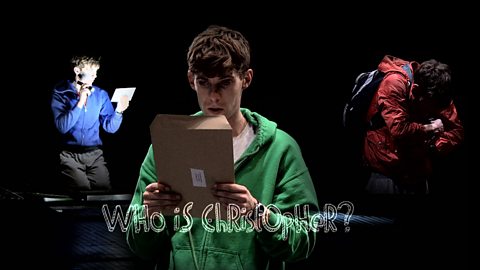
Judy:
I said I wanted to explain to you why I went away.
Nicola:
The audience meets Judy through her letters. So you only know this woman through her words.
Judy:
Well now I have, lots of time.
Nicola:
When you read the letters in the book, it could be, um, quite flat. Because it’s just the written word. When you put a human being into those letters and you have her walk on stage, and be in the same space as her son… you can see what it costs her to write those letters.
Judy:
So I’m sitting on the sofa here with this letter and the radio on… and I’m going to try and explain.
Nicola:
The tension is building because although they are not speaking to each other… erm… he’s coming closer to his real mother on stage saying this letter and that became very interesting that he is getting physically nearer to her with the train track, not looking at her engrossed in the train track.
Judy:
You grabbed the chopping board and threw it and broke my toes.
Siobhan:
And I remember!
Nicola:
So it was highly emotional.
Judy:
And I couldn’t walk properly for a month. Do you remember? And your father had to look after you.
Siobhan:
And I remember looking at the two of you and seeing you with him and thinking you were really different with him, much calmer.
Judy:
And it made me so sad… cause it was like you didn’t need me at all.
Nicola:
It’s a real build those moments of intensity, for me, where about the characters all inhabiting the same space. Seemingly not communicating but being more honest and open than they ever could be in real life.
Judy:
Really angry! He said I couldn’t…
Siobhan:
He said I couldn’t talk to you.
Judy:
And I didn’t know what to do.
Siobhan:
He said I was being selfish and was to never set foot inside the house again.
Simon:
In a book which is about dishonesty and betrayal and death and love and thwarted love. I think what you really need is a bit of playfulness.
{PING}
Christopher:
Where is 451C, Chapter Road, NW2 5NG?
{A to Z falls from the sky}
Ensemble:
A to Z of London £2.95, you gonna buy it or not?
Luke:
I think that brings the play to life really you can’t have a whole play or a whole book where its tense and its horrible and it's depressing because no one is really going to care about any of the characters.
Mrs Alexander:
I’m going to say something to you now. And you must promise not to tell your father I told you this.
Luke:
You have to make people laugh and you have to make people enjoy themselves and enjoy the characters they’re watching otherwise they won’t care about the dramatic moments.
Mrs Alexander:
Your mother, before she died was very good friends with Mr Shears.
Christopher:
I know.
Mrs Alexander:
No, Christopher I ‘m not sure that you do know, I mean that they were VERY good friends… Very very good friends.
Christopher:
Do you mean they were doing sex?
Mrs Alexander:
Yes, Christopher that is what I mean.
Simon:
I think because my adaptation is very loyal to the book, a lot of the comedy that underpins the tragedy comes directly from Mark’s writing. It comes from his dialogue and his observations. I think maybe what I brought to it was a sense of the playfulness of the theatricality.
Tube Lady:
Get the tube to Willesden Junction or Willesden Green it got to be near der some where…
Christopher:
What is a tuabe??
Tube lady:
Are you for reel?
Marianne:
It takes the audience a bit of time before they realise they’re allowed to laugh between it being very sad and very emotional and very tense and other times when it’s actually quite quirky and fun because…because Christopher sees things in a different way.
Tube Lady:
You see the big staircase through the escalators?
Luke:
I think the comedy comes from Christopher’s very logical way of looking at the world and one of the things Christopher says is about… when he’s asking Reverend Peter’s where heaven is…
Reverend Peters:
It’s another kind of place all together.
Christopher:
There isn’t anything outside our universe Reverend Peters. There isn’t another kind of place altogether.
Luke:
Nearly all of the laughs every night on stage they’re really very rarely coming from someone trying to be funny they’re coming from places of misunderstanding between two people or peoples points of view being completely at cross roads.
Christopher:
And if Heaven was on the other side of a black hole, then dead people will have to be fired into space on a rocket to get there and they aren’t or people will notice.
Video summary
This short film is to support teaching around GCSE English Literature or Drama.
Moments of comedy and tension are explored in the National Theatre’s production of 'The Curious Incident of the Dog in the Night-Time', adapted for the stage by Simon Stephens from the novel by Mark Haddon.
It shows how placing Christopher on the stage whilst his mother reads aloud her letters about how hard she found life with him build tension into the scene.
In contrast to this, we see moments of comedy in the play.
Simon Stephens explains that many of the comic moments came directly from Mark Haddon’s writing.
We see the cast creating these comic moments on stage, such as the interaction between Mrs Alexander and Christopher.
Because Christopher sees things in a different way, the play is quirky and fun as well as being tense and emotional.
This short film is from the BBC series, The Curious Incident of the Dog in the Night-Time: From Page to Stage, made in collaboration with the National Theatre.
It explores how Mark Haddon’s much-loved novel became a multi-award-winning theatre production.
Interviews with the playwright, director and cast and footage from both rehearsal and performance reveal the process of bringing the story alive on stage.
Teacher Notes
This short film could be useful in looking at particular moments of tension when studying the novel as a set text.
Students could be encouraged to explore Haddon's use of humour and how it is translated to the reader.
Students could gain inspiration on how to perform moments of comedy and tension, and in particular, the scenes with Judy's monologues.
Students could also use this to examine how the actors worked together to create moments of comedy and tension if analysing the play as a piece of live theatre.
This short film is suitable for teaching GCSE English literature and drama in England, Wales and Northern Ireland and National 5 in Scotland.
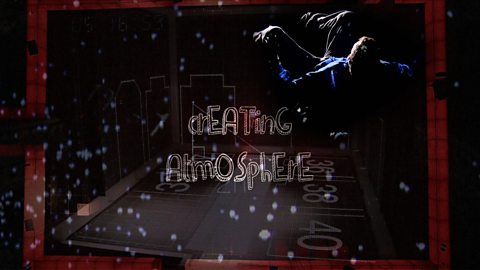
Creating Atmosphere. video
Through interviews with the director and designers, we learn how projection, lighting and sound come together to create atmosphere in the production.
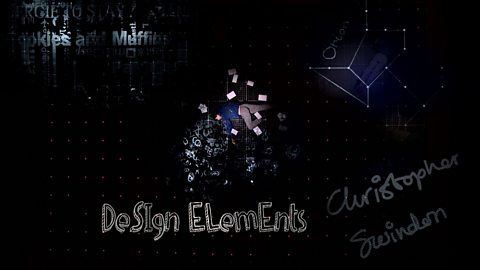
Design Elements. video
A look at how the highly stylised set of the play was designed, featuring interviews with the director and designers.
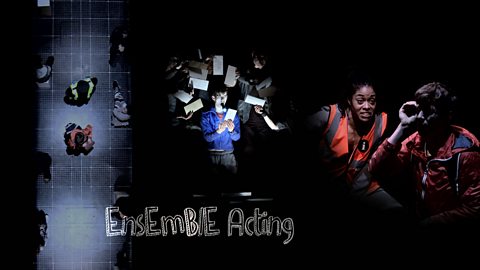
Ensemble Acting. video
The cast and creative team give us an insight into the use of ensemble acting, where a small group of actors play a large number of different parts.
Adapting a Novel for Theatre. video
Playwright Simon Stephens explains the strategies he used in adapting the story of Mark Haddon’s novel into a script for his production at the National Theatre.
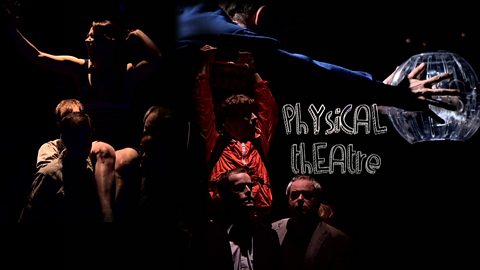
What is Physical Theatre? video
Scott Graham from theatre company, Frantic Assembly, explains what physical theatre is, and how it was used to create the original National Theatre production.
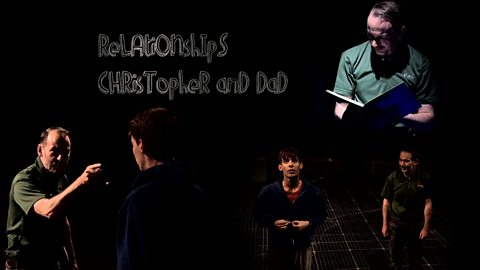
Christopher and his Dad. video
An exploration of the relationship between Christopher Boone and his Dad, Ed Boone, using footage from the original National Theatre production of 'The Curious Incident of the Dog in the Night-Time'.
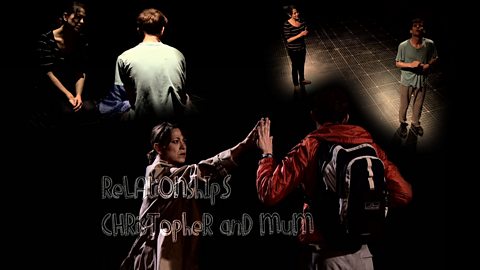
Christopher and his Mum. video
A look at the relationship between Christopher Boone and his Mum, Judy, through interviews with the actors and footage from the National Theatre production.
Christopher and Siobhan. video
A look at the relationship between the characters of Christopher Boone and his teacher, Siobhan, played by Niamh Cusack in the National Theatre production.
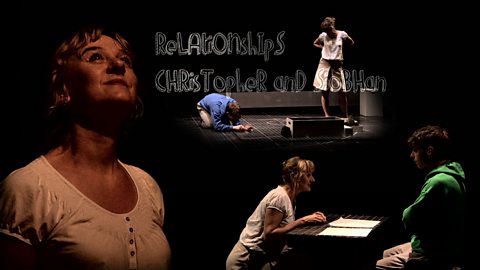
Themes. video
Playwright Simon Stephens explains the themes of the novel and play; family, love, honesty and truthfulness.
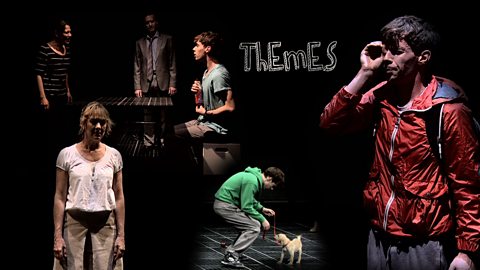
Who is Christopher Boone? video
An exploration of the character Christopher Boone, from the actor and director who originated the role in the National Theatre production of 'The Curious Incident of the Dog in the Night-Time'.