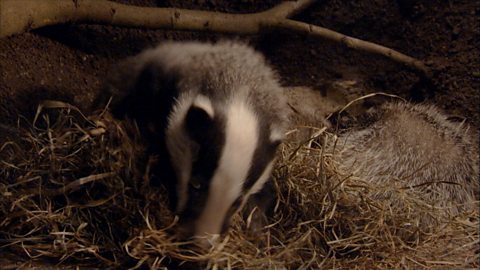
Chris Packham describes how badgers are the biggest animal that lives underground in the UK.
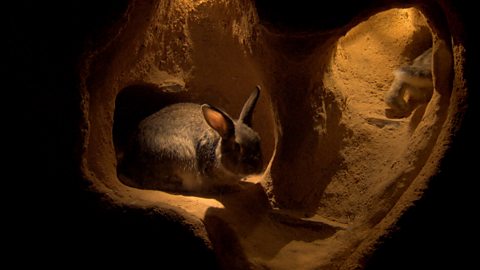
In a man-made sett, cameras are used to observe the badgers playing.
In the wild, a sett is in the middle of the large territory that belongs to a family of badgers.
The main sett is where the badgers live for most of the year and where they rear their babies.
Smaller setts are used in the warmer times of the year so that they can sleep near to where they find food.
Badgers mark the edges of their territory using smelly faeces and this helps them avoid conflict with other badger families.
This clip is from the series The Burrowers.
Teacher Notes
You could start by asking the class to describe the family group that they live in. How many members of their family do they live with? Do they live in the same house all the time, or do they sometimes stay with relatives, or go on holiday?
After watching the clip, you could ask them to describe how humans know which bits of land belong to whom.
What would life be like if we used the same methods as badgers?!
Curriculum Notes
This clip is relevant for teaching Science at KS1 and KS2 in England, Northern Ireland and Wales and at Early and 1st Level in Scotland.
More from The Burrowers:
How do badgers keep clean? video
Chris Packham uses footage from a man-made badger sett to explore how badgers overcome various challenges to clean themselves underground.
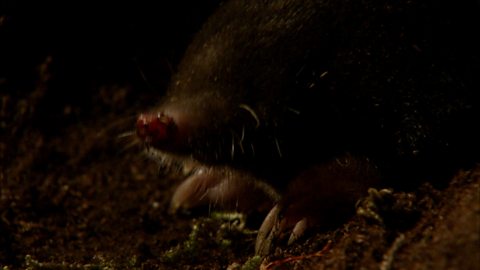
How have moles adapted to live underground? video
Chris Packham observes moles in a man-made burrow and explores the ways that they are adapted for life underground.
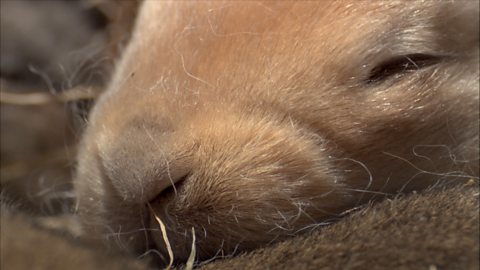
How do rabbit babies live underground? video
Chris Packham visits a man-made rabbit warren to observe rabbits being born and explore how they adapt to life underground.
What is a rabbit warren like? video
Chris Packham investigates a deserted rabbit warren that has been filled with concrete to show its shape and structure.
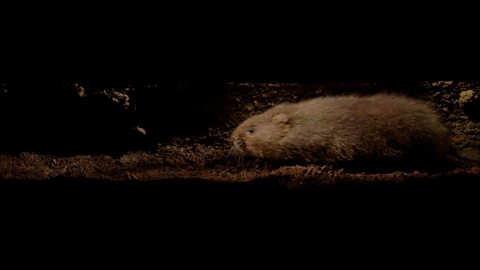
How have water voles adapted to live near the water? video
Chris Packham investigates how water voles have adapted to live in and near to the water.