Edith Cavell, Patriotism is not Enough.
Edith was born in 1865. Her father was a vicar and taught her how important it was to help people. When she was older, she moved to Belgium to become a governess, and later travelled to Austria to find out about helping the sick. She returned home to look after her ill father and decided to train as a nurse. Later, she returned to Belgium and pioneered the training of nurses.
In 1914, whilst Edith was on holiday, the Germans took control of Belgium. She decided to return there, as she felt her help was needed more than ever. Edith nursed the soldiers at her Red Cross hospital. It didn't matter to her which country they came from. She sheltered Allied soldiers in basement hideouts and helped them escape from the Germans into neutral Holland.
The Germans found out about this and arrested Edith. Her punishment was death. Many people tried to get her released, but they could not help. The night before her execution, she told her chaplain that it was more important to care for everyone, rather than be patriotic. She was shot dead by a German firing squad on the 12th of October 1915.
Edith is remembered for caring for soldiers, no matter which side they fought for.
This is the dramatic story of Edith Cavell, a British nurse remembered for her work in Brussels with injured soldiers of all nationalities.
Born in 1865, the daughter of a vicar, she eventually decided to train as a nurse after caring for her sick father.
During her time in Belgium, she pioneered training for nurses.
When World War One broke out, she returned there because she felt her help was needed more than ever.
Edith saved the lives of soldiers from all sides without distinction but also actively helped some 200 allied soldiers escape German-occupied Brussels, for which she was arrested.
She was tried, found guilty of treason and sentenced to death.
She was executed by the Germans in 1915. She is widely regarded today as an icon of courage and compassion.
She famously said the day before her execution: ʺPatriotism is not enough, I must have no hatred or bitterness towards anyone.ʺ
Her bravery was further celebrated when a mountain in Canada was named after her.
Teacher Notes
Edith Cavell loved to draw pictures of birds and flowers. Pupils could be provided with opportunities to create their own work in a range of media.
Pupils could research using books, digital resources and the web and locate Canada and Mount Edith Cavell and write an information sheet about it.
They could also sketch and draw the mountain through using a range of media.
Pupils could write a diary entry from Edith's perspective.
They might be prompted to write about why she became a nurse and why she wanted to help soldiers from all sides rather than just British soldiers.
Pupils could search the web for extracts of Edith's letters.
After reading some examples of her letters, pupils could write a reply.
Curriculum Notes
This animation is suitable for teaching History at Key Stage 2 in England, Wales and Northern Ireland, and at 2nd Level in Scotland.

Attacks by the sea. video
An animation about an attack that targeted key parts of the British coastline and the impact it had on one town.
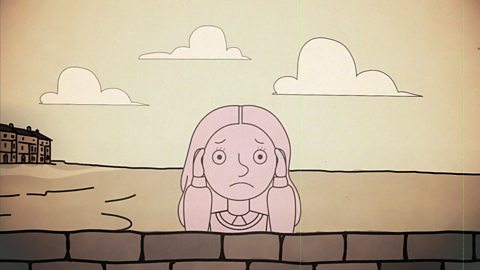
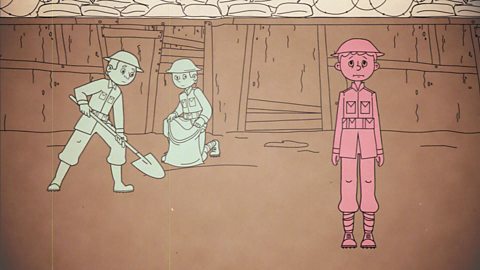
Life in the trenches. video
A look at what life was like in World War One for soldiers on the front line and the conditions that they had to live in.
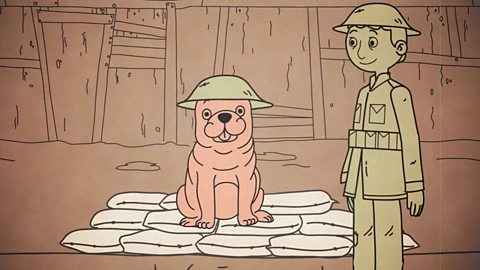
Animals during World War One. video
Animals were key to the success of World War One and this article explains why.
Methods of transport. video
This animation looks at why the various methods of transport were important and how they were used during World War One.
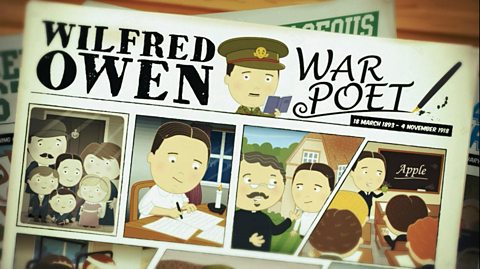
Wilfred Owen's poems. video
Explore the work of Wilfred Owen as a poet and why his writing is important in reflecting on World War One.