This article was originally published as part of BBC iWonder in 2014. It was amended in December 2025
Roald Dahl's career as a children's author is well known, and his phizz-whizzing heroes and demonic villains continue to delight and enchant new generations of readers.
But Dahl also had a lesser-known side, one that included military service, medical invention, adult-oriented novels and macabre short stories, and some of the darkest dramas ever to hit TV screens…
1942
'Shot Down Over Libya'
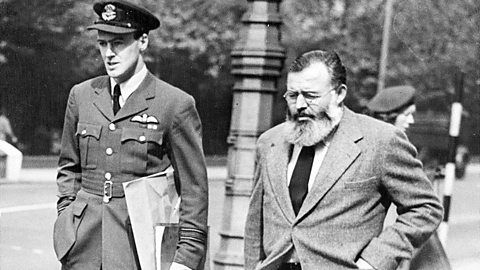
Roald Dahl’s first writing commission, 'Shot Down Over Libya', was published anonymously in 1942 in The Saturday Evening Post. He was 26 years old.
In 1940, as a wartime pilot officer, Dahl had crash landed his biplane in the Libyan desert, sustaining injuries including a fractured skull. He returned to active service, before a posting as Assistant Air Attaché in Washington DC. Here he was encouraged by novelist CS Forester to recount his wartime experiences. The resulting piece, for which he was paid £1,000, was originally titled A Piece Of Cake, but when published was given a more dramatic title – even though Dahl had never been actually shot down.
1946
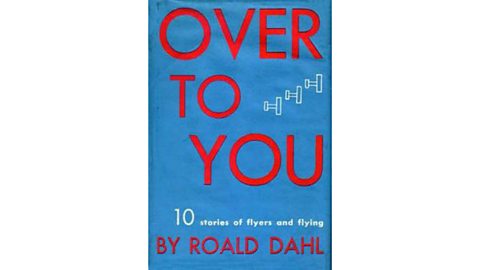
Over to You: Ten Stories of Flyers and Flying
A Piece Of Cake also appeared in Over To You, Dahl’s first collection of short stories. First published in 1946, it featured 10 stories about flying.
The tales in Over To You were based on Dahl's wartime experiences in the RAF, but were more fantasy than biography. He touched upon subjects including off-duty exploits, the pain of waiting for a lover to return from battle and, in They Shall Not Grow Old, the afterlife of pilots. Dahl was still finding his feet as a writer, and Over To You lacks the characterisation and suspense of his later works, but still showed elements of the dark fantasy he would later explore further.
1948
Some Time Never: A Fable for Supermen
Roald Dahl's first novel was a commercial and critical flop upon its publication. It was the first book about nuclear war to be published in the US.
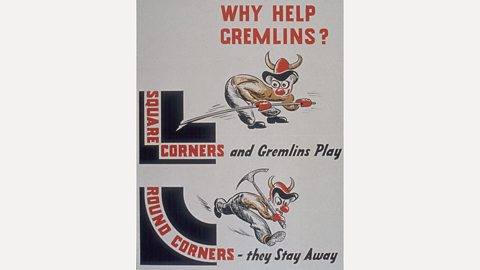
The book, also known as Sometime Never, tells the story of Gremlins who had previously ruled the world but were forced underground by humans. Awaiting their chance to take over the world, they decide to wait until humans have self-destructed without their involvement. The book, a critique of atomic warfare, was never reprinted after its initial run in the US and UK, and Dahl later disowned it, describing it as a "ghastly book" and "not worth reading".
1953
Someone Like You
Roald Dahl's 1953 short story collection Someone Like You explored his taste for the macabre, and showed his mastery of the plot twist ending.
Nine of the 18 stories, including Lamb To The Slaughter and Man From The South, were reprinted in his later collection Tales of the Unexpected, and some were dramatised in the television series of the same name. These are tales of murder, gambling, poison, surveillance and – in The Great Automatic Grammatizator – machines taking over. Dahl doesn't get much darker than this.
1958 - 1961
Alfred Hitchcock Presents
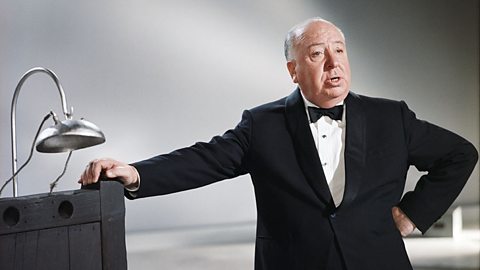
Between 1958 and 1961 Dahl adapted six of his stories for Alfred Hitchcock Presents, a US television series featuring horror, suspense and terror.
Four of the six episodes were directed by Hitchcock himself. The most celebrated is perhaps Lamb To The Slaughter, in which a woman murders her husband with a frozen leg of lamb, later feeding it to the investigating police officers. The story was subsequently remade in the UK for Tales Of The Unexpected, and remains one of Dahl's best known works of adult fiction.
1960
Kiss Kiss
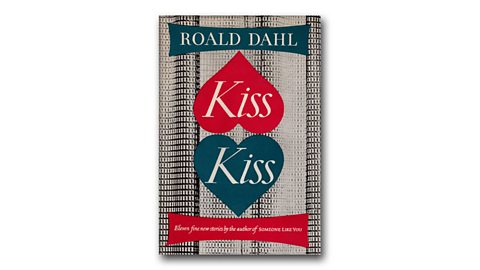
Eleven of Dahl's adult stories – four of which had previously been published by The New Yorker magazine – were brought together in 1960's Kiss Kiss.
The stories often use implication and suggestion instead of direct descriptions of horrific events, and contain the plot twists which had by now become Dahl's hallmark – including William And Mary, in which a dead man's brain and eye continue to operate in a laboratory after his death. The collection ends with The Champion of the World – later reworked as Dahl's 1977 children's book Danny the Champion of the World, which itself contained an early version of The BFG.
1960
The Dahl-Wade-Till valve
Dahl met Patricia Neal in 1951. They married two years after in New York, and had five children together: Olivia, Tessa, Theo, Ophelia and Lucy.
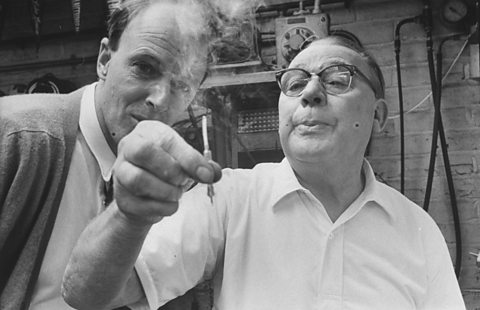
In December 1960, a pram containing Dahl's baby son Theo was hit by a taxi in New York City. He sustained serious head injuries, spent weeks in hospital and developed hydrocephalus - 'water on the brain'. Undeterred, Dahl enlisted a friend, toymaker and hydraulic engineer Stanley Wade, to help develop a valve to release the pressure on Theo's brain. Working with paediatric neurosurgeon Kenneth Till, they developed the Dahl-Wade-Till, which helped thousands of children worldwide.
1961
Way Out
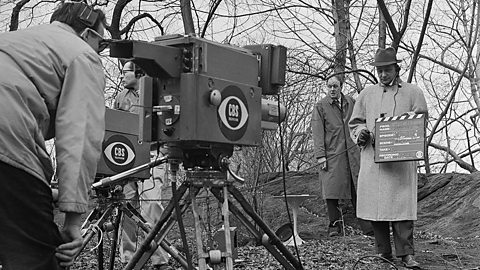
Dahl returned to US TV in 1961, after producer David Susskind asked him to front the sci-fi/horror anthology series Way Out.
The writer was well-known for his dark fantasies, and his slightly sinister demeanour made him a natural choice to provide a drily witty monologue to introduce each 25-minute episode – a role he reprised in Tales Of The Unexpected. Way Out began with one of his stories, William And Mary. The show was a hit among city viewers but proved less popular across middle America, and was cancelled by CBS after 14 episodes.
1962
Tragedy
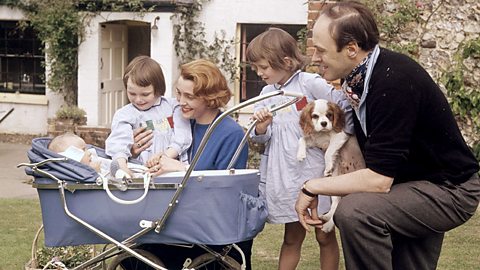
In November 1962, Dahl's eldest daughter Olivia contracted measles. The family was living once again in England, where no vaccine was available.
As the illness took its course, she complained of headaches and tiredness. Her mother alerted a doctor after Olivia suffered convulsions, and an ambulance was called. The unconscious child was rushed to nearby Stoke Mandeville Hospital, but the illness had developed into measles encephalitis, for which no cure exists. Olivia died the same day, 17 November. James and the Giant Peach and The BFG were both dedicated to the seven-year-old, and a photograph of her adorned a wall of his writing hut.
1967-68
Screenplays
1967 saw the author explore other forms of fiction writing – most notably in screenplays for motion pictures.
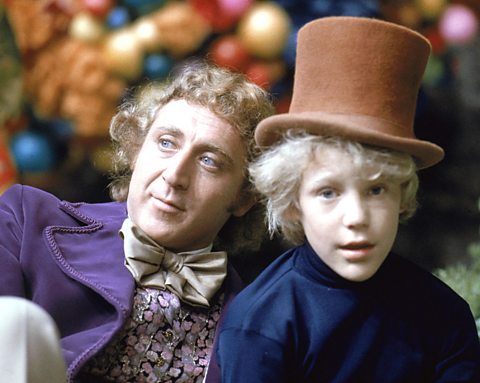
Writing for the silver screen saw Dahl adapt the James Bond novel You Only Live Twice – written by his fellow novelist and wartime friend Ian Fleming. The film was a box office success and would see Dahl adapt another Fleming novel for the big screen – Chitty Chitty Bang Bang. In 1971, Dahl penned two more films – The Night Digger and Willy Wonka and the Chocolate Factory. The latter was based on Dahl’s own book, starred the late Gene Wilder and became a cult classic.
1979
Tales Of The Unexpected
In 1979, British TV viewers got a taste of Dahl's dark side in Tales Of The Unexpected, for which he co-wrote a number of screenplays.
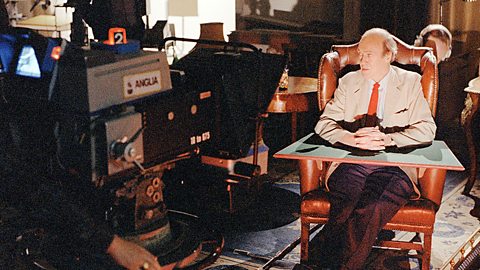
The long-running show aired from 1979 to 1988, although with decreasing involvement from Dahl. All nine episodes of series one, eight from series two and one from series three were based on his short stories. Dahl filmed introductory monologues for the first two series in which he explained his inspirations. A book of the same name, containing 16 of Dahl's stories, was also published in 1979; each had previously appeared in magazines, and in the collections Someone Like You and Kiss Kiss.
1986
Two Fables
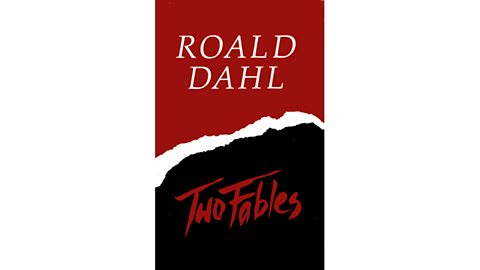
To mark Roald Dahl's 70th birthday, the book Two Fables was released. It was the last collection of adult short stories published in his lifetime.
The two stories, written by Dahl especially for the collection, and illustrated in black and white by Graham Dean, were The Princess and the Poacher and Princess Mammalia. Existing only as a limited run, the book is now out of print and the two stories have never been printed anywhere else.
2016
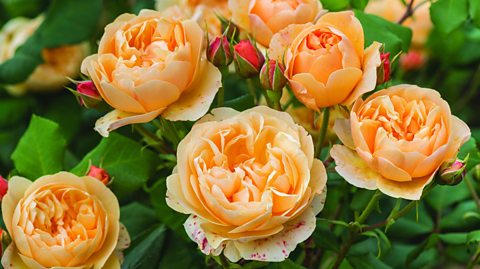
The Roald Dahl rose
As part of the celebrations to mark 100 years since the author’s birth, a new rose was developed and called the Roald Dahl (Ausowlish).
The rose was selected by Liccy Dahl after she suggested naming a rose after her late husband to gardening expert Alan Titchmarsh. She said: “I focused on what Roald’s passions were, and gardening of course was one. It was a natural next step to name a rose after him as it has universal resonance around the world just like the man himself.” Helping in its selection was its peach colouring, as it matches that of Dahl’s first success as a children’s novelist – James and the Giant Peach.
