
Brahms Requiem
Thursday 26/3/26, 7.30pm
Brangwyn Hall, Swansea


Wolfgang Amadeus Mozart
Symphony No. 40 in G minor 35’
INTERVAL: 15 minutes
Johannes Brahms
A German Requiem 68’
Thomas Zehetmair conductor
Elizabeth Watts soprano
Andrew Foster-Williams bass-baritone
BBC National Chorus of Wales
This concert is being recorded by BBC Radio 3 for future broadcast in In Concert; it will be available for 30 days after broadcast via BBC Sounds, where you can also find podcasts and music mixes.
Introduction
A warm welcome to tonight’s concert, in which Thomas Zehetmair returns to conduct BBC NOW in a programme of music by two composers particularly close to his heart.
We begin with Mozart. His 40th Symphony in G minor is one of a remarkable trio of symphonies he composed at speed during a single summer. With the composer exploiting its minor key to the full, it’s a work whose passion and drive allied to lyrical beauty seem to anticipate the Romantic era.
After the interval BBC NOW is joined by soloists Elizabeth Watts and Andrew Foster-Williams and BBC National Chorus of Wales for Brahms’s extraordinary A German Requiem. In it, the composer offers a very personal take on the traditional requiem, and his suggested alternative title – ‘A Human Requiem’ – is telling. With its private reflection on human mortality, grief and peace, its power remains undimmed today.
Enjoy!
Lisa Tregale
Director
Please respect your fellow audience members and those listening at home: mobile phones may be kept on but on silent and with the brightness turned down; other electronic devices should be switched off during the performance. Photography and recording are not permitted.
Wolfgang Amadeus Mozart (1756–91)
Symphony No. 40 in G minor, K550 (1788)

1 Molto allegro
2 Andante
3 Minuet
4 Finale: Allegro assai
The mid-1780s were busy years for Mozart, above all in terms of his operatic output. 1786 saw a revival of Idomeneo and premieres of The Marriage of Figaro and Der Schauspieldirektor, and in 1787 Don Giovanni was given its first performance in Prague. Not surprisingly, this meant that time left for other pieces was increasingly squeezed. But in the summer of 1788, Mozart composed three symphonies, his last such works, each including bold experiments and surprises for his audience. The G minor Symphony, K550, was the second to be written, completed on 25 July 1788.
There are as many questions as answers with this symphony and its 1788 counterparts. We don’t know, for instance, whether they were written with a planned performance in mind; and it’s also not clear whether Mozart considered them a kind of trilogy or meant each to stand alone. For a long time it was believed that he never even heard them performed – but surviving documents suggest that he did at least hear private try-outs at the home of the influential music patron Baron van Swieten. Mozart was working for van Swieten at the time, arranging and conducting choral works by Handel (including Messiah) for his private music club.
The symphony begins with an urgent, brooding theme in the violins, accompanied by chugging violas which Mozart divides into two groups. This kind of importance and independence was seldom given to the viola section, and it makes for a richer, more supported sound. When the second, major-key subject arrives, this slithers down the stave in semitones; and the scoring becomes almost chamber-like as the woodwinds and strings pass the melodic baton between them. The abrupt changes of key later in the movement add to a sense of anxious drama, and even the arrival of the lilting second-movement Andante doesn’t entirely dispel this. Elegant suspensions and light-touch melodies sit alongside brooding bass lines and curious chromatic crunches, and moments of breaking free into entirely untroubled waters are few and far between. The Minuet briskly returns us to the home key of G minor, with the Trio bringing a moment of major-key respite, strings and woodwinds once again in gentle dialogue. Mozart’s vigorous finale is a game of high contrasts, the music yo-yoing between piano and forte: surely an important model for the young Ludwig van Beethoven, who celebrated his 18th birthday in the year of this symphony’s completion.
Programme note © Katy Hamilton
INTERVAL: 15 minutes
Johannes Brahms (1833–97)
A German Requiem, Op. 45 (1865–8)
1 Selig sind, die da Leid tragen
2 Denn alles Fleisch es ist wie Gras
3 Herr, lehre doch mich
4 Wie lieblich sind deine Wohnungen
5 Ihr habt nun Traurigkeit
6 Denn wir haben hie keine bleibende Statt
7 Selig sind die Toten
Elizabeth Watts soprano
Andrew Foster-Williamsbass-baritone
BBC National Chorus of Wales
Why a ‘German’ Requiem? The obvious answer is that, unlike any other familiar 19th-century work that calls itself Requiem, Brahms employs not the standard Latin liturgical text but a compilation from the German Bible. But the title can still cause perplexity. Brahms did become increasingly nationalistic in later years, especially after the unification of the German lands in 1871, but even then he seems to have had doubts about the wisdom of his choice of wording, as he revealed in a reply to a letter from the cathedral organist Karl Martin Reinthaler. Reinthaler had been anxious to defend Brahms against charges that his Requiem was in some significant way irreligious – it had been pointedly noted that at no stage in the work do the words ‘Jesus’ or ‘Christ’ appear. Brahms’s response is guarded, but still revealing:
As regards the title, I will confess that I should gladly have left out ‘German’ and substituted ‘Human’. Also that I knowingly and intentionally dispensed with passages such as St John 3:16 (‘For God so loved the world that he gave his only begotten Son’). On the other hand, I have no doubt included much because I am a musician, because I required it, because I can neither argue away nor strike out a ‘henceforth’ from my venerable extracts. But I had better stop before I say too much.
One can understand why Brahms might have felt that he had landed himself with the wrong title, particularly at a time when certain forms of German nationalism were becoming increasingly strident. All the same, there was definitely an element of cultural pride behind his original choice. The Protestant Reformation had begun in Germany and it was on German soil that the political might of the Catholic Church had first been successfully challenged. Martin Luther’s translation of the Bible – the source of Brahms’s text – had at once helped define the still-developing German language and marked the start of a process by which scripture ceased to be the property of an educated elite and was opened out to the masses. The great Protestant church compositions of Schütz, Bach and Handel – which left their mark on the German Requiem – had continued this process of democratising the mysteries of faith.
Works such as Bach’s St Matthew Passion and Handel’s Messiah had also brought a new emphasis on the humanity of Christ – a real, suffering human being rather than a mystical symbol. This was fertile ground for the emergence of a more humanistic kind of belief. Surely that is what Brahms meant when he suggested ‘A Human Requiem’ as an alternative title. The value of religious tradition would be acknowledged, especially its power to console in the face of death, but it was to be kept as non-dogmatic as possible. Human mortality, its grief and resolution were to be the objects of contemplation, not a specific deity.
Brahms had good reason to be reflecting on mortality and grief in 1865, the year he began work on the German Requiem. In January his mother suffered a stroke. Brahms hurried to her bedside, but he was too late. The experience was devastating. A friend, calling on him soon afterwards, found Brahms practising Bach at the piano with tears streaming down his face. Playing was one way of working through painful emotion; composing was clearly another. Brahms’s feelings in the wake of his mother’s death may well have spilt over into the powerfully elegiac slow movement of the Horn Trio, Op. 40, composed in the summer of 1865. And by April that year Brahms had sent two movements of the German Requiem to his confidante, Clara Schumann, virtuoso pianist and widow of the composer Robert Schumann. ‘I am hoping to produce a sort of whole out of the thing,’ he told her, ‘and trust I shall retain enough courage and zest to carry it through.’
But another loss may have left its mark on the German Requiem. The second movement, the funeral-march-like ‘Denn alles Fleisch es ist wie Gras’ (‘For all flesh is as grass’), apparently derives its material from the ‘slow Scherzo’ Brahms had included in his abandoned Symphony of 1854–5, later revised as the First Piano Concerto. Those were the years in which Brahms’s mentor and champion Robert Schumann had suffered his catastrophic final breakdown. After Schumann died in a mental asylum in 1856 Brahms confided to Clara that the slow movement of the new Piano Concerto was to be a ‘requiem for Schumann’. So, in the ‘Denn alles Fleisch’ funeral march, the German Requiem reworks material associated in Brahms’s mind with another dreadful bereavement. At the beginning of this movement the chorus intones a chorale tune from Bach’s cantata BWV 27, ‘Wer weiss, wie nähe mir mein Ende!’ (‘Who knows how near my end shall be!’). Echoes of that chorale can be heard in themes from other movements of the German Requiem; in fact Brahms told a friend that ‘the whole work was, essentially, founded on the chorale’. These connections are of more than technical significance: they steer us away from the conclusion that the work is purely a Requiem for Brahms’s mother. In this case, part of the creative process involved the objectifying of private feelings: grief as a universal aspect of the human condition – or, as Brahms put it, a ‘Human’ Requiem.
A quick glance at the text of A German Requiem shows how different it is from that of the Roman Catholic Mass for the Dead. There are no heart-rending pleas for mercy, no terrifying depictions of the Last Judgement or glimpses of Hell. Musically, there could hardly be a greater contrast between this and the grand operatic drama of Verdi’s Messa da Requiem, completed six years later; the direct expressions of dread and anguish in Mozart’s Requiem are likewise avoided. Instead there is, in the words of the German philosopher Ernst Bloch, ‘a precious depth that avoids apotheoses’.
Something of that ‘precious depth’ can be felt in the opening movement, ‘Selig sind, die da Leid tragen’ (‘Blessed are they that bear grief’): a restrained, dignified hymn to the process of mourning – painful enough in itself, but holding out hope of recovery from loss.
The grim funeral march ‘Denn alles Fleisch’ (‘For all flesh’) follows; but this too offers hope: winter turns to spring, the seed endures and grows again.
There must be reckoning with one’s own mortality, hence the prayer at the beginning of the third movement, ‘Herr lehre doch mich, dass ein Ende mit mir haben muss’ (‘Lord, teach me that I must have an end’). But the question ‘Nun, Herr, wess soll ich mich trösten?’ (‘Now, Lord, in whom shall I console myself?’) is answered by a majestic Bachian fugue for chorus and full orchestra, anchored throughout to a sustained bass D, symbol of the secure grasp of God’s hand.
‘Wie lieblich sind deine Wohnungen’ (‘How lovely are your dwellings’) is a vision of the blissful life of the departed, portrayed in a kind of serene waltz. This is the heart of the German Requiem. In a sense the whole structure of the work turns upon it; one could see it as the keystone of a huge arch. From now on the progress is broadly one of return – to the image of blessedness, and to the restrained warmth of the music that enshrined it.
The fifth movement, ‘Ihr habt nun Traurigkeit’ (‘Now you have sorrow’), does allow us a passing glimpse of something personal in its closing moments. As the chorus finally intones the words ‘wie Einen seine Mutter tröstet’ (‘as one is consoled by his mother’), the soprano soloist dwells with quiet pathos on the words ‘wieder sehen’ (‘I will see you again’).
But then comes the most dramatic movement of all: ‘Denn wir haben hie keine bleibende Statt’ (‘For here we have no lasting city’), its stormy defiance of death turning suddenly into another magnificent fugue (echoes of Bach and Handel, and also of Beethoven’s Missa solemnis).
The last movement brings a return to the key of the first movement (F major), with echoes of its thematic material. Now it is the dead themselves, rather than those who mourn them, who are celebrated – as in the final ‘In paradisum’ prayer of the Latin Mass for the Dead. The chorus’s final utterance is a repetition of the word we heard at the start of the German Requiem: ‘Selig’ (‘Blessed’). The great arch is complete.
Programme note © Stephen Johnson
Text
1 Selig sind, die da Leid tragen
Selig sind, die da Leid tragen,
denn sie sollen getröstet werden.
Die mit Tränen säen,
werden mit Freuden ernten.
Sie gehen hin und weinen
und tragen edlen Samen,
und kommen mit Freuden
und bringen ihre Garben.
Matthew 5:4; Psalm 126: 5–6
2 Denn alles Fleisch es ist wie Gras
Denn alles Fleisch es ist wie Gras
und alle Herrlichkeit des Menschen
wie des Grases Blumen.
Das Gras ist verdorret
und die Blume abgefallen.
So seid nun geduldig, lieben Brüder,
bis auf die Zukunft des Herrn.
Siehe, ein Ackermann wartet
auf die köstliche Frucht der Erde
und ist geduldig darüber, bis er empfahe
den Morgenregen und Abendregen.
Aber des Herrn Wort bleibet in Ewigkeit.
Die Erlöseten des Herrn werden wieder kommen,
und gen Zion kommen mit Jauchzen;
ewige Freude wird über ihrem Haupte sein;
Freude und Wonne werden sie ergreifen
und Schmerz und Seufzen wird weg müssen.
1 Peter 1:24, 25; James 5:7; Isaiah 35:10
3 Herr, lehre doch mich
Herr, lehre doch mich,
dass ein Ende mit mir haben muss,
und mein Leben ein Ziel hat,
und ich davon muss.
Siehe, meine Tage sind
einer Hand breit vor dir,
und mein Leben ist wie nichts vor dir.
Ach wie gar nichts sind alle Menschen,
die doch so sicher leben.
Sie gehen daher wie ein Schemen,
und machen ihnen viel vergebliche Unruhe;
sie sammeln und wissen nicht
wer es kriegen wird.
Nun Herr, wess soll ich mich trösten?
Ich hoffe auf dich.
Der Gerechten Seelen sind in Gottes Hand
und keine Qual rühret sie an.
Psalm 39:4–7; Wisdom 3:1
4 Wie lieblich sind deine Wohnungen
Wie lieblich sind deine Wohnungen,
Herr Zebaoth!
Meine Seele verlanget und sehnet sich
nach den Vorhöfen des Herrn;
mein Leib und Seele freuen sich
in dem lebendigen Gott.
Wohl denen, die in deinem Hause wohnen,
die loben dich immerdar.
Psalm 84:1, 2, 4
5 Ihr habt nun Traurigkeit
Ihr habt nun Traurigkeit;
aber ich will euch wieder sehen
und euer Herz soll sich freuen
und eure Freude soll niemand von euch nehmen.
Ich will euch trösten,
wie Einen seine Mutter tröstet.
Sehet mich an:
Ich habe eine kleine Zeit Mühe und Arbeit gehabt
und habe grossen Trost funden.
John 16:22; Isaiah 66:13; Ecclesiasticus 51:27
6 Denn wir haben hie keine bleibende Statt
Denn wir haben hie keine bleibende Statt,
sondern die zukünftige suchen wir.
Siehe, ich sage euch ein Geheimnis:
Wir werden nicht alle entschlafen,
wir werden aber alle verwandelt werden;
und dasselbige plötzlich, in einem Augenblick,
zu der Zeit der letzten Posaune.
Denn es wird die Posaune schallen,
und die Toten werden auferstehen unverweslich,
und wir werden verwandelt werden.
Dann wird erfüllet werden
das Wort, das geschrieben steht:
Der Tod ist verschlungen in den Sieg.
Tod, wo ist dein Stachel?
Hölle, wo ist dein Sieg?
Herr, du bist würdig zu nehmen
Preis und Ehre und Kraft,
denn du hast alle Dinge geschaffen,
und durch deinen Willen haben sie das Wesen
und sind geschaffen.
Hebrews 13:14; 1 Corinthians 15:51–55; Revelation 4:11
7 Selig sind die Toten
Selig sind die Toten,
die in dem Herrn sterben,
von nun an.
Ja, der Geist spricht,
dass sie ruhen von ihrer Arbeit;
denn ihre Werke folgen ihnen nach.
Revelation 14:13
Translation
Blessed are they that bear grief
Blessed are they that bear grief
for they shall be comforted.
They who sow with tears,
shall reap with joy.
They go forth and weep,
and bear precious seeds,
and come with joy
and bring their sheaves.
For all flesh is as grass
For all flesh is as grass,
and all the glory of man
as the flower of grass.
The grass has withered
and the flower fallen away.
So be patient, dear brothers,
until the coming of the Lord.
Behold, a ploughman waits
for the delicious fruit of the earth
and is patient for it, until he receives
the morning rain and evening rain.
But the word of the Lord abides for eternity.
The ransomed of the Lord shall return,
and come to Zion with rejoicing;
eternal joy shall be upon their heads;
they shall obtain joy and gladness,
and sorrow and sighing shall depart.
Lord, teach me
Lord, teach me
that I must have an end,
and my life has a purpose,
and I am bound to this.
Behold, my days are
a hand’s span before you,
and my life is as nothing before you.
Alas, all people are as nothing,
but they live so surely.
They therefore go about like a shadow,
and greatly disquiet themselves in vain;
they gather, and do not know
who will receive it.
Now, Lord, in whom shall I console myself?
My hope is in you.
The souls of the righteous are in the hand of God
and they are untouched by torment.
How lovely are your dwellings
How lovely are your dwellings,
Lord of Hosts!
My soul desires and yearns
for the courts of the Lord;
my body and soul delight
in the living God.
They that dwell in your house
praise you for ever.
Now you have sorrow
Now you have sorrow;
but I will see you again
and your heart shall rejoice
and nobody shall take your joy from you.
I will console you,
as one is consoled by his mother.
Behold me:
I have toiled and laboured for a short time,
and have found great consolation.
For here we have no lasting city
For here we have no lasting city,
but we seek the one to come.
Behold, I tell you a mystery:
We shall not all pass away
but we shall all be changed;
and suddenly, in the blink of an eye,
at the time of the last trumpet.
For the trumpet will sound,
and the dead will be raised incorruptible,
and we will be changed.
Then the word that is written
will be fulfilled:
Death is swallowed up in victory.
Death, where is your sting?
Hell, where is your victory?
Lord, you are worthy to receive
praise and honour and virtue,
for you have created all things,
and through your will they have their being
and were created.
Blessed are the dead
Blessed are the dead
that die in the Lord
from henceforth.
Yes, the spirit says
that they rest from their labours,
for their works follow them.
Help Us Improve Our Online Programmes.
Please take this 5-minute survey and let us know what you think of these notes.
Programme Survey
You may also like:
If you’ve enjoyed the concert today, bring friends and family and come along to this forthcoming concert. As an existing audience member, you can buy tickets for it for £7 using promotion code NOWYOU when buying online.
Enigma
Saturday 18/4/26, 3.00pm
Brangwyn Hall, Swansea
Sunday 19/4/26, 3.00pm
BBC Hoddinott Hall, Cardiff
Livestream
Grace Williams Sea Sketches
Saint-Saëns Violin Concerto No. 3
Elgar Enigma Variations
Jaime Martín conductor
Akiko Suwanai violin
ELEGANT | GRAND | ILLUSTRATIVE
If you were moved by the emotional depth of Brahms’s German Requiem and the dramatic intensity of Mozart’s Symphony No. 40, we invite you to experience that same musical power in Elgar’s iconic Enigma Variations. This masterpiece reveals a series of vivid musical portraits – by turns tender, witty, noble and exuberant – culminating in the magnificent ‘Nimrod’, one of the most soul‑stirring moments in the orchestral repertoire. Just as Brahms explored the human spirit and Mozart exposed raw emotion, Elgar opens a window into friendship and reveals the heart of British music. Join us for a concert that blends sumptuous orchestral colour with rich emotional storytelling – perfect for anyone who loves music that resonates long after the final note has died away.
Book tickets for just £7 using promotion code NOWYOU https://www.bbc.co.uk/events/evr6gw
Biographies
Thomas Zehetmairconductor

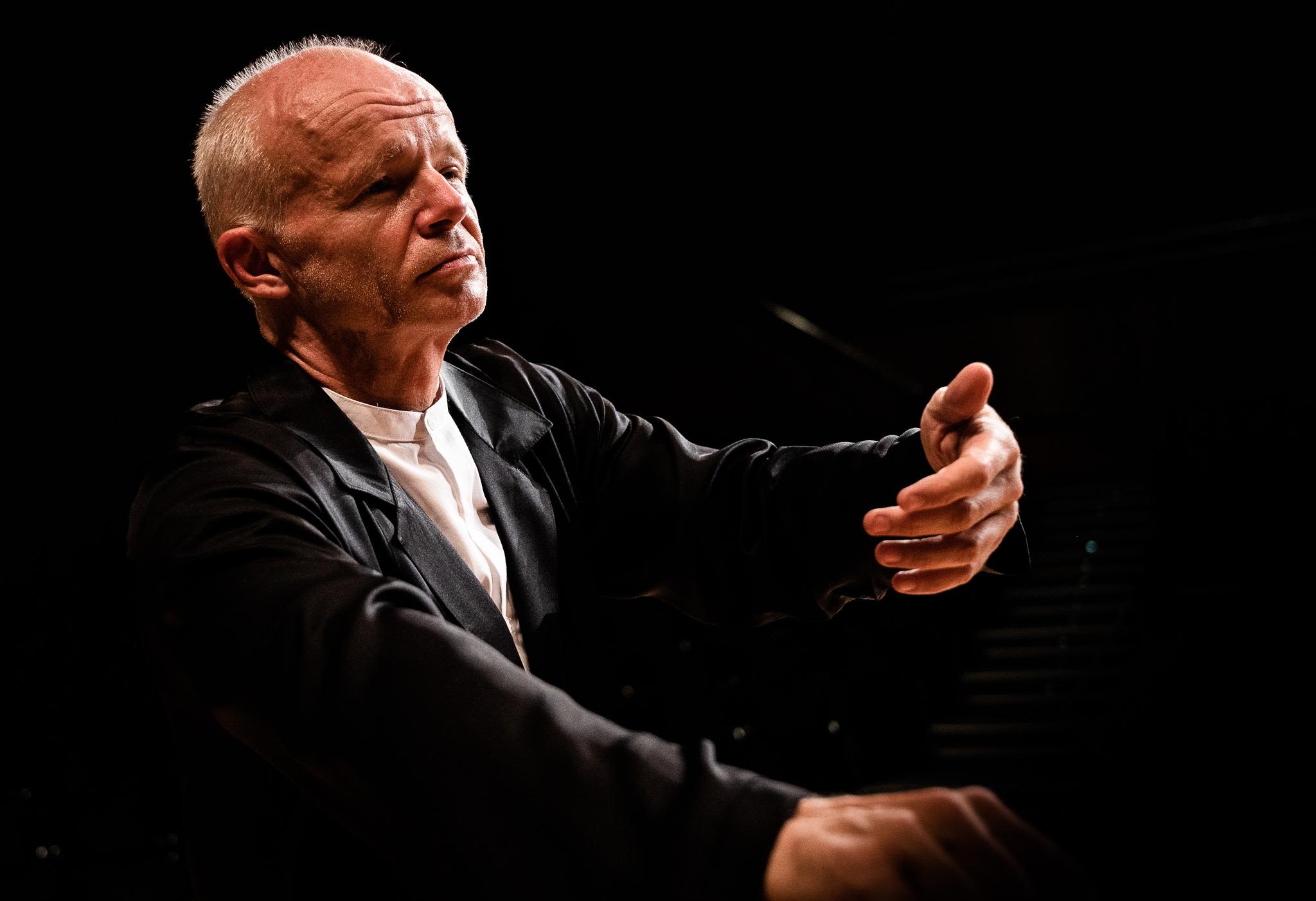
Thomas Zehetmair enjoys wide international acclaim as a violinist as well as a conductor. He is Principal Conductor of the Orchestre national Auvergne-Rhône-Alpes and his position of Chief Conductor of the Stuttgart Chamber Orchestra has been extended until summer 2029.
He has received much inspiration from his work as a soloist with Nikolaus Harnoncourt, Frans Brüggen, David Zinman, Daniel Barenboim, Sir Simon Rattle and Paavo Järvi. As a conductor he has appeared with orchestras including Hamburg, London, Rotterdam and Seoul Philharmonic orchestras, Hallé, Scottish and Swedish Chamber orchestras, Detroit and Seattle Symphony orchestras, Orchestra of the Eighteenth Century, Budapest Festival Orchestra, Mozarteum Orchester and Orquesta Sinfónica de Castilla y León.
He has an extensive and varied discography as a violinist, conductor and with the Zehetmair Quartet. His recording of the Paganini Caprices won a MIDEM Classique Award and he received Gramophone Awards for his Elgar Concerto with Sir Mark Elder and the Szymanowski concertos with Sir Simon Rattle. The Zehetmair Quartet’s recording of Schumann won Gramophone’s Record of the Year and four other international prizes. In 2020 he received an Opus Klassik Award for his recording of Bach’s Solo Sonatas and Partitas. Recently released recordings include symphonies by Haydn and works by Schoenberg, Bartók, Beethoven, Brahms and Mozart.
He has more recently been developing his interest in composition and arrangements; compositions of note include his Rondo for violin and cello, Passacaglia, Burlesque and Chorale for string trio and Variations on a Mediaeval Theme for solo viola. His Double Concerto for viola, cello and strings was premiered in November.
Highlights of this season include touring in Asia with both the Orchestre national Auvergne-Rhône-Alpes and the Stuttgart Chamber Orchestra, a return to the St Paul Chamber Orchestra and performances of Szymanowski’s Second Violin Concerto with Orchestre National de Lyon. He also forms a duo partnership with Pierre-Laurent Aimard.
The Zehetmair Quartet has been awarded the Paul Hindemith Prize by the City of Hanau for outstanding musical achievement. Thomas Zehetmair was honoured with the Preis der Deutschen Schallplattenkritik and holds honorary doctorates from the Liszt University in Weimar and Newcastle University.
Elizabeth Wattssoprano

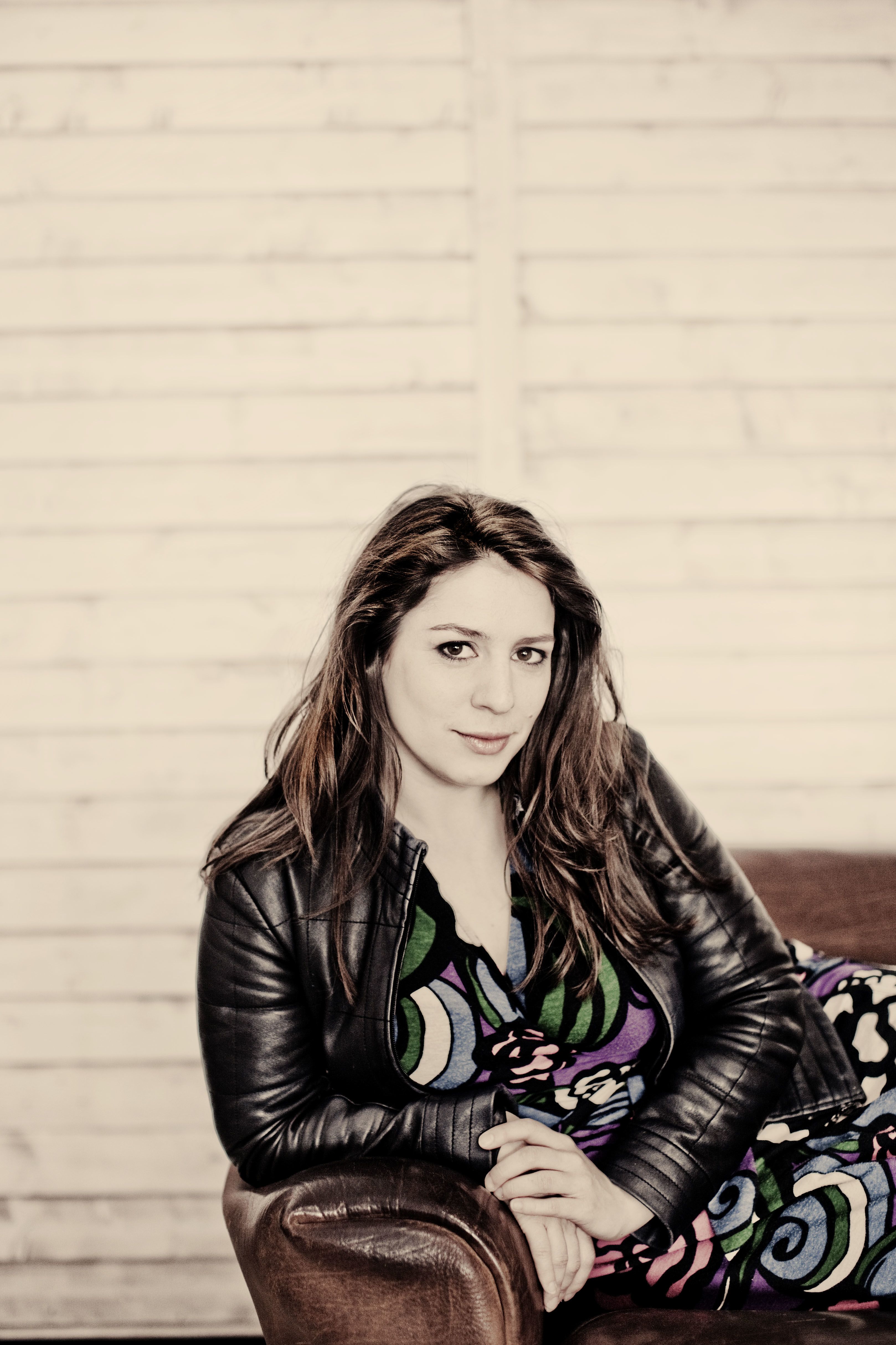
Elizabeth Watts is now established as one of Britain’s leading sopranos. She came to attention with her debut recording of Schubert Lieder and has since become a prolific recording artist, winning many awards and accolades along the way. Most recently her recording of Britten’s Spring Symphony with Sir Simon Rattle and the London Symphony Orchestra was named Orchestral Album of the year by Classica magazine.
She is a former BBC Radio 3 New Generation Artist and is much in demand as a recitalist. She has given recitals at the UK’s leading venues, including Wigmore Hall, Bridgewater Hall, Purcell Room and at the Aldeburgh, Edinburgh, Hay and Cheltenham festivals. Further afield, she has performed at prestigious venues and festivals such as the Amsterdam Concertgebouw, Hardanger Festival in Norway, Bad Kissinger Summer Festival, at the Musée d’Orsay in Paris and at the Zurich Tonhalle.
On the concert platform, she sings a broad repertoire from Bach via Brahms and Richard Strauss, to premieres by composers such as Richard Blackford and Ryan Wigglesworth.
Now firmly established as a lyric soprano, her recent operatic roles include Aspasia (Mozart’s Mitridate) for Garsington Opera and the Countess (The Marriage of Figaro) forEnglish National Opera. Previous operatic appearances include Zerlina (Don Giovanni) and Marzelline (Fidelio)for the Royal Opera, Covent Garden; Susanna (The Marriage of Figaro) for Santa Fe Opera and Welsh National Opera, for which she has also sung Donna Elvira (Don Giovanni), Pamina (The Magic Flute) and Fiordiligi (Così fan tutte). On the concert platform her lyric repertoire now includes Britten’s War Requiem and Elgar’s The Apostles and The Kingdom, giving the Polish premiere of the latter.
Elizabeth Watts was a chorister at Norwich Cathedral and gained a First in Archaeology and Prehistory at Sheffield University, before attending the Royal College of Music. Among her many prizes are the Kathleen Ferrier Award, the MIDEM Classique Outstanding Young Artist Award and the BBC Cardiff Singer of the World Rosenblatt Recital Song Prize. A former member of English National Opera’s Young Singers’ Programme, she has been an Artist-in-Residence at the Southbank Centre, London and is the recipient of a Borletti–Buitoni Trust Award. More recently, she was made an honorary Doctor of Music by Sheffield University and a Fellow of the Royal College of Music.
Andrew Foster-Williamsbass-baritone

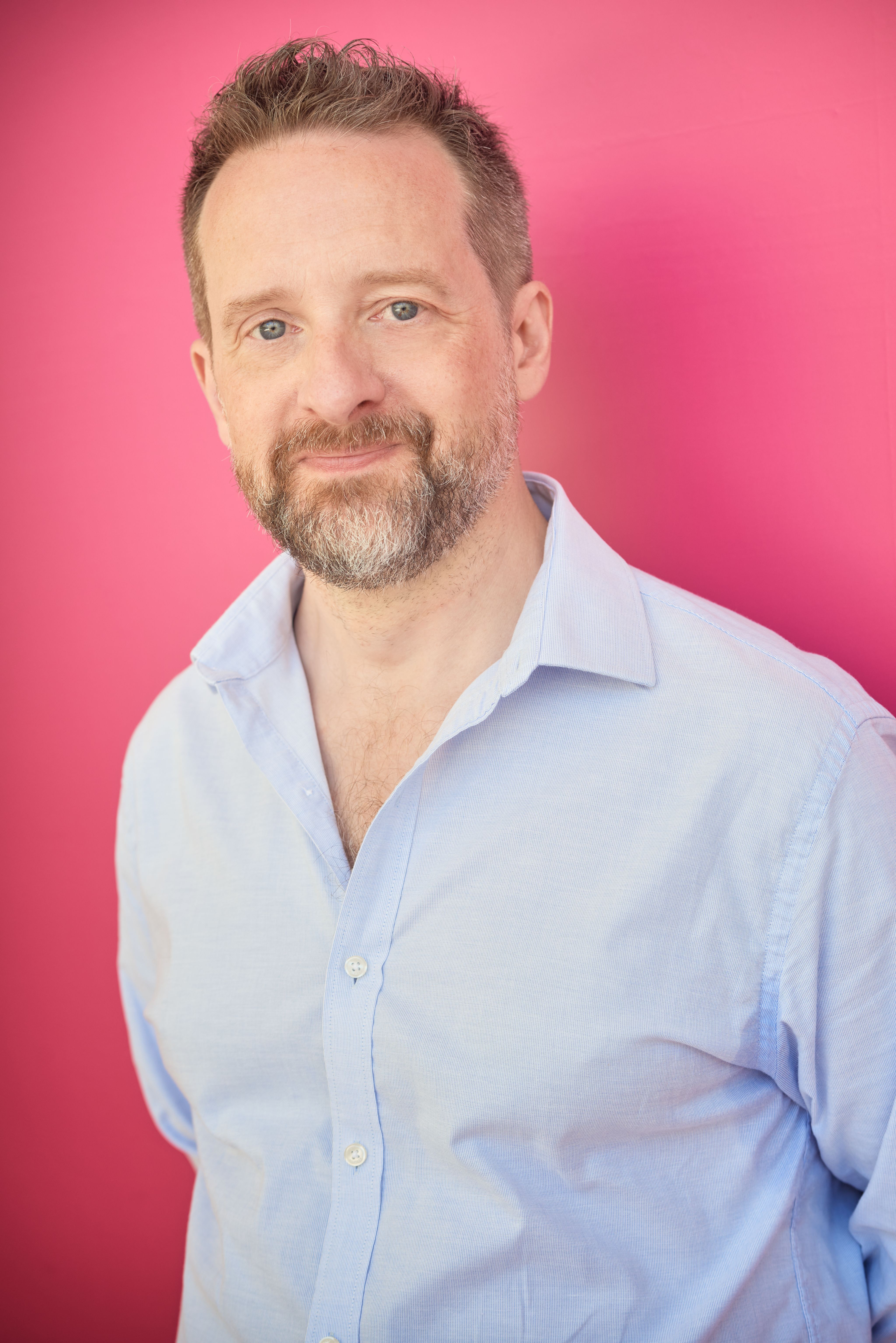
Andrew Foster-Williams has carved out a distinguished international career playing a wide range of operatic roles, each brought to life with vocal authority, dramatic insight and stylistic finesse.
His portrayal of Don Pizarro (Fidelio) at the Theater an der Wien and the Philharmonie de Paris brought his ability to channel menace with vocal precision to the fore. As the Four Villains (Les contes d’Hoffmann), he demonstrated his versatility in a new production by Andreas Homoki at Zurich Opera House and in subsequent productions for Gothenburg Opera and the Komische Oper Berlin, while his Nick Shadow (The Rake’s Progress) at Opéra National de Lorraine was acclaimed for its blend of charm and danger. He returns to ENO this season as Don Alfonso (Così fan tutte), conducted by Dinis Sousa.
He has also been acclaimed in roles such as Gunther (Götterdämmerung)and Kurwenal (Tristan und Isolde), both at La Monnaie; Captain Balstrode (Peter Grimes) at Theater an der Wien and Opéra de Lyon; Lysiart (Euryanthe) at Theater an der Wien; and Golaud (Pelléas et Mélisande) at Theater Basel.
Outside the opera house, he has appeared with the Cleveland Orchestra, San Francisco Symphony, Royal Concertgebouw Orchestra and London Philharmonic Orchestra. This season sees him in two of his signature pieces: Elgar’s The Dream of Gerontius with the Munich Philharmonic under Andrew Manze and with Tampere Philharmonic conducted by Matthew Halls; and Brahms’s A German Requiem with the Polish National Radio Orchestra and Andrew Manze. Elsewhere he appears in concert with the Estonian National Symphony Orchestra in Sibelius’s Kullervo and in Michael Haydn’s Requiem with Munich Philharmonic and Riccardo Minasi.
Andrew Foster-Wiliams’s discography includes Beethoven’s Cantata on the Death of Emperor Joseph II and Haydn’s The Seasons, as well as award-winning contributions to the Opéra français series. His performance in The Fairy Queen with Glyndebourne Festival Opera, captured on DVD, earned a Gramophone Award, as did his recording of The Dream of Gerontius with Paul McCreesh and the Gabrieli Consort and Players.
BBC National Chorus of Wales
BBC National Chorus of Wales is made up of over 120 singers and is one of the leading mixed symphony choruses in the UK. While preserving its amateur status, it works to the highest professional standards under Artistic Director, Adrian Partington. Comprising a mix of amateur singers alongside students from the Royal Welsh College of Music & Drama and Cardiff University, the chorus, based at BBC Hoddinott Hall in Cardiff Bay, works regularly alongside BBC National Orchestra of Wales, as well as giving concerts in its own right.
Recent highlights include performances of Poulenc’s Stabat mater and the world premiere of Alexander Campkin’s Sound of Stardust alongside BBC Cardiff Singer of the World Audience Prize winner Julieth Lozano Rolong and choral conductor Sofi Jeannin; Shostakovich’s 13th Symphony with Principal Conductor Ryan Bancroft; and Sir Karl Jenkins’s Dewi Sant in his 80th-birthday year. The chorus also appears annually at the BBC Proms, with recent highlights including Verdi’s Requiem, John Adams’s Harmonium with Ryan Bancroft and Vaughan Williams’s A Sea Symphony with Andrew Manze.
Last season the chorus performed Rossini’s Stabat mater alongside 2021 Cardiff Singer of the World Song Prize winner Masabane Cecilia Rangwanasha and Nil Venditti; Handel’s Messiah with early music specialist John Butt; and Beethoven’s Missa solemnis with Andrew Manze, as well as its annual carols concert and a programme of Brahms with Ryan Bancroft.
BBC National Chorus of Wales is committed to promoting Welsh and contemporary music and gave the second-ever performance of Grace Williams’s Missa Cambrensis, 45 years after its premiere, which was also released on CD. It has premiered works by many composers, including a special performance of Kate Whitley’s Speak Out, set to the words of Malala Yousafzai’s 2013 UN Speech.
The chorus can be heard on BBC Radio 3, BBC Radio Wales and BBC Radio Cymru, and recently featured in Paul Mealor’s soundtrack for BBC Wales’s Wonders of the Celtic Deep.
BBC National Orchestra of Wales
For over 90 years, the BBC National Orchestra of Wales, the only professional symphony orchestra in Wales, has played an integral part in the cultural landscape of the country, occupying a distinctive role as both a broadcast and national orchestra, and serving as an ambassador of Welsh culture, regularly performing music created in Wales and championing Welsh composers and artists.
Part of BBC Cymru Wales and supported by the Arts Council of Wales, BBC NOW performs a busy schedule of concerts and broadcasts, working with acclaimed conductors and soloists from across the world, including its Principal Conductor, the award-winning Ryan Bancroft.
The orchestra is committed to working in partnership with community groups and charities, taking music out of the concert hall and into settings such as schools and hospitals to enable others to experience and be empowered by music. It undertakes workshops, concerts and side-by-side performances to inspire and encourage the next generation of performers, composers and arts leaders, and welcomes thousands of young people and community members annually through its outreach and education projects.
BBC NOW performs annually at the BBC Proms and biennially at the BBC Cardiff Singer of the World competition, and its concerts can be heard regularly across the BBC – on Radio 3, Radio Wales and Radio Cymru. On screen, music performed by BBC NOW can be heard widely across the BBC and other global channels, including the soundtrack and theme tune for Doctor Who, Planet Earth III, Prehistoric Planet, The Pact and Children in Need.
Based at BBC Hoddinott Hall, Cardiff Bay, BBC NOW utilises a state-of-the-art recording studio with a camera system for livestreams and TV broadcasts to bring BBC NOW’s music to a broader audience across Wales and the world. For more information about BBC NOW please visit bbc.co.uk/now
Patron
HM King Charles III KG KT PC GCB
Principal Conductor
Ryan Bancroft
PrincipalGuest Conductor
Jaime Martín
Composer-in-Association
Gavin Higgins
BBC National Chorus of Wales
Artistic Director
Adrian Partington
Assistant Director
Christopher Williams
Soprano 1
Amelia Beecroft
Kate Bidwell
Eleanor Cantrill
Iustina Chirila
Isabel D’Avanzo
Phoebe Dry
Martha Eddowes
Ella Edwards Beavington
Bethan Evans
Faith Gerber
Olivia Ghanem
Claire Hardy
Vanessa John-Hall
Lucie Jones
Bethan Nicholas‑Thomas
Joanna Osborn
Elizabeth Phillips
Hannah Robertson
Helen Thomas
Lydia Wilson
Soprano 2
Megan Allen
Esme Daniell‑Grenhalgh
Penelope George
Emily Hopkins
Rhiannon Humphreys
Margaret Lake
Carolyn Lee
Qianyu Lin
Lucy Paterson
Rebecca Reavley
Melanie Taylor
Megan Veiga
Alto 1
Nazanin Dastafkan
Alison Davies
Catherine Duffy
Rachel Farebrother
Kathrin Hammer
Naomi Hitchings
Eleri Hurley
Matilda Holder
Lisa May
Shanta Miller
Rhian Pullen
Avery Rabbitt
Kate Reynolds
Zozi Sookanadenchetty
Vicki Westwell
Yirui Wang
Jessica Williams
Alto 2
Annette Hecht
Yvonne Higginbottom
Max Keith
Sian Schutz
Sarah Willmott
Julie Wilcox
Tenor 1
Jake Bussell
Meilyr Dafydd
Keith Davies
Phil Holtam
Andrew Lunn
Andrew Morris
Nick Willmott
Tenor 2
Roland George
Peter Holmes
Rory McIver
Richard Shearman
Michael Willmott
Bass 1
Noah Boneham‑Hill
Peter Cooke
John Davies
David John Davies
James Downs
Charlie Gedge
Rafael Grigoletto
David Hopkins
Geraint Jones
Emyr Wynne Jones
Lucas Maunder
Joseph Pasley
Joseph Pitkethly
Neil Schofield
Will Walshe‑Grey
Alun Williams
Daniel Williams
Bass 2
Jeffrey Davies
Lyndon Davies
Evan Hancock
Oliver Hodgson
Gregg Hollister
Stuart Hogg
David Hutchings
David McLain
Luke Monkhouse
Gareth Nixon
Mike Osborn
David Rodgers
BBC National Orchestra of Wales
First Violins
Juliette Roos
Gwenllian Hâf MacDonald
Terry Porteus
Suzanne Casey
Emilie Godden
Kerry Gordon-Smith
Žanete Uškāne
Alejandro Trigo
Carmel Barber
Ruth Heney **
Anna Cleworth
Zhivko Georgiev
Second Violins
Anna Smith *
Kirsty Lovie #
Ros Butler
Sheila Smith
Beverley Wescott
Roussanka Karatchivieva
Katherine Miller
Lydia Caines **
Michael Topping
Vickie Ringguth
Joseph Williams
Gary George-Veale
Violas
Tetsuumi Nagata
Peter Taylor
Laura Sinnerton
Robert Gibbons
Anna Growns
Lydia Abell
Catherine Palmer
Nancy Johnson
Mungo Everett-Jordan
Cellos
Pedro Silva
Jessica Feaver
Sandy Bartai
Alistair Howes
Rachel Ford
Keith Hewitt
Carolyn Hewitt
Tabitha Selley
Double Basses
David Stark *
Alexander Jones #
David F. C. Johnson
Christopher Wescott
Emma Prince
Imogen Fernando
Flutes
Matthew Featherstone *
John Hall †
Lindsey Ellis
Piccolo
Oboes
Clarinets
Nicholas Carpenter *
Bassoons
Patrick Bolton
David Buckland
Contrabassoon
David Buckland †
Horns
Meilyr Hughes
Sarah Pennington
Michael Gibbs
John Davy
Trumpets
Philippe Schartz *
Robert Samuel
Trombones
Bass Trombone
Tuba
Timpani
* Section Principal
The list of players was correct at the time of publication
Director Lisa Tregale
+ Green Team member
Keep up to date with BBC National Orchestra of Wales
Listen to our BBC Radio 3 broadcasts via the BBC Sounds app. Visit our website and follow us on Facebook and Instagram
To help us improve our online concert programmes, please take this 5-minute survey
Produced by BBC Proms Publications