
Love & Transformation
Thursday 12/3/26, 7.30pm
BBC Hoddinott Hall, Cardiff


Benjamin Britten
An American Overture10’
Joan Tower
Love Returns UK premiere 23’
INTERVAL: 15 minutes
Carl Maria von Weber
Symphony No. 2 in C major 18’
PaulHindemith
Symphonic Metamorphosis of Themes by Carl Maria von Weber 21’
Tomas Djupsjöbacka conductor
Steven Banks alto saxophone
BBC Hoddinott Hall is certified by EcoAudio and we’re proud to be supporting the BBC in becoming a more sustainable organisation. For more information on the BBC’s net-zero transition plan and sustainability strategy please visit https://www.bbc.co.uk/aboutthebbc/documents/bbc-net-zero-transition-plan-2024.pdf




This concert is being recorded by BBC Radio 3 for future broadcast in Radio 3 in Concert; it will be available for 30 days after broadcast via BBC Sounds, where you can also find podcasts and music mixes.
Introduction
A warm welcome to tonight’s concert, in which Finnish conductor Tomas Djupsjöbackamakes his BBC NOW debut with a programme that has a strong American vein running through it.
Britten’s An American Overture dates from his stay in the States during the Second World War. It was a work that lay unperformed until after the composer’s death, though there are plenty of hallmarks that could be by no-one else. Love Returns is a powerfully wrought saxophone concerto by one of the elder stateswomen of American music – Joan Tower. It receives its UK premiere this evening by the musician for whom she wrote it, Steven Banks.
Weber’s Second Symphony offers a wonderful example of his sense of drama, allied to a brilliant ear for instrumental sonorities – qualities that would go on to make him such an important figure in the opera house.
To end, Hindemith’s Symphonic Metamorphosis of Themes by Carl Maria von Weber. It was written just a couple of years after the Britten overture, while Hindemith was exiled in the US and in it he transforms piano duets by Weber to utterly delightful effect.
Enjoy!
Lisa Tregale
Director
Please respect your fellow audience members and those listening at home: mobile phones may be kept on but on silent and with the brightness turned down; other electronic devices should be switched off during the performance. Photography and recording are not permitted.
Benjamin Britten (1913–76)
An American Overture (1941)

There is a complex backstory to Britten’s An American Overture which, for brevity’s sake, can be summarised as follows: it was written in America in October 1941, apparently unperformed at the time, then completely forgotten about for some 30 years. It turned up, eventually, in the New York Public Library. In July 1972 a cataloguer contacted Britten, who remarked that on seeing a copy of the manuscript a few years earlier he ‘had absolutely no recollection whatsoever of writing the work’. He also noted that the score was clearly in his own handwriting, and that ‘the music had obviously some of my mannerisms (not my happiest!)’. Britten asked that it be destroyed, or at least not reproduced further. It was not performed until 1983, seven years after the composer’s death.
The piece had indeed been somewhat dashed off in order to meet the deadline set by the commissioner (Artur Rodzinski, conductor of the Cleveland Orchestra). But it certainly bears Britten’s trademark instrumental flair (particularly in the percussion section), as well as some of the characteristic touches he had acquired while living in North America. There are splashes of jazz in its syncopated middle section, as well as some expansive, Copland-like melodic contours. But it also, in its insistent bass lines, has a hint of the ominous atmosphere of Peter Grimes which was already brewing, and which would be coming down the line in a few years’ time
Programme note © Lucy Walker
Joan Tower (born 1938)
Love Returns (2024)
UK premiere
Steven Banks alto saxophone
Joan Tower composed Love Returns, a concerto for alto saxophone and orchestra, for tonight’s soloist Steven Banks. In him, Tower found an ideal collaborator: following a visit to her home in Red Hook, NY, the two stayed in close communication over many months as the piece found its balance of technical brilliance and heartfelt expression. The idea for the concerto was initiated by conductor Peter Oundjian, one of Tower’s closest collaborators, who led the premiere performances with Banks at the Colorado Music Festival in Boulder, Colorado, on 10–11 July 2025. He had previously conducted the premieres of Tower’s A New Day and Suite from Concerto for Orchestra.
An international consortium of orchestras led by the Colorado Music Festival supported the creation of Love Returns; the other commissioners are the National Symphony Orchestra, Aspen Music Festival and School, BBC National Orchestra of Wales, Indianapolis Symphony Orchestra, Los Angeles Chamber Orchestra, and Toronto Symphony Orchestra.
Love Returns is built on a theme from Love Letter, Tower’s brief but poignant solo piano piece that she dedicated to her late husband Jeff Litfin, who died in 2022 at the age of 95. ‘I played Love Letter for a lot of people because I was rehearsing it for a TEDx talk,’ she said. ‘People loved the piece. I’ve never had quite such a visceral reaction to anything else.’
Love Returns is cast as a theme and variations in six sections. Tower initially questioned whether the theme from Love Letter would make sense in this new context. ‘I started thinking, “What does this concerto have to do with my relationship to my husband of 50 years?” Well, any relationship is up and down, and you go through various trials and various wonderful periods. This piece is sort of like that. It keeps coming back to this love theme.’
Its main theme is built on a series of rising-fifth intervals. After a slow and reflective opening section, the theme is transformed through various textures and contexts. Each section is faster than the previous one, except the fifth, a solo cadenza for the saxophone. In the presto finale, the soloist darts and weaves through a string of orchestral commentary.
Programme note © Wise Music
INTERVAL: 15 minutes
Carl Maria von Weber (1786–1826)
Symphony No. 2 in C major (1807)
1 Allegro
2 Adagio ma non troppo
3 Menuetto
4 Finale: Scherzo presto
Carl Maria von Weber was born in Eutin, Schleswig-Holstein, in 1786; he died in London in 1826. His family was industrious and artistic, if not exactly upper-class, despite the aristocratic ‘von’ in the surname. Weber’s father had himself added the ‘von’ in a shameless attempt at social climbing. In reality, Carl Maria was no more a member of the nobility than Duke Ellington. Yet he was at least equally talented. In his thirties, he effectively became the founder of German Romantic opera with Der Freischütz (The Marksman) of 1821, a diabolical Teutonic tale that took European theatres by storm. Its notoriously terrifying ‘Wolf’s Glen’ scene was the 19th-century operatic equivalent of 1960s Hammer Horror. Freischütz spawned a host of copycat chillers, such as Marschner’s Der Vampyr (The Vampire) and Meyerbeer’s Robert le Diable (Robert the Devil). But its demonic thrills were distinctly in the future when the much younger and still relatively inexperienced Carl Maria (von) Weber was hired as Court Music Director by Duke Eugen of Württemberg-Öls in 1806.
The Duke’s delightful palace in Carlsruhe (now Pokój in Poland – not the more famous Karlsruhe in Baden-Württemberg) sported a surprisingly good, if small, orchestra. Weber seized the opportunity to try his hand at writing music that would showcase the talents of the eager ensemble. Thus arose two fairly flimsy but fun-filled and colourful symphonies in C major, the second of which (completed in 1807) is heard this evening. The Duke himself was a keen oboe player and no doubt Weber wrote the numerous oboe solos in the two symphonies with that in mind, although his master’s military duties demanded frequent absences from Carlsruhe during the composer’s residency.
The jolly opening Allegro of this symphony additionally highlights the skills of the bassoonist and the horn player, while the song-like second movement showcases a solo viola, before the theme is passed to – you’ve guessed it – the oboe. The third movement is a ‘blink and you’ll miss it’ mini-Minuet, lasting less than two minutes. (Did Weber get bored, or was he simply called to dinner?) The finale is a witty Scherzo, replete with false starts and surprises. It seems to end with a loud C-major chord, but the hapless bassoon and lower strings have miscounted. They incompetently add an extra bar after everyone else has finished: a musical joke that, for once, is actually funny.
Programme note © Monika Hennemann
Paul Hindemith (1895–1963)
Symphonic Metamorphosis of Themes by Carl Maria von Weber (1943)
1 Allegro
2 Scherzo
3 Andantino
4 March
In 1940 Paul Hindemith together with his wife, Gertrud Rottenberg, fled from Europe to the US. The ‘atonal noisemaker’, as Josef Goebbels rantingly described the composer, had long attracted the ire of the Nazi regime in Germany. Performances of his works had been banned, although they had also been offered some free publicity by inclusion in a remarkably well-visited 1938 exhibition of ‘Entartete Musik’ (Degenerate Music).
Among the items that the couple took with them to America was a collection of piano duets by Carl Maria von Weber. They enjoyed playing these together, although neither was a particularly expert pianist. The pieces are rarely heard nowadays, but in the later 19th and early 20th centuries, when the performance of piano duets was a sure sign of domestic bliss, they enjoyed wide circulation. Hindemith had initially begun to orchestrate a selection of them for a ballet to be choreographed by Léonide Massine of Ballets Russes fame, but the project was abandoned owing to ‘creative differences’. The composer nevertheless continued working on the Weber, which eventually emerged in 1943 as a fully fledged orchestral work with the title Symphonic Metamorphosis of Themes by Carl Maria von Weber, possibly in tribute to Leopold Godowsky’s devilishly distorted piano piece – ‘Symphonic Metamorphoses’ on waltzes by Johann Strauss II.
It turned out to be Hindemith’s most popular piece. In reality, he had never been an ‘atonal’ composer. His music had run the gamut of recent styles, from Romanticism to Expressionism to Neo-Baroque. A fondness for fugues, and a prolific production of duos for seemingly every instrument under the sun, had given him a reputation as a dry and ‘uninspired’ musician. The Symphonic Metamorphosis belies this: it’s imaginative, snazzy and a whole lot of fun.
The first movement, from a duet captioned ‘Alla Zingara’ (In Gypsy Style) by Weber, offers a swashbuckling melody with a hint of Hungarian rhapsody. Raucous woodwind trills cackle over boisterous syncopations in the brass, like a noisy party to which Weber had originally not been invited. The second movement is based on a Chinese melody from Jean-Jacques Rousseau’s Dictionary of Music, which Weber employed for his incidental music to the play Turandot (later the basis for Puccini’s opera). Hindemith treats the tune to a wild intensification, supported by an impressive battery of ‘oriental’ percussion, culminating in an unexpectedly jazzy fugue. The primly pastoral third movement is relatively sober: very likely the sort of thing that Massine had expected for his ballet. Mahler, on the other hand, was an extra inspiration for the March of the last movement. Hindemith’s reworking could fit seamlessly into his Sixth Symphony, and makes us realise just how well Mahler himself must have known the Weber duets. Perhaps he played them together with his wife Alma?
Programme note © Monika Hennemann
Help Us Improve Our Online Programmes.
Please take this 5-minute survey and let us know what you think of these notes.
Programme Survey
You may also like:
If you’ve enjoyed the concert today, bring friends and family and come along to this forthcoming concert. As an existing audience member, you can buy tickets for it for £7 using promotion code NOWYOU when buying online.
Enigma
Saturday 18/4/26, 3.00pm
Brangwyn Hall, Swansea
Sunday 19/4/26, 3.00pm
BBC Hoddinott Hall, Cardiff
Grace Williams Sea Sketches
Saint-Saëns Violin Concerto No. 3
Elgar Enigma Variations
Jaime Martínconductor
Akiko Suwanai violin
ELEGANT | GRAND | ILLUSTRATIVE
Join us for an afternoon of music that promises elegance, grandeur and vivid storytelling. This programme offers a rich emotional journey, from the shimmering seascapes of Grace Williams’s Sea Sketches – inspired by the shores of her hometown of Barry – to the lyricism and drama of Saint-Saëns’s Violin Concerto No. 3 performed by the outstanding Akiko Suwanai. The concert culminates in Elgar’s beloved ‘Enigma’ Variations – a masterful blend of warmth, wit and nobility, each movement a musical portrait of the composer’s closest friends. With our Principal Guest Conductor Jaime Martín leading the orchestra, these performances in Swansea and Cardiff (with livestream available) will be an unforgettable highlight of the season. Don’t miss your chance to experience this powerful and evocative programme.
Book tickets for just £7 using promotion code NOWYOU https://www.bbc.co.uk/events/evr6gw
Biographies
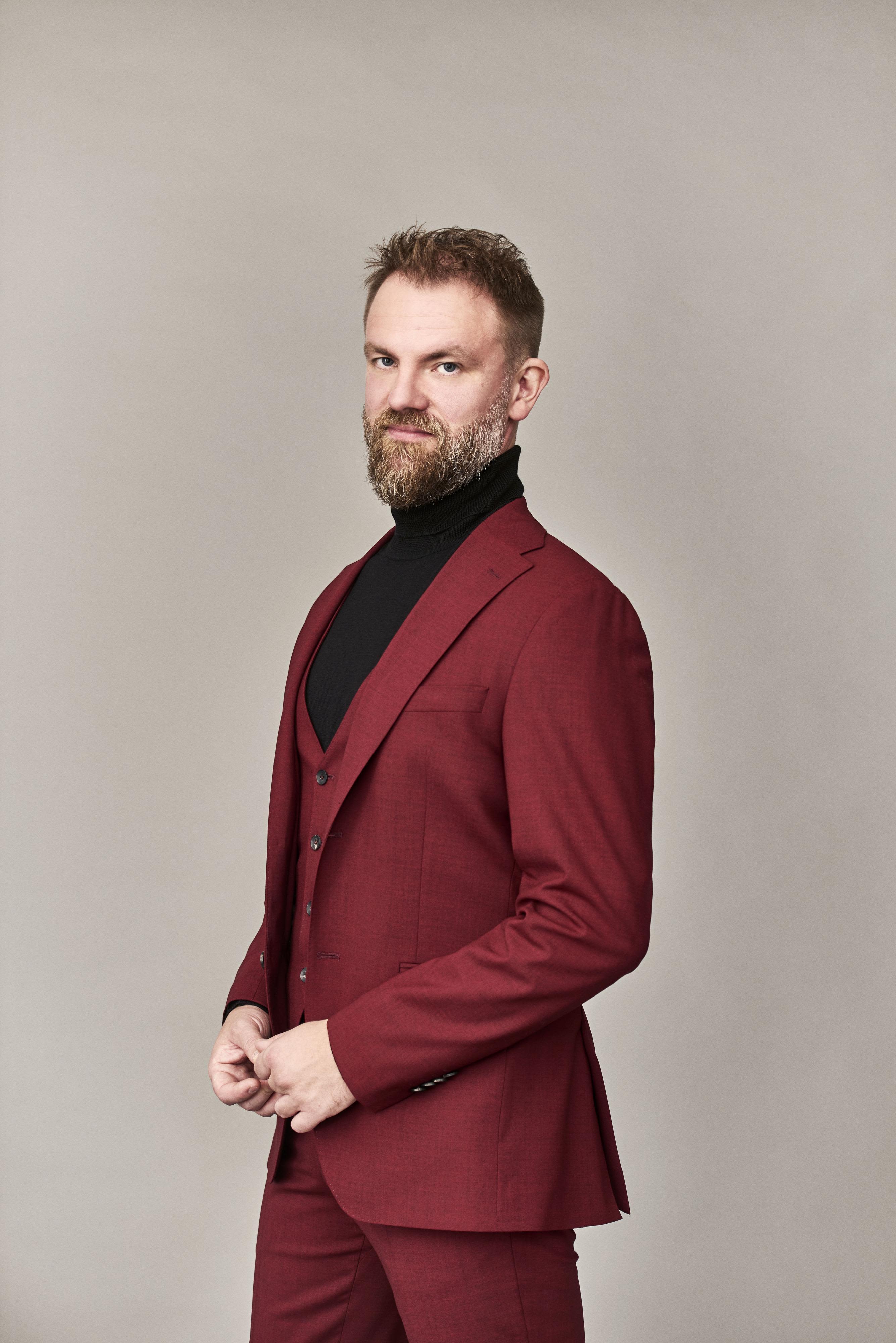
Tomas Djupsjöbacka conductor

Elina Simonen
Elina Simonen
Tomas Djupsjöbacka is a Finnish conductor and cellist with a strong chamber music background and a growing international profile. He is the founding cellist of the acclaimed string quartet Meta4 and a member of the Chamber Orchestra of Europe.
He made his conducting debut with the Ostrobothnian Chamber Orchestra in 2013 and has since conducted most of the Finnish orchestras, including the Finnish Radio Symphony Orchestra, Helsinki Philharmonic Orchestra, Turku Philharmonic Orchestra, Oulu Sinfonia and Sinfonia Lahti.
Internationally, he has appeared with orchestras such as the Gävle and Swedish Radio Symphony orchestras and the Nordic Chamber Orchestra, with whom he is a regular guest conductor.
The musicians of the Lapland Chamber Orchestra appointed him their first-ever Principal Guest Conductor, a post he held from 2019 to 2022. From 2021 to 2024, he served as Chief Conductor of the Vaasa City Orchestra. The quartet Meta4 was also the Principal Guest of the Jyväskylä Sinfonia from 2022 to 2024.
Tomas Djupsjöbacka studied conducting privately with Yannick Nézet-Séguin. He completed his formal conducting studies at the Sibelius Academy in 2017 and has participated in masterclasses with Jorma Panula.
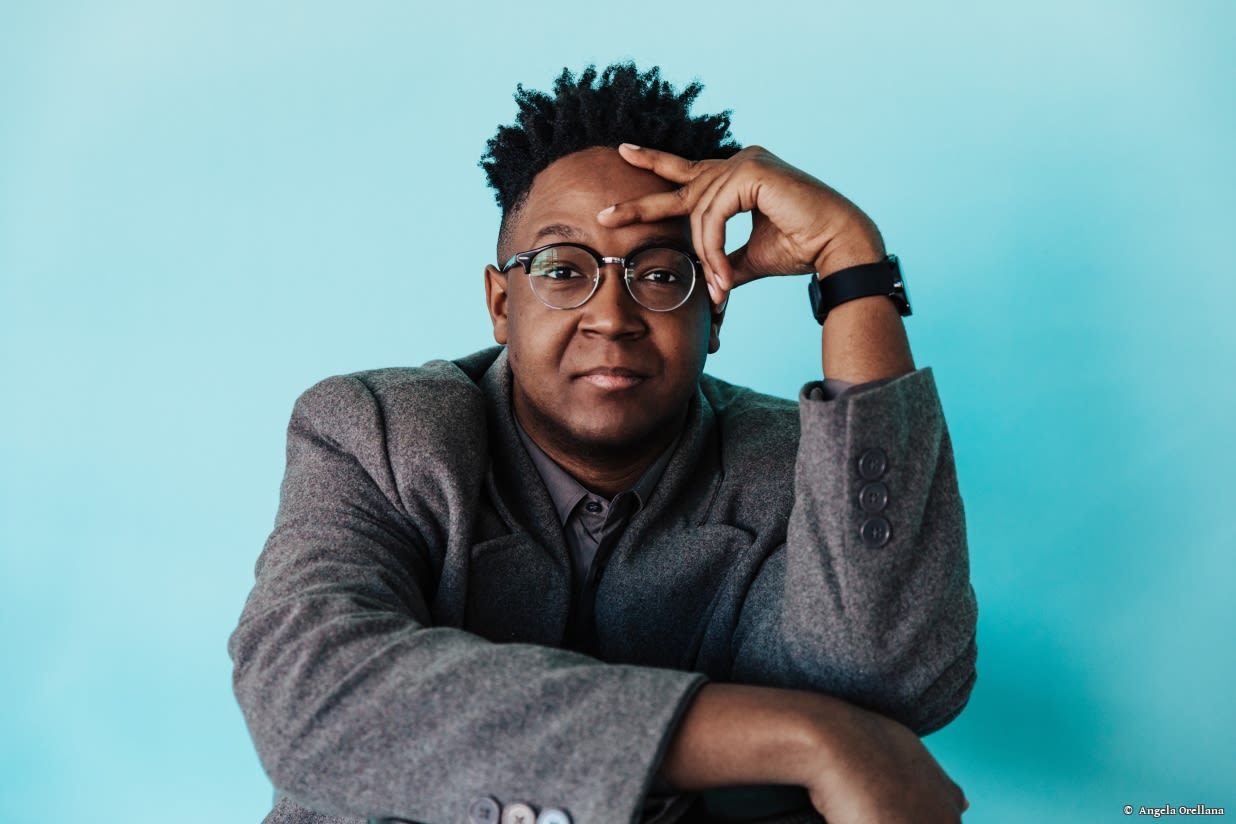
Steven Banksalto saxophone

Angela Orellana
Angela Orellana
Performer and composer Steven Banks strives to bring his instrument to the heart of the classical world. He commissions and writes music that expands the repertoire for saxophone, introducing audiences to new possibilities for artistic expression.
Highlights this season include his debuts with the BBC, Indianapolis, Oregon, Montréal and St Louis Symphony orchestras and the Netherlands Radio Philharmonic Orchestra. He also performs Joan Tower’s Love Returns, following its world premiere at last year’s Colorado Music Festival.
Other recent premieres include Billy Childs’s Diaspora, Carlos Simon’s hear them, Augusta Read Thomas’s Haemosu’s Celestial Chariot Ride and Christopher Theofanidis’s Visions of the Hereafter, among others.
In recital, he appears with pianist Xak Bjerken at prestigious series throughout the US. As a chamber musician, he enjoys close collaborations with the Miró and Verona quartets, as well as being a founding member of the award-winning all-saxophone ensemble Kenari Quartet.
His compositions are increasingly in demand and he has been commissioned by Young Concert Artists, the chamber music festivals of Tulsa, Tucson, Bridgehampton and Chamber Music North West and the Chicago Symphony Orchestra.
As part of his ongoing advocacy for diversity and inclusion, Steven Banks this season launched the ‘Come As You Are’ project – an innovative community engagement initiative in partnership with orchestras, designed to increase representation in the concert hall through potent community performances and affordable ticket access.
BBC National Orchestra of Wales
For over 90 years, the BBC National Orchestra of Wales, the only professional symphony orchestra in Wales, has played an integral part in the cultural landscape of the country, occupying a distinctive role as both a broadcast and national orchestra, and serving as an ambassador of Welsh culture, regularly performing music created in Wales and championing Welsh composers and artists.
Part of BBC Cymru Wales and supported by the Arts Council of Wales, BBC NOW performs a busy schedule of concerts and broadcasts, working with acclaimed conductors and soloists from across the world, including its Principal Conductor, the award-winning Ryan Bancroft.
The orchestra is committed to working in partnership with community groups and charities, taking music out of the concert hall and into settings such as schools and hospitals to enable others to experience and be empowered by music. It undertakes workshops, concerts and side-by-side performances to inspire and encourage the next generation of performers, composers and arts leaders, and welcomes thousands of young people and community members annually through its outreach and education projects.
BBC NOW performs annually at the BBC Proms and biennially at the BBC Cardiff Singer of the World competition, and its concerts can be heard regularly across the BBC – on Radio 3, Radio Wales and Radio Cymru. On screen, music performed by BBC NOW can be heard widely across the BBC and other global channels, including the soundtrack and theme tune for Doctor Who, Planet Earth III, Prehistoric Planet, The Pact and Children in Need.
Based at BBC Hoddinott Hall, Cardiff Bay, BBC NOW utilises a state-of-the-art recording studio with a camera system for livestreams and TV broadcasts to bring BBC NOW’s music to a broader audience across Wales and the world. For more information about BBC NOW please visit bbc.co.uk/now
BBC National Orchestra of Wales
Patron
HM King Charles III KG KT PC GCB
Principal Conductor
Ryan Bancroft
PrincipalGuest Conductor
Jaime Martín
Composer-in-Association
Gavin Higgins
First Violins
Savva Zverev
Gwenllian Hâf MacDonald
Terry Porteus
Suzanne Casey
Carmel Barber
Kerry Gordon-Smith
Emilie Godden
Anna Cleworth
Ruth Heney **
Žanete Uškāne
Alejandro Trigo
Gary George-Veale
Second Violins
Anna Smith *
Kirsty Lovie #
Sheila Smith
Vickie Ringguth
Joseph Williams
Michael Topping
Katherine Miller
Beverley Wescott
Roussanka Karatchivieva
Lydia Caines **
Elizabeth Whittam
Laurence Kempton
Violas
Tetsuumi Nagata
Peter Taylor
Lydia Abell
Catherine Palmer
Anna Growns
Robert Gibbons
Laura Sinnerton
Dáire Roberts
Charlotte Limb
Cellos
Miwa Rosso
Jessica Feaver
Sandy Bartai
Keith Hewitt
Carolyn Hewitt
Alistair Howes
Rachel Ford
Kathryn Graham
Double Basses
Alexander Jones #
Christopher Wescott
Emma Prince
Chris Kelly
Piccolo
Oboes
Cor anglais
Clarinets
Nicholas Carpenter *
Bass Clarinet
Lenny Sayers †**+
Bassoons
Contrabassoon
David Buckland †
Horns
Meilyr Hughes
Pedro Meseguer Magaña
Dave Ransom
John Davy
Trumpets
Phillipe Schartz *
Trombones
Bass Trombone
Tuba
Timpani
Percussion
Phil Girling
Max Ireland
Sarah Mason
Sam Jowett
Harp
Tomos Xerri
Piano
Catherine Roe Williams
* Section Principal
The list of players was correct at the time of publication
Director Lisa Tregale
+ Green Team member
Keep up to date with BBC National Orchestra of Wales
Listen to our BBC Radio 3 broadcasts via the BBC Sounds app. Visit our website and follow us on Facebook and Instagram
To help us improve our online concert programmes, please take this 5-minute survey
Produced by BBC Proms Publications