
Magic & Melodies
Thursday 19/3/26, 7.30pm
Aberystwyth Arts Centre
Friday 20/3/26, 7.30pm
Prichard-Jones Hall, Bangor


Grace Williams
Concert Overture 7’
Jean Sibelius
Violin Concerto in D minor31’
INTERVAL: 15 minutes
Pyotr Tchaikovsky
Symphony No. 1 in G minor, ‘Winter Daydreams’ 44’
Nil Venditti conductor
Liya Petrova violin


The concert in Bangor is being recorded by BBC Radio 3 for future broadcast in Classical Live and by Radio Cymru; it will be available for 30 days after broadcast via BBC Sounds, where you can also find podcasts and music mixes.
Introduction
A warm welcome to tonight’s concert, for which we’re delighted to welcome back Nil Venditti, who launched our season in such style back in September.
There’s no lack of Romantic fervour in the programme, with masterpieces by Sibelius and Tchaikovsky. But we begin closer to home, with one of Grace Williams’s earliest surviving orchestral works, one that clearly shows that she already has a distinctive voice of her own.
Liya Petrova joins the orchestra for Sibelius’s Violin Concerto. It was an instrument the composer knew intimately, having once hoped to forge a career as a solo violinist. With its mix of icy beauty and hugely demanding writing for the soloist – all set against a backdrop that seems to conjure the landscapes of his native Finland – it has long been a favourite with both players and audiences.
To end, Tchaikovsky’s First Symphony, subtitled ‘Winter Daydreams’. It was written when he was in his twenties and he later dismissed it as ‘a sin of my sweet youth’, but that’s to underestimate its considerable charms, with Tchaikovsky’s ear for a melody already very much in evidence.
Enjoy!
Lisa Tregale
Director
Please respect your fellow audience members and those listening at home: mobile phones may be kept on but on silent and with the brightness turned down; other electronic devices should be switched off during the performance. Photography and recording are not permitted.
Grace Williams (1906–77)
Concert Overture (c1932)

Barring the overture Hen Walia (1930) and a four-movement Suite for Orchestra (1932), Williams’s Concert Overture is the first of her orchestral works to have survived. Written for a competition held by the Daily Telegraph in 1932–3 in which it was subsequently ‘highly commended’, it followed its two predecessors in being premiered (in 1935) at the National Eisteddfod by the London Symphony Orchestra. No records of further performances exist – perhaps because the composer herself later seemingly destroyed any original orchestral parts. (Evidence of this event can be seen both on the manuscript score itself, dismissed as ‘not worth performing’, and in Williams’s diary, which records 10 May 1951 – when she destroyed a number of her manuscript scores – as a ‘DAY OF DESTRUCTION’.)
Unlike Hen Walia, the Concert Overture uses no traditional melodies and has no discernible programme. Virtuosic from the outset and seldom deviating from the opening Allegro con brio tempo or subsequent Agitato di molto (‘Very agitated’) and similar, it shares aspects of its musical language with others of Grace Williams’s works of the 1930s and 1940s – in which the composer’s biographer, Malcolm Boyd, observed that ‘tonality is often extremely elusive’. Nevertheless, it is finely crafted and as representative of Williams’s early style as better-known works such as Penillion and the Trumpet Concerto are of her later scores.
Programme note © Graeme Cotterill
Jean Sibelius (1865–1957)
Violin Concerto in D minor, Op. 47 (1903–4, rev. 1905)
1 Allegro moderato
2 Adagio di molto
3 Allegro, ma non tanto
Liya Petrova violin
For a time as a young man, Sibelius had hoped to become a violin virtuoso. Yet something seems to have gone wrong with Sibelius’s confidence, and his technique suffered. He thought of renouncing music altogether ‘and living the life of an idiot, for which I’m well qualified’. In the end, the urge to compose was too strong but, even so, one can imagine how mixed his feelings must have been when he came to tackle a concerto for the instrument in 1903.
It may be significant that the time immediately before and during Sibelius’s work on the Violin Concerto was marked by one of his worst periods of alcoholism. His heroically patient wife Aino frequently went out to search Helsinki’s fashionable clubs, bars and restaurants for him, hoping against hope that he might just sober up enough to complete the work. The slow movement of the concerto was apparently sketched out during a colossal three-day hangover. Sibelius’s brother Christian (a clinical psychiatrist) begged him to stop drinking. But Sibelius replied that he was just too weak. ‘When I am standing in front of a grand orchestra and have drunk a half-bottle of champagne, then I conduct like a young god. Otherwise I am nervous and tremble, feel unsure of myself, and then everything is lost. The same is true of my visits to the bank manager.’ And yet nowhere is this the kind of music one would describe as self-indulgent or loose-limbed. The violin writing is masterly – showing how thoroughly Sibelius understood his instrument. There are moments that can bring the most expert player out in a cold sweat – and they’re not always the passages that sound the most difficult.
The idea of mastery extends to every dimension of the concerto. Construction is taut, emotions are powerful but not uncontrolled and the long lyrical paragraphs (such as the floating, soaring violin line at the very beginning) are always beautifully shaped – they never sprawl. There are moments, such as the impassioned second theme of the first movement, or virtually the whole of the central slow movement, where the mood is achingly nostalgic, even pained. But the hand of Sibelius the great symphonist, the master of organic logic, is always in evidence. And after the emotionally probing first and second movements comes an energetic, resolute finale. The stern, stormy but unambiguously major-key ending suggests inner darkness confronted and defied. In terms of Sibelius’s own life at the time, this may have been wish-fulfilment, but as art it’s resoundingly convincing.
Programme note © Stephen Johnson
INTERVAL: 15 minutes
Pyotr Tchaikovsky (1840–93)
Symphony No. 1 in G minor, Op. 13, ‘Winter Daydreams’ (1866, rev. 1868, 1874)
1 Daydreams on a Winter Journey
2 Land of Gloom, Land of Mist
3 Scherzo
4 Finale
Tchaikovsky’s First Symphony was not often performed during the composer’s lifetime, but he affectionately called it ‘a sin of my sweet youth’. It does indeed sound immediate and fresh from the outset, with a melody that sweeps you away on a troika of fine horses through the snowy expanse of a Russian landscape. Tchaikovsky’s melodic inspiration was already in full flow when he started the symphony at the age of 26, just after graduating from the St Petersburg Conservatoire. But symphonic forms are difficult to handle, and the genre carries a heavy burden of tradition and high expectations. During the summer of 1866, Tchaikovsky found the symphony such a struggle to write that he suffered a nervous breakdown. Ever after, he had to exercise restraint, and avoid the trap of obsessive round-the-clock work. The resulting score failed to satisfy him, so he revised it before the premiere in 1868, and once again in 1874.
The first movement, published under the title ‘Daydreams on a Winter Journey’, begins with a lyrical theme that is rooted in Russian folksong. Its calm is almost immediately interrupted by a prickly chromatic motif that acts as a dynamic force and adds darker, fantastical shades. The movement has a great sense of natural flow, and hints at dramatic depths that prefigure the mature Tchaikovsky.
The slow movement also has a title: ‘Land of Gloom, Land of Mist’, referring to the austere northern landscape of Valaam Island оn Lake Ladoga. Tchaikovsky had visited this place of pilgrimage famed for its monastery, and the opening chorale seems to suggest a mood of tranquil piety. The solo oboe invokes melancholy Russian folk tunes, but it is paired with a warmer theme in the strings. When these themes return, they come into full bloom, thanks to Tchaikovsky’s skill as an orchestrator. And when the oboe’s theme is transferred to the horns, it achieves a hymnic resonance.
The whimsical Scherzo draws on an early piano sonata of Tchaikovsky’s, but it perfectly echoes the more anxious moments of the first movement. The obsessive rhythms of the Scherzo give way to a relaxed waltz in the Trio, which returns at the end of the movement, but now darkened by a minor key and the presence of a worrying rhythm in the timpani. The graceful ending is a nod to Mendelssohn’s famous scherzo from his music for A Midsummer Night’s Dream.
The finale begins slowly and darkly: it is a quotation of a genuine Russian street song, although Tchaikovsky changed the key from major to minor. The clouds part for the boisterous Allegro theme and the street song also comes back, now confident and even brash, suggesting unsophisticated merriment turning riotous. Tchaikovsky restores order and symphonic standards with a fugue, but afterwards the music descends into depression, which is succeeded, manically, by a still wilder bacchanal. Perhaps the movement tells us something of Tchaikovsky’s conflicted life and anticipates the harsher struggles with ‘Fate’ that will underpin his later works.
Programme note © Marina Frolova-Walker
Help Us Improve Our Online Programmes.
Please take this 5-minute survey and let us know what you think of these notes.
Programme Survey
You may also like:
If you’ve enjoyed the concert today, bring friends and family and come along to this forthcoming concert. As an existing audience member, you can buy tickets for it for £7 using promotion code NOWYOU when buying online.
Symphonic Dances
Thursday 4/6/26, 7.30pm
BBC Hoddinott Hall, Cardiff
Livestream
Friday 5/6/26, 7.30pm
Brangwyn Hall, Swansea
Stravinsky Song of the Nightingale
Brahms Double Concerto
Rachmaninov Symphonic Dances
Ryan Bancroft conductor
Lesley Hatfield violin
Alice Neary cello
CAPTIVATING | VIBRANT | THEATRICAL
Not one to miss, our season finale and Ryan Bancroft’s final concert as BBC NOW’s Principal Conductor. Starting with Stravinsky’s symphonic poem Song of the Nightingale, we then hear from our leader Lesley Hatfield, and former principal cellist Alice Neary, in Brahms’sDouble Concerto. We finish with Rachmaninov’s Symphonic Dances, his final complete composition, which combines motifs derived from Russian church music with quotes from his own First Symphony.
Book tickets for just £7 using promotion code NOWYOU https://www.bbc.co.uk/events/evr6gw
Biographies
Nil Venditti conductor

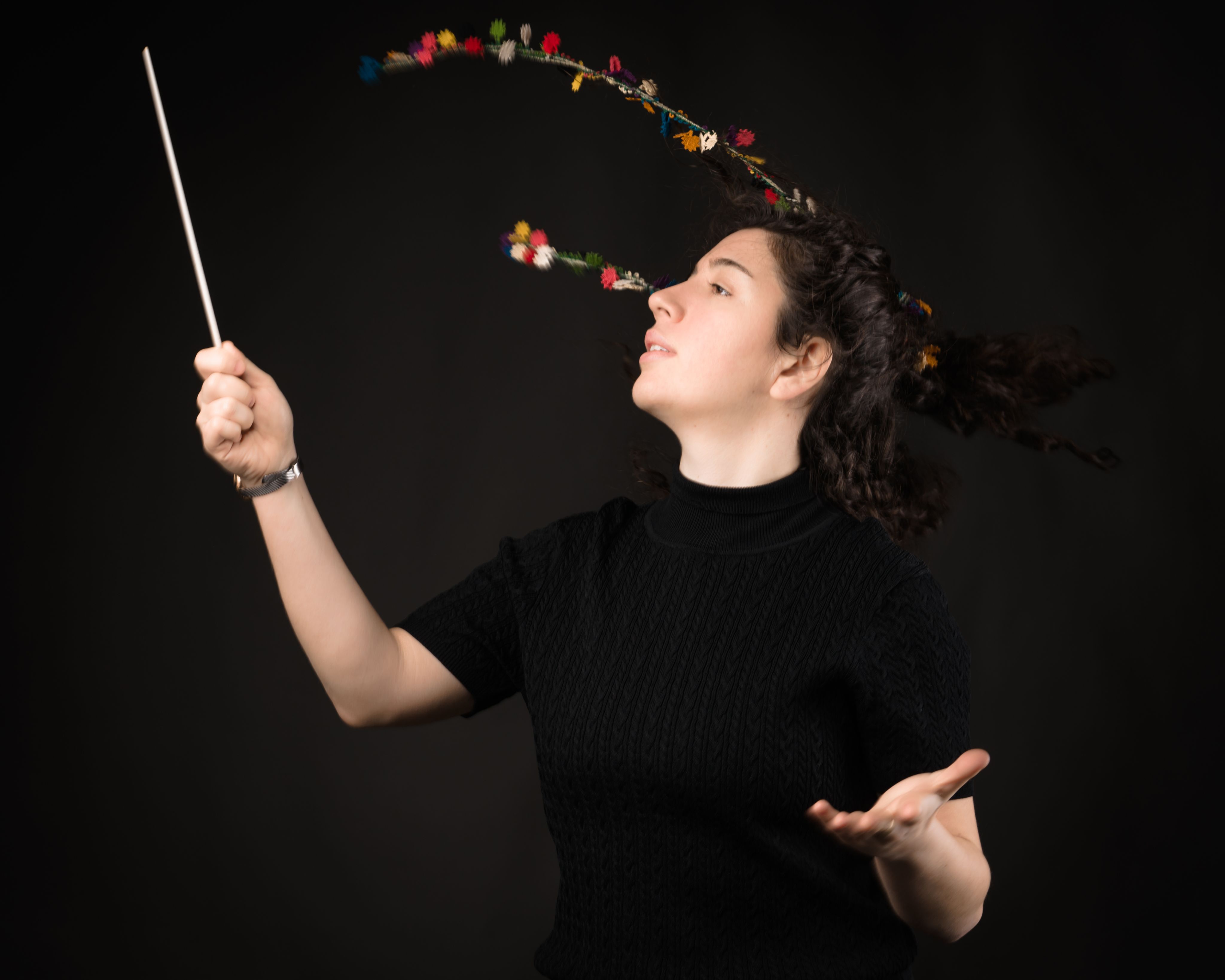
Alessandro Bertani
Alessandro Bertani
Italian-Turkish conductor Nil Venditti is fast establishing relationships with major orchestras and ensembles around the world, including the Royal Northern Sinfonia, of which she has been Principal Guest Conductor since the 2024/25 season.
This season she has engagements spanning the globe. Highlights include a number of concerts in the UK, where she works extensively with the BBC National Orchestra of Wales and Royal Philharmonic Orchestra, as well as making her debut with the Philharmonia Orchestra and City of Birmingham Symphony Orchestra. She also makes her debut at London’s Barbican with the BBC Symphony Orchestra. She also appears with the Deutsche Symphonie-Orchester Berlin, Beethoven Orchester Bonn, Musikalische Akademie Mannheim, Bilbao and Quebec Symphony orchestras and Tampere Philharmonic Orchestra, among others.
Recent highlights include debuts with the Finnish Radio Symphony Orchestra, BBC Philharmonic Orchestra and Orchestra Ensemble Kanazawa, as well as returns to the BBC Proms, Schleswig-Holstein Festival, Royal Philharmonic Orchestra, and Deutsche Kammerphilharmonie Bremen.
She combines a strong affinity for Classical and early Romantic repertoire with a particular interest in Turkish and Italian composers. She continues to strengthen her reputation in the opera house, and has conducted operas from Mozart’s Così fan tutte to Peter Maxwell Davies’s The Lighthouse. This summer she conducts Macbeth for Longborough Festival Opera.
Nil Venditti studied conducting at the Zurich University of the Arts with Johannes Schlaefli, as well as attending the Conducting Academy associated with the Pärnu Music Festival under Paavo Järvi, Neeme Järvi and Leonid Grin. Prior to this, she studied cello in Italy with Francesco Pepicelli.
Liya Petrovaviolin

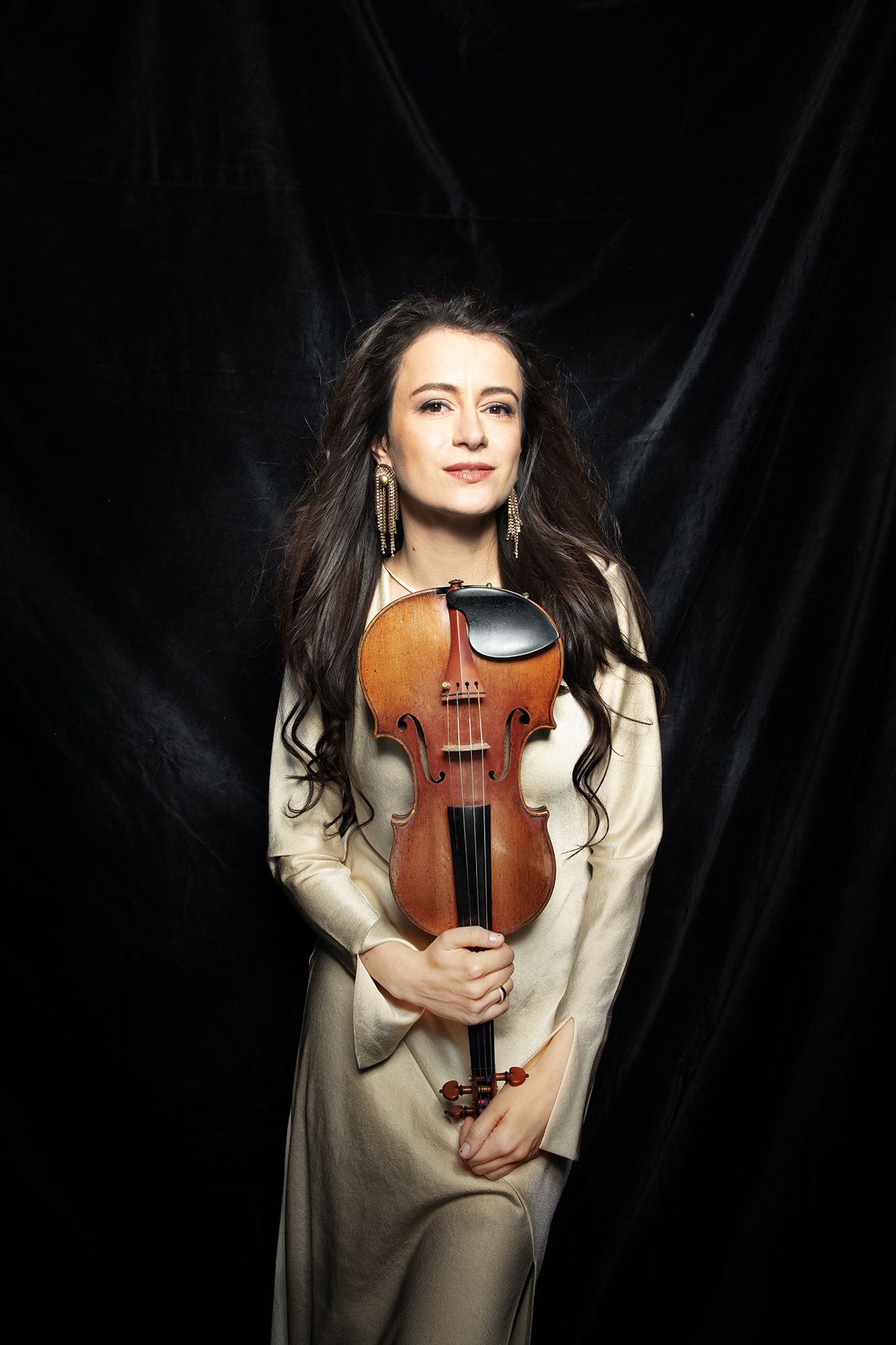
Simon Fowler
Simon Fowler
Liya Petrova first came to international attention when she won the 2016 Carl Nielsen Competition. Two years later she recorded the Nielsen concerto and Prokofiev’s First with the Odense Symphony Orchestra and Kristiina Poska to great acclaim.
She has appeared as a soloist with leading orchestras, including the Orchestre de Paris, the Brussels, Luxembourg, Monte-Carlo, Netherlands Radio, Radio France, Royal, Strasbourg and Tokyo Philharmonic orchestras and the Antwerp, Bournemouth, China National, Flanders and Odense Symphony orchestras, Weimar Staatskapelle, Orchestre National de Lyon, Orchestre National de Bordeaux and Orchestre National des Pays de la Loire.
She has worked with conductors such as Elim Chan, Stanislav Kochanovsky, Aziz Shokhakimov, Tan Dun, Pierre Bleuse, Duncan Ward, Martyn Brabbins, Kristiina Poska, Riccardo Minasi, Michael Sanderling, Kirill Karabits, Diego Fasolis, Michael Schønwandt, Philippe Herreweghe, Krzysztof Penderecki, Nikolaj Szeps-Znaider, Alexander Liebreich, Xian Zhang, Ariane Matiakh, Christopher Warren-Green, Michel Tabachnik and Jesús López Cobos.
Last August she made her debut at the BBC Proms, playing Vaughan Williams’s The Lark Ascending with tonight’s conductor and orchestra.
She regularly plays chamber music with Alexandre Kantorow and has performed with many other leading musicians, including Beatrice Rana, Emmanuel Pahud, Pablo Ferrández, Martha Argerich, Nicholas Angellich, Yuri Bashmet, Mischa Maisky, Renaud Capuçon, Augustin Dumay, James Ehnes, Frank Braley, Yuja Wang, Gérard Caussé, Antoine Tamestit, Bruno Philippe, Aurélien Pascal and Gautier Capuçon.
The latest addition to her award-winning discography combines Korngold’s Violin Concerto and Richard Strauss’s Violin Sonata.
She was born in Bulgaria into a family of musicians and studied with Augustin Dumay at the Chapelle Musicale Reine Élisabeth in Brussels, Antje Weithaas at the Hochschule für Musik Hans Eisler Berlin and Renaud Capuçon at the Haute École de Musique in Lausanne.
She founded La Musikfest Parisienne in 2020 during the first lockdown. The festival quickly gained acclaim and now takes place at the Philharmonie de Paris, under her joint artistic direction with Alexandre Kantorow.
Liya Petrova plays the ‘Rovelli’ violin, made in 1742 by Guarneri del Gesù, generously loaned by private sponsors, as well as the ‘Consolo’, made in 1733 by Guarneri del Gesù, on loan from the Bulgarian State.
BBC National Orchestra of Wales
For over 90 years, the BBC National Orchestra of Wales, the only professional symphony orchestra in Wales, has played an integral part in the cultural landscape of the country, occupying a distinctive role as both a broadcast and national orchestra, and serving as an ambassador of Welsh culture, regularly performing music created in Wales and championing Welsh composers and artists.
Part of BBC Cymru Wales and supported by the Arts Council of Wales, BBC NOW performs a busy schedule of concerts and broadcasts, working with acclaimed conductors and soloists from across the world, including its Principal Conductor, the award-winning Ryan Bancroft.
The orchestra is committed to working in partnership with community groups and charities, taking music out of the concert hall and into settings such as schools and hospitals to enable others to experience and be empowered by music. It undertakes workshops, concerts and side-by-side performances to inspire and encourage the next generation of performers, composers and arts leaders, and welcomes thousands of young people and community members annually through its outreach and education projects.
BBC NOW performs annually at the BBC Proms and biennially at the BBC Cardiff Singer of the World competition, and its concerts can be heard regularly across the BBC – on Radio 3, Radio Wales and Radio Cymru. On screen, music performed by BBC NOW can be heard widely across the BBC and other global channels, including the soundtrack and theme tune for Doctor Who, Planet Earth III, Prehistoric Planet, The Pact and Children in Need.
Based at BBC Hoddinott Hall, Cardiff Bay, BBC NOW utilises a state-of-the-art recording studio with a camera system for livestreams and TV broadcasts to bring BBC NOW’s music to a broader audience across Wales and the world. For more information about BBC NOW please visit bbc.co.uk/now
BBC National Orchestra of Wales
Patron
HM King Charles III KG KT PC GCB
Principal Conductor
Ryan Bancroft
PrincipalGuest Conductor
Jaime Martín
Composer-in-Association
Gavin Higgins
First Violins
Gongbo Jiang *
Gwenllian Hâf MacDonald
Terry Porteus
Suzanne Casey
Anna Cleworth
Emilie Godden
Žanete Uškāne
Alejandro Trigo
Carmel Barber
Ruth Heney
Grace Shepherd
Second Violins
Anna Smith *
Kirsty Lovie #
Ros Butler
Sheila Smith
Michael Topping
Katherine Miller
Vickie Ringguth
Beverley Wescott
Lydia Caines
Roussanka Karatchivieva
Violas
Tetsuumi Nagata
Peter Taylor
Robert Gibbons
Lydia Abell
Catherine Palmer
Anna Growns
Laura Sinnerton
Cellos
Miwa Rosso *
Sandy Bartai
Alistair Howes
Rachel Ford
Keith Hewitt
Carolyn Hewitt
Double Basses
Siân Hicks
Cécile-Laure Kouassi
James Manson
Christopher Wescott
Flutes
Mark Taylor
John Hall †
Lindsey Ellis
Piccolos
Oboes
Amy McKean †
Clarinets
Nicholas Carpenter *
William White
Bassoons
Patrick Bolton
Contrabassoon
David Buckland †
Horns
Meilyr Hughes
Jack Pilcher May
Flora Bain
Dave Ransom
Trumpets
Corey Morris †
Robert Samuel
Trombones
Dafydd Thomas †
Bass Trombone
Tuba
Timpani
Percussion
Phil Girling
Harp
Tomos Xerri
* Section Principal
The list of players was correct at the time of publication
Director Lisa Tregale
+ Green Team member
Keep up to date with BBC National Orchestra of Wales
Listen to our BBC Radio 3 broadcasts via the BBC Sounds app. Visit our website and follow us on Facebook and Instagram
To help us improve our online concert programmes, please take this 5-minute survey
Produced by BBC Proms Publications