
Echoes of France
Thursday 26/2/26, 7.30pm
BBC Hoddinott Hall, Cardiff


Jean Sibelius
Pelléas et Mélisande – suite 29’
Maurice Ravel
Piano Concerto for the Left Hand 19’
INTERVAL: 15 minutes
Ernest Chausson
Symphony in B flat major 30’
Clelia Cafiero conductor
Nicholas McCarthy piano
BBC Hoddinott Hall is certified by EcoAudio and we’re proud to be supporting the BBC in becoming a more sustainable organisation. For more information on the BBC’s net-zero transition plan and sustainability strategy please visit https://www.bbc.co.uk/aboutthebbc/documents/bbc-net-zero-transition-plan-2024.pdf




This concert is being recorded by BBC Radio 3 for future broadcast in Classical Live; it will be available for 30 days after broadcast via BBC Sounds, where you can also find podcasts and music mixes.
Introduction
A warm welcome to tonight’s concert, in which up-and-coming Italian conductor Clelia Cafieromakes her BBC NOW debut with a programme that centres around French music.
In his Pelléas et Mélisande suite Sibelius turned to Maurice Maeterlinck’s play of the same name – a tragedy that inspired responses from composers as different as Debussy and Schoenberg. Sibelius adapted the music he’d originally composed to accompany a staging of the play in Helsinki into a concert suite that combines soulfulness with his acute ear for orchestral colour.
Nicholas McCarthy – also making his BBC NOW debut – is an artist who is used to breaking down barriers, having been born without his right hand. He has a particularly close relationship with Ravel’s Concerto for the Left Hand, originally written for Paul Wittgenstein (who’d lost his right arm in the First World War) and which he performed at last year’s BBC Proms to great acclaim.
To end, Chausson’s Symphony in B flat major, a work that abounds in Wagnerian richness allied to a tautness of structure that he learnt from his teacher, César Franck.
Enjoy!
Lisa Tregale
Director
Please respect your fellow audience members and those listening at home: mobile phones may be kept on but on silent and with the brightness turned down; other electronic devices should be switched off during the performance. Photography and recording are not permitted.
Jean Sibelius (1865–1957)
Pelléas et Mélisande – suite, Op. 46 (1905)

1 At the Castle Gate
2 Mélisande
3 At the Seashore
4 A Spring in the Park
5 The Three Blind Sisters
6 Pastorale
7 Mélisande at the Spinning Wheel
8 Entr’acte
9 The Death of Mélisande
Maurice Maeterlinck’s tragic Symbolist play Pelléas et Mélisande is rarely seen in theatres today, but it cast a peculiarly long shadow over composers at the turn of the 20th century. Gabriel Fauré scored the first London production in 1898, four years before Claude Debussy completed the final version of his landmark opera and Arnold Schoenberg started work on his symphonic poem. Jean Sibelius got in on the act soon after, writing music for a Helsinki production and then reworking it into this nine-part concert suite.
After the grand swells of the opening, which has found a 64-years-and-counting afterlife as the theme to BBC TV’s The Sky at Night, we meet the woman at the centre of the play’s love triangle: married to one man but soon to fall in love with his brother. The doomed lovers meet by the sea (to a decidedly ominous soundtrack) and in the park (to a jaunty waltz), before Mélisande’s hopes of happiness start to fade – and then, in ‘Mélisande at the Spinning Wheel’, appear to come crashing down entirely. The oddly perky ‘Entr’acte’ (originally the prelude to the play’s penultimate act) feels shipped in from another piece entirely, before Sibelius brings things to a suitably yearning yet tragic conclusion. No happy endings here.
Programme note © Will Fulford-Jones
Maurice Ravel (1875–1937)
Piano Concerto for the Left Hand (1929–30)
Lento – Più lento – Allegro – Più vivo ed accelerando – Tempo primo – Allegro
Nicholas McCarthy piano
Ravel’s Concerto for the Left Hand resulted from a commission by the Austrian pianist Paul Wittgenstein (brother of the philosopher) who lost his right arm during the First World War. Although Ravel was already working on the G major Piano Concerto when he met Wittgenstein during a visit to Vienna in March 1929, he threw himself vigorously into the project, composing both concertos simultaneously. Completed in 1930, the Left-Hand Concerto was premiered in Vienna on 5 January 1932 only days before the Paris premiere of the G major Concerto. Ravel conducted the Paris premiere of the Left Hand Concerto with Wittgenstein as soloist in January 1933.
While both concertos owe much to Ravel’s love of jazz, the Left Hand Concerto differs from the G major not only in its rhapsodic single-movement form but also in its dark, brooding character. A sense of mystery and foreboding is present from the outset. Opening in the depths of the orchestra with almost imperceptible rumbling of double basses and cellos, a growling contrabassoon creeps in with the first theme followed by a yearning motif on the horns, also low in their register. These two ideas build the orchestral introduction which expands through the instrumental registers in an extended crescendo that reaches a climax with the first piano entry in a dramatic solo cadenza.
Although writing for only one hand, Ravel wanted to give the impression of a full sonority as if writing for two. The piano cadenza, which establishes the work’s tonic key of D major, reveals a dazzling new approach to pianism that characterises the whole concerto; the full range of the keyboard is explored through a combination of athletic leaps (often in quick succession), cascading chords, expansive arpeggiations and juxtaposition of extremes of register, all richly resonated with the sustaining pedal. Melodic lines are deftly voiced through the shape of the left hand itself, with the thumb ideally positioned to emphasise the tops of chords.
Following the yearning lyricism of the first section, a march-like Allegro presents a dramatic contrast in terms of mood, texture and key (E major). Percussive, energetic and with an obsessive ostinato (repeated phrase) throughout, the Allegro juxtaposes three main ideas: cascading triplet chords (first announced fortissimo by a trio of trumpets), a jazzy chromatic chordal motif and a jaunty main theme in staccato triplets. The relentlessly driving rhythms create the effect of a prolonged moto perpetuo which is eventually interrupted by the dramatic return of the theme from the opening slow section. Following the piano’s long final cadenza, a brief return of the Allegro material provides a climactic conclusion.
Programme note © Caroline Rae
INTERVAL: 15 minutes
Ernest Chausson (1855–99)
Symphony in B flat major, Op. 20 (1889–91)
1 Lent – Allegro vivo
2 Très lent
3 Animé
With its sweeping lyricism and an overarching sense of fluidity Chausson’s sole Symphony echoes the elegant swirls and extended lines of the Art Nouveau movement. He embarked on the workin 1889at the suggestion of his wife’s brother-in-law, Impressionist painter Henry Lerolle (1848–1929), to whom the work is dedicated. Chausson’s reworkings, deletions and additions to the manuscript score clearly demonstrate his self-doubt during the symphony’s composition and he turned to his colleagues for advice and reassurance. The premiere took place on 18 April 1891, performed by the Société Nationale de Musique under Chausson’s direction.
Chausson was a disciple of César Franck and his symphony follows in his footsteps with its seriousness and cyclical form, reintroducing and transforming earlier themes in later movements. Several aspects of the work bear an uncanny resemblance to Franck’s own Symphony in D minor (1886–8), with parallel tonal and formal structures, and the use of a cor anglais solo in the second movement. However, Chausson’s is distinguished by its flexibility resulting in a unity between all three movements. Aside from Franck, Chausson was an ardent admirer of Wagner, even incorporating a visit to Bayreuth to see Parsifal into his honeymoon. Chausson composed his symphony alongside his opera Le roi Arthus (1886–95), which is rich in Wagner-inspired use of leitmotifs. Wagner’s influence also infiltrated the symphony, which bears his hallmark orchestration and harmonic stylings.
Chausson’s symphony may be in a major key but fellow-composer Vincent d’Indy was right when he described it being cloaked by a ‘veil of melancholy’. The lengthy slow introduction to the first movement sets a wistful tone, yet the start of the Allegro vivo, heralded by a flourish in the violins and woodwind, alleviates the intensity with a more sanguine melody, first heard on horn and bassoon before being taken up buoyantly by the orchestra.
The second movement – the source of most angst for the composer – continues this fluctuation between light and dark through two contrasting melodies. Chausson initially withholds the full extent of the first one, an expressive and intense refrain dominated by the strings, which is only heard in full after the brief respite of a more serene and hopeful middle section.
The finale bursts forth with tumultuous strings, summoning the themes heard throughout the work with competing glimpses of both heroism and struggle. After yielding to an understated yet dignified brass chorale, the symphony comes full circle, closing with a statement of the brooding five-note theme which set us forth on the sombre, yet passionate journey.
Programme note © Kerry Bunkhall
Help Us Improve Our Online Programmes.
Please take this 5-minute survey and let us know what you think of these notes.
Programme Survey
You may also like:
If you’ve enjoyed the concert today, bring friends and family and come along to this forthcoming concert. As an existing audience member, you can buy tickets for it for £7 using promotion code NOWYOU when buying online.
Love & Transformation
Thursday 12/3/26, 7.30pm
BBC Hoddinott Hall, Cardiff
Britten An American Overture
Joan Tower Love Letters UK premiere
Weber Symphony No. 2
Hindemith Symphonic Metamorphosis of Themes by Carl Maria von Weber
Tomas Djupsjöbacka conductor
Steven Banks saxophone
MAGNIFICENT | GRACEFUL | TRANSFORMATORY
Join BBC NOW for an evening that celebrates love, energy and musical transformation. Britten’s thrilling American Overture sets a lively tone, followed by the UK premiere of Joan Tower’s heartfelt Love Letters, performed by outstanding saxophonist Steven Banks. We then journey into Weber’s world, first through the charm and wit of his Second Symphony, before Hindemith’s colourful reimagining of Weber’s melodies in his Symphonic Metamorphosis. It’s a night of bold sounds, touching stories and music that continually reinvents itself.
Book tickets for just £7 using promotion code NOWYOU https://www.bbc.co.uk/events/evr6gw
Biographies
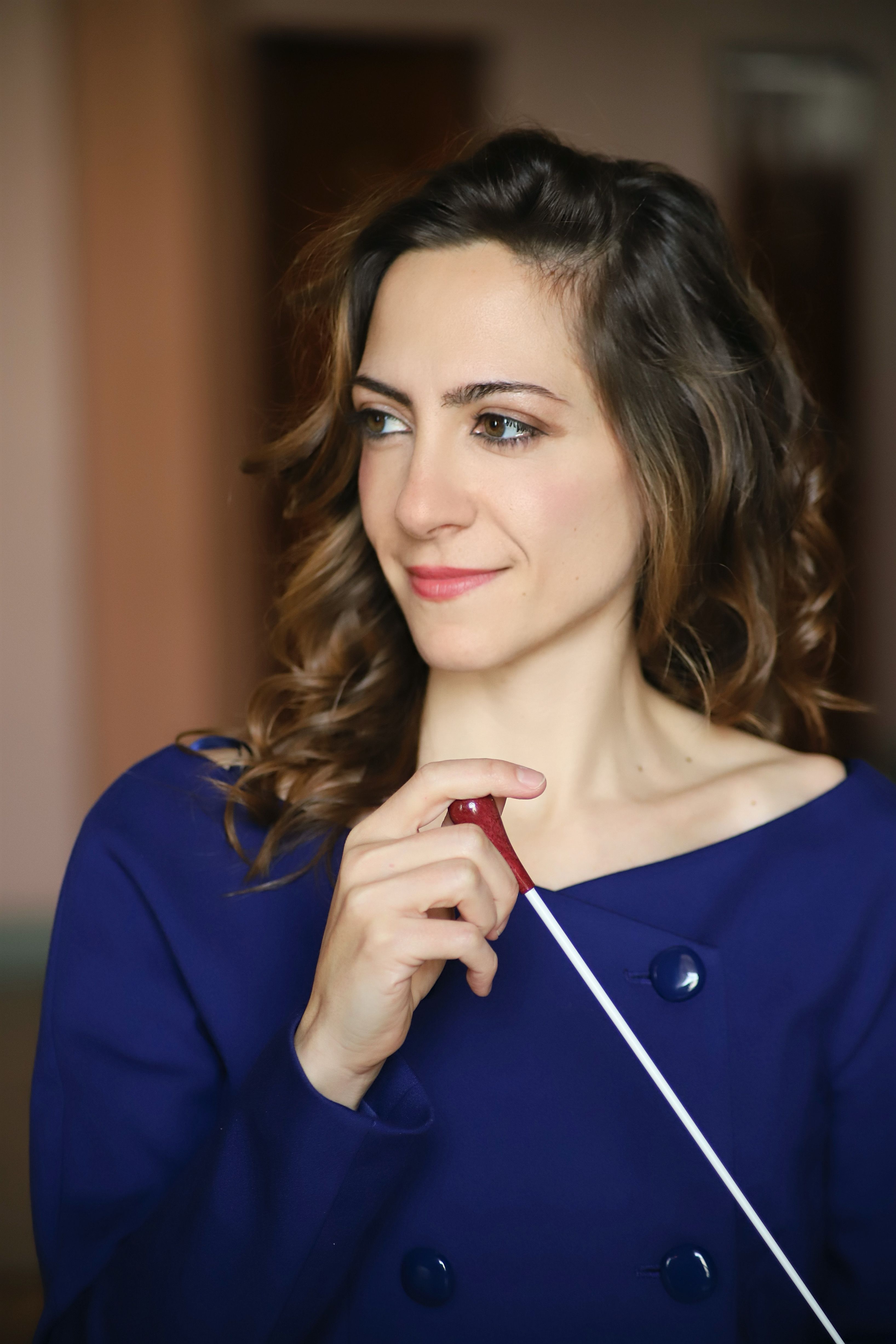
Clelia Cafiero conductor

Cyril Cosson
Cyril Cosson
The Neapolitan conductor Clelia Cafiero first gained international attention with her acclaimed debut at the Chorégies d’Orange in 2023, where she conducted Carmen, more recently stepping in at short notice to conduct the French version of Don Carlos at the Opéra de Paris.
This season she makes numerous prestigious debuts, among them Carmen at Opera Australia, La bohème at the Staatsoper Berlin and La traviata at the Semperoper Dresden. She also returns to English National Opera.
In the concert hall she makes debuts with the Orchestra Sinfonica di Milano, the Orchestre National de France, BBC Philharmonic Orchestra and the Malmö, La Monnaie and Lucerne Symphony orchestras. She also returns to the Orchestre national Montpellier Occitanie for a series of concerts.
Highlights of last season include debuts at ENO, Opéra Royal de Wallonie in Liège, Cincinnati Opera and the Nikikai Opera Foundation in Tokyo, as well as with the Orchestre National de Lyon, Irish National Orchestra and the Festival Napa Valley.
From 2022 to 2025 she was Principal Guest Conductor of the Opéra de Tours, where she led both opera productions and symphonic concerts.
In recent years, she has conducted Madama Butterfly at the Opéra de Québec; Carmen and La traviata at the Opéra de Marseille; Tosca at the Angers-Nantes Opéra and Opéra de Rennes; and The Barber of Seville at the Opéra de Tours. She has also appeared in concert with the Gulbenkian Orchestra, Polish National Radio Symphony Orchestra, Orchestre National de Lorraine and the Orchestra of the Accademia della Scala.
Clelia Cafiero began her career as a pianist, appearing at the Amsterdam Concertgebouw, Carnegie Hall, the Royal Albert Hall and the Philharmonie de Paris. Between 2013 and 2019, she worked regularly as a répétiteur at the Teatro alla Scala. She studied piano and conducting at the conservatories in Naples and Milan, as well as at the Mozarteum in Salzburg. She also holds a master’s degree in philosophy from the University of Naples.
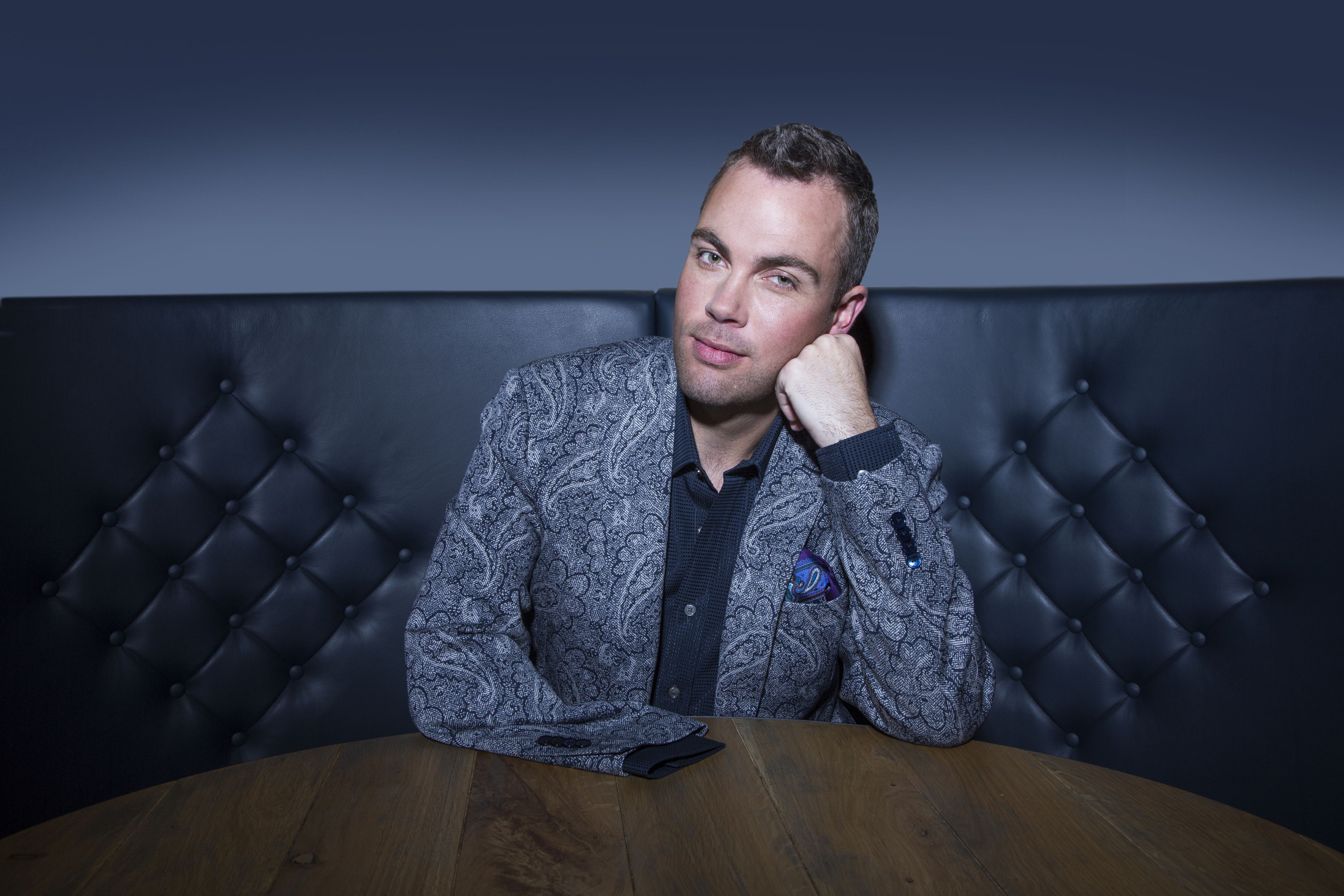
Nicholas McCarthypiano

Paul Marc Mitchell
Paul Marc Mitchell
Nicholas McCarthy was born in 1989 without his right hand and has gone on to achieve international acclaim as a pianist through talent, determination and a pioneering spirit. He defied expectations to pursue his passion for the piano, culminating in his graduation from the Royal College of Music in 2012 – the first one-handed pianist to graduate in the institution’s 130-year history. In recognition of his achievements, he was awarded Honorary Membership of the Royal College of Music in 2018.
As one of the few professional classical artists with a disability, he is a passionate advocate for the often overlooked left-hand-alone repertoire – a body of work that emerged in the 19th century and expanded significantly following the First World War, when many injured soldiers continued their musical careers through left-hand compositions.
A defining moment in his career came with his performance at the Closing Ceremony of the London 2012 Paralympic Games, where he appeared with the British Paraorchestra and Coldplay, playing live to a global audience of over 500 million. Since then, he has performed extensively worldwide, both in recital and with major orchestras.
Away from the concert stage he is a sought-after motivational speaker, regularly delivering keynote talks for leading global organisations and institutions.
In collaboration with the Associated Board of the Royal Schools of Music, he launched the world’s first graded syllabus for one-handed pianists in 2024.
Last season Nicholas McCarthy made debuts with the Royal Philharmonic Orchestra and Bournemouth and London Symphony orchestras, as well as giving his debut recital at the Vienna Konzerthaus. Last summer he made his BBC Proms debut at the Royal Albert Hall, performing Ravel’s Left Hand Concerto with the Bournemouth Symphony Orchestra and Mark Wigglesworth.
This season’s highlights include performances with the Melbourne Symphony Orchestra, his South Korean concerto debut and recital debuts at the Berlin Konzerthaus and The Glasshouse as well as concerto debuts with Aurora Orchestra and the Slovak State Philharmonic.
BBC National Orchestra of Wales
For over 90 years, the BBC National Orchestra of Wales, the only professional symphony orchestra in Wales, has played an integral part in the cultural landscape of the country, occupying a distinctive role as both a broadcast and national orchestra, and serving as an ambassador of Welsh culture, regularly performing music created in Wales and championing Welsh composers and artists.
Part of BBC Cymru Wales and supported by the Arts Council of Wales, BBC NOW performs a busy schedule of concerts and broadcasts, working with acclaimed conductors and soloists from across the world, including its Principal Conductor, the award-winning Ryan Bancroft.
The orchestra is committed to working in partnership with community groups and charities, taking music out of the concert hall and into settings such as schools and hospitals to enable others to experience and be empowered by music. It undertakes workshops, concerts and side-by-side performances to inspire and encourage the next generation of performers, composers and arts leaders, and welcomes thousands of young people and community members annually through its outreach and education projects.
BBC NOW performs annually at the BBC Proms and biennially at the BBC Cardiff Singer of the World competition, and its concerts can be heard regularly across the BBC – on Radio 3, Radio Wales and Radio Cymru. On screen, music performed by BBC NOW can be heard widely across the BBC and other global channels, including the soundtrack and theme tune for Doctor Who, Planet Earth III, Prehistoric Planet, The Pact and Children in Need.
Based at BBC Hoddinott Hall, Cardiff Bay, BBC NOW utilises a state-of-the-art recording studio with a camera system for livestreams and TV broadcasts to bring BBC NOW’s music to a broader audience across Wales and the world. For more information about BBC NOW please visit bbc.co.uk/now
BBC National Orchestra of Wales
Patron
HM King Charles III KG KT PC GCB
Principal Conductor
Ryan Bancroft
PrincipalGuest Conductor
Jaime Martín
Composer-in-Association
Gavin Higgins
First Violins
Savva Zverev
Gwenllian Hâf MacDonald
Suzanne Casey
Carmel Barber
Kerry Gordon-Smith
Anna Cleworth
Ruth Heney **
Žanete Uškāne
Alejandro Trigo
Grace Shepherd
Gary George-Veale
Rowan Patterson
Naomi Warburton
Second Violins
Anna Smith *
Kirsty Lovie #
Ros Butler
Sheila Smith
Roussanka Karatchivieva
Lydia Caines **
Beverley Wescott
Michael Topping
Katherine Miller
Joseph Williams
Laurence Kempton
Elizabeth Whittam
Violas
Cellos
Pedro Silva
Jessica Feaver
Sandy Bartai
Rachel Ford
Carolyn Hewitt
Alistair Howes
Keith Hewitt
Kathryn Graham
Double Basses
Piccolo
Oboes
Cor anglais
Clarinets
Nicholas Carpenter *
Lenny Sayers **+
E flat Clarinet
William White
Bass Clarinet
Lenny Sayers †**+
Bassoons
Llinos Owen
David Buckland
Contrabassoon
David Buckland †
Horns
Trumpets
Phillipe Schartz *
Robert Samuel
Corey Morris †
Giovanni Re
Trombones
Bass Trombone
Tuba
Timpani
Percussion
Feargus Brennan
Phil Girling
Sarah Mason
Sam Jowett
Heledd Fflur Gwynant
Harps
Elen Hydref
Aisha Palmer
* Section Principal
The list of players was correct at the time of publication
Director Lisa Tregale
+ Green Team member
Keep up to date with BBC National Orchestra of Wales
Listen to our BBC Radio 3 broadcasts via the BBC Sounds app. Visit our website and follow us on Facebook and Instagram
To help us improve our online concert programmes, please take this 5-minute survey
Produced by BBC Proms Publications