Navigating the Strait of Hormuz
Sailors share their experiences of navigating the Strait
The Strait of Hormuz has been effectively closed by Iran for more than a fortnight, preventing vital supplies of oil and gas from leaving the Middle East and sending global fuel prices soaring.
Some 20% of the world’s oil and liquefied natural gas is usually carried through the narrow corridor by around 3000 ships a month. Iran has targeted ships in the area, and it’s estimated that over 20 vessels have been hit and at least eight people killed.
In our conversations we bring together sailors to share their experiences of navigating the Strait of Hormuz.
“We would often try and transit at night because we did not want the Iranians to know where our ships were,” Tom, a former US naval officer tells us. “We would reconfigure the lights on our ship to make us look like a merchant vessel – it’s called deceptive lighting – and we would only broadcast with our civilian radar.”
After President Trump said oil tanker crews should show “some guts” and continue to sail through the Strait, we also bring together seafarer organisations concerned for the welfare of their members stuck on ships in the Gulf.
Presenter: James Reynolds
BBC producers: James Beardsworth and Isabella Bull
Boffin Media producer: Richard Hollingham
Editors: Arja Haikonen and Harriet Oliver
A Boffin Media production in partnership with the BBC World Service Outside Source team.
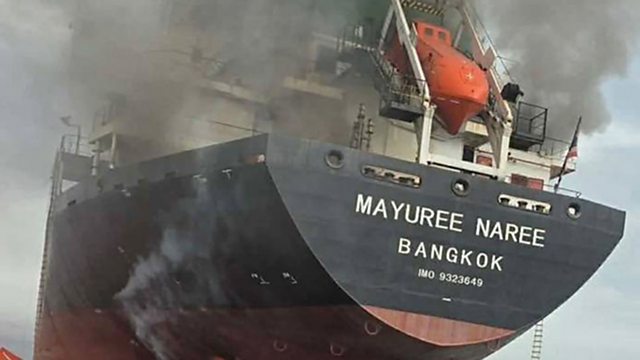
(Photo: A vessel sailing under a Thai flag is set on fire by an Iranian missile. Credit: Royal Thai Navy/handout/EPA/Shutterstock)
Last on

More episodes
Broadcasts
- Fri 20 Mar 202620:06GMTBBC World Service Online, Americas and the Caribbean, UK DAB/Freeview & Europe and the Middle East only
- Fri 20 Mar 202621:06GMTBBC World Service except Online, Americas and the Caribbean, Europe and the Middle East & UK DAB/Freeview
- Sat 21 Mar 202609:06GMTBBC World Service except East Asia, Europe and the Middle East & South Asia
- Sat 21 Mar 202616:06GMTBBC World Service News Internet
- Sat 21 Mar 202619:06GMTBBC World Service East and Southern Africa & West and Central Africa only
- Sun 22 Mar 202600:06GMTBBC World Service except Americas and the Caribbean
- Sun 22 Mar 202612:06GMTBBC World Service except East and Southern Africa & West and Central Africa
