
Bluebeard
Bartók recovers from romantic rejection. Donald Macleod explores the life of one of Hungary's greatest composers, who travelled Europe recording folk songs.
Bartók recovers from romantic rejection.
Béla Bartók was regarded as one of Hungary’s greatest composers. His fellow countryman, the pianist Andras Schiff, called him “one of the giants in the history of music.” But he was also one of the founders of what we now call ethnomusicology, spending much of his time immersed in peasant life, collecting folk songs. As around him Europe was torn apart by conflict, Bartók found relief in rural life and took inspiration from these traditional tunes, incorporating them into his own compositions.
In today's programme, Donald finds out who would provide a salve for Bartók's heartache.
7 Sketches, BB 54, Sz. 44
Dejan Lazic, piano
Duke Bluebeard's Castle, Sz. 48, Op. 11
Szilvia Vörös, mezzo-soprano
Mika Kares, bass
Helsinki Philharmonic Orchestra, Susanna Mälkki
Duke Bluebeard's Castle, Sz. 48, Op. 11
Gábor Bretz, bass
Rinat Shaham, soprano
Netherlands Radio Philharmonic Orchestra, Karina Canellakis
Four Dirges, Op. 9a
Kabi Laretei, piano
Produced by Alice McKee for BBC Audio Wales & West
Last on

Music Played
![]()
Béla Bartók
7 Sketches, Sz.44, (No.1, Portrait of a Girl)
Performer: Dejan Lazić.- CHANNEL CLASSICS : CCSSA-23407.
- CHANNEL CLASSICS.
- 10.
![]()
Béla Bartók
7 Sketches, Sz.44
Performer: Dejan Lazić.- CHANNEL CLASSICS : CCSSA-23407.
- CHANNEL CLASSICS.
- 11.
![]()
Béla Bartók
Duke Bluebeard's Castle, Sz.48 (excerpt)
Singer: Szilvia Vörös. Singer: Mika Kares. Orchestra: Helsinki Philharmonic Orchestra. Conductor: Susanna Mälkki.- BIS : BIS-2388.
- BIS.
- 1.
![]()
Béla Bartók
Duke Bluebeard's Castle, Sz.48 (excerpt)
Singer: Gábor Bretz. Singer: Rinat Shaham. Orchestra: Netherlands Radio Philharmonic Orchestra. Conductor: Karina Canellakis.- PENTATONE : PTC 5187-225.
- PENTATONE.
- 5.
![]()
Béla Bartók
Four Dirges, Sz.45
Performer: Käbi Laretei.- PROPRIUS : PRCD-9113.
- PROPRIUS.
- 6.

Broadcast
- Wed 6 May 202616:00BBC Radio 3
Beethoven Unleashed – the box set

The complete set of Radio 3 Beethoven Unleashed podcasts, with Donald Macleod.
What was really wrong with Beethoven?

Georgia Mann and neurosurgeon Henry Marsh examine the composer's numerous health problems
Composers A to Z

Visit the extensive audio archive of Radio 3 programmes about Composers and their works.
Who knew? Five eye-opening stories from Composer of the Week

The production team reflects on 5 of Donald Macleod’s best stories from the last 20 years
Five reasons why we love Parry's Jerusalem

What is the strange power of Jerusalem which makes strong men weep?
A man out of time – why Parry's music and ideas were at odds with his image...
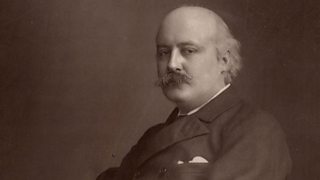
The composer of Jerusalem was very far from the conservative figure his image suggests.
Composer Help Page

Find resources and contacts for composers from within the classical music industry.
