Care for Creation
This episode from Llandaff Cathedral in Cardiff looks at the importance of caring for creation. With reflections by Bishop Mary Stallard, and music led by Llandaff Cathedral Choir.
Today’s episode comes from Llandaff Cathedral in Cardiff. Unusually, the Cathedral sits outside the city centre, in an almost rural village setting at the side of the River Taff. Like many churches, the Cathedral community see the care of God’s creation, both with voices and with actions, as a key part of their mission. Today’s service explores the Biblical mandate to care for the world around us as we hear about practical steps taken within the community, and consider how we can all contribute to making a difference in the world. The music is led by Llandaff Cathedral Choir.
Preacher: Bishop Mary Stallard
Service leaders: Canon Ian Yemm; Dean Dr Jason Bray; Canon Dr Jan van der Lely
Director of Music: Stephen Moore
Organist: Aaron Shilson
Producer: Jonathan Thomas
Readings: Psalm 1
Luke 13:6-9
Hymns: Great is thy Faithfulness
Coronation Kyrie – Mealor
View me, Lord, a work of thine
When we gasp in awe and wonder
Let the peoples praise you O God
Now thank we all our God
Play Out: Sortie on ‘Nun danket alle Gott)
Last on

More episodes
Script:
A very warm welcome to Llandaff Cathedral here in Cardiff, the capital city of Wales. Unusually, our Cathedral sits outside the city centre, in an almost rural village setting at the side of the River Taff.
Like many churches, we see the care of God’s creation, both with our voices and with our actions, as a key part of our Cathedral’s mission. As leaves fall to expose bare branches, our minds may turn to the impermanence of things, but Autumn is also a time of new beginnings, expectations and hopes.
Our Cathedral Choir and congregation sing the first hymn, ‘Great is thy Faithfulness’, expressing this so beautifully: ‘join with all nature in manifold witness to Thy great faithfulness, mercy, and love.’
Music 1 Hymn - Great is thy Faithfulness
Ian - Dean Jason, the Dean of Llandaff, leads us in prayer:
Opening Prayer (Dean Jason, Dean of Llandaff)
O Lord, You who made us to till and to keep the earth,Grace us, we pray, to preserve its beauty and to protect it against harm,as well as to delight in all its variety and to steward all of its riches, so that we might care for it as you care for it, in wisdom and in love.
We pray this for your sake and our neighbour’s as well, both near and far.
In the name of the One who sustains all of creation, Jesus Christ himself.Amen.
(by W. David O. Taylor)
Ian – Our environmental strategy is led enthusiastically by the Cathedral’s Chancellor. Canon Jan explains a little of the journey so far.
Context passage (Canon Jan, Chancellor)
Eco Church is an A Rocha project aimed at equipping churches of all denominations in England and Wales to take practical steps in caring for Creation. Churches must take meaningful action in their worship and teaching, buildings, land use, community and global engagement, and lifestyle, in order to progress through Bronze, Silver, and Gold awards.
In 2020, we were excited to receive a Bronze Eco Award and with our enthusiastic Eco Church group we’re working hard to achieve silver – starting to build a new and exciting culture of sustainability, rooted in the core values of our Christian faith. With the help of the Woodland Trust we’ve improved our surroundings by removing non-native, invasive species and planting a new mixed species native hedge. We held a ‘Community Planting Day’ last November to put in the trees, and lots of our congregation including children – and Bishop Mary - came to take part. Each person had 5 trees to plant- it may sound a lot but they were just tiny twigs at that stage! We watched them anxiously through the winter and were delighted to see them sprout leaves and grow in the spring. As the hedge grows and thickens it will provide food and shelter for many creatures. We’ve replaced old and inefficient boilers to reduce our carbon footprint whilst making the building ‘Heat Pump ready’. We’ve devised eco-friendly activities and life-style changes for our Sunday School families, and we offer regular sustainability tips to our congregations. Keep Wales Tidy helped with our churchyard Butterfly Garden and our Bishop, Mary, blessed our Cathedral shaped bug-hotel which was designed and made by one of our volunteers.
Penitential Rite (Dean Jason)
We are making slow and steady progress. Still, we remain sorry for the many ways we have fallen short of God’s expectations of us in the care of the planet. And so we pray for his mercy and forgiveness, and express our sorrow.
Music 2 Mealor – Coronation Kyrie
Ian – Paul Mealor’s Kyrie formed part of the Coronation Service of King Charles. Mealor described it as ‘a cry from the deep soul of the hills and valleys of Wales for hope, peace, love and friendship.’ Our first reading now is from the Old Testament, the first of the Psalms and is read by Dean Jason.
Reading 1 – Psalm 1 (Dean Jason)
Happy are those who do not follow the advice of the wicked, or take the path that sinners tread, or sit in the seat of scoffers; but their delight is in the law of the Lord, and on his law they meditate day and night.
They are like trees planted by streams of water, which yield their fruit in its season, and their leaves do not wither. In all that they do, they prosper. The wicked are not so, but are like chaff that the wind drives away. Therefore the wicked will not stand in the judgement, nor sinners in the congregation of the righteous; for the Lord watches over the way of the righteous, but the way of the wicked will perish.
Ian – Bishop Mary ministered across Wales before she became the Bishop of Llandaff; she joins us in worship and offers her thoughts and reflections.
Reflection 1 – Bishop Mary
Those words from that ancient song or ‘psalm’ in the Bible contrast the choices set before us: The psalmist says, we can choose to flourish or to perish. This seems to speak so directly to us as we consider our relationship with the environment and the climate emergency that’s impacting the world.
Biblical language about creation fits our setting here in Wales. Valleys, trees, rocks and mountains define much of our landscape. Wales has such a range of breathtaking scenery, and it also bears the marks and scars of our agricultural and industrial history. Here, in in Llandaff we enjoy both something of the open space of the countryside and we’re also aware of the busy hum of the city nearby.
What we notice in our local environment reflects both the beauty of creation, and its fragility. As we pray for the needs of the whole world here, we’re aware of communities elsewhere that are under threat due to climate change: Areas that flooded, places where crops will no longer grow, and people having to flee their homelands because they are becoming uninhabitable. All of this makes us more aware of our shared need to look after creation, and to discover ways to live more sustainably.
Some of our leaders in eco-awareness have come from amongst our oldest and youngest worshippers. It’s been wonderful to see the enthusiasm of small children to be involved in planting our new hedges and our little service of blessing the bug cathedral became quite extended when so many of the youngsters who’d taken part in creating it were also keen to sprinkle it with holy water! It’s also been great to see some of our older members of the congregations sharing their wisdom about how to tend and care for all that’s growing.
Gathering at the cathedral for morning and evening prayer at this time of year with the darker mornings and evenings, when we’re aware that winter’s coming, it can feel as if we’re at a turning point, a time of change. It’s a time when the pace of life undergoes a subtle shift: During the spring and summer we saw growth happening all around us. In autumn and winter much that’s growing and changing is more hidden and mysterious. Leaves and seeds are falling to the ground, and in the coming months as many trees and shrubs will become bare, below the soil we know that growth continues – even though we cannot see this.
Perhaps there’s a hopeful message for us in this – a truth about our own growth and journey towards finding the courage and trust we need for the future. The psalmist suggested that we should be like “trees planted by water”. Maybe this prompts us to think carefully about our environment, to be intentional about our use of resources and to listen to our religious traditions, and the wisdom of those around us. We may feel the challenge, uncertainty and hardship of these times, but there are still possibilities for growth and healing, and God has gifts and blessings still to show us.
lan - people can feel small and insignificant in the face of global challenges. In Llandaff, through the Eco Church project, we have learned that every person matters, and can make a difference. Against the backdrop of 'earth's delight', the 16th century poet Thomas Campion frames our humanity as 'God's work', from clay and dust. We, and the earth, are literally made from the same stuff. Campion's words are set to music by Richard Lloyd: 'View me Lord, a work of thine'.
Music 3 - Lloyd - View me, Lord
Ian – our next reading will certainly resonate with Canon Jan and her husband Graham as they have championed better stewardship of the land around the Cathedral. They organised a community planting day to replace non-native invasive species with mixed native trees to form a new hedge along our boundary. Jan reads from the Gospel according to St Luke, chapter 13.
Reading 2 – Luke 13.6-9 (Canon Jan)
Then he told this parable: ‘A man had a fig tree planted in his vineyard; and he came looking for fruit on it and found none. So he said to the gardener, “See here! For three years I have come looking for fruit on this fig tree, and still I find none. Cut it down! Why should it be wasting the soil?” He replied, “Sir, let it alone for one more year, until I dig round it and put manure on it. If it bears fruit next year, well and good; but if not, you can cut it down.”’
Reflection 2 – Bishop Mary
There’s a huge apple tree in my garden here in Llandaff, it‘s loaded with large cooking apples. I love stewed apple, so I promised myself that I’d gather the fruit and cook it, so that I’d have boxes of cooked apple stored in the freezer to last through the winter. I started so well, collecting the windfalls, cooking and freezing them, but quickly life with its busyness has taken over and so many apples haven’t been harvested by me. Surprisingly they haven’t remained on the ground either. An army of squirrels has been busy in my garden! They’re extraordinary to watch, these little creatures have managed to carry off even the biggest apples with an agility I would never have believed possible.
And they’re reminding me of some truths we’ve heard in this service in our music and readings: That creation is not the property of humanity - the earth is a gift of God. It doesn’t belong to us, and its goodness and riches yield plenty for all creation to enjoy - if only we can learn how to share. The squirrels are helping me to ponder my role in the garden of God’s creation, they’re reminding me that it’s not only humans who enjoy and depend upon all that grows. Our task in life is not only about looking after our own needs, we also have a role to play in protecting and preserving the whole of creation.
Perhaps there’s an echo of this message in the reading from St Luke’s Gospel that we just heard: Jesus‘ parable about the fig tree that wasn’t bearing fruit can be read as a story with a warning. It’s usually understood more broadly as being about humanity’s response to God. If we relate this story to our calling to care for creation, and our failure to act to make a difference, we can hear it chiming in with what we’re hearing from climate scientists. There’s a shared message here giving us a stern reminder that unless we listen and respond to the urgent needs of the planet, our future is bleak, and destruction seems inevitable.
But we can also hear this as a story of mercy; a message that offers a possibility for things to be different. We know that it is achievable for us to make positive changes. The parable of the fig tree is a reminder that the Christian message is all about hope. God invites us to a way of life and of resurrection. For believers, Jesus demonstrates this when he shows humanity how love put into action can be transformative. He not only demonstrates this, but invites us to participate in this way of living.
Living in greater harmony with the creation that God made good, means seeking to live differently. It’s about recognising the awesome wonder of God’s gifts to us in creation and learning to share the goodness of this world with generosity and with grace.
Ian – Our next hymn takes the Welsh tune Ebeneezer by Thomas John Williams. Ralph Vaughan Williams referred to it as one of the greatest hymn tunes and its certainly a wonderful sing! Rosalind Brown’s words inspire us to hope, ‘Challenge us to new approaches, Healing, restoration bring’.
Music 4 – HYMN When we gasp in awe and wonder
Intercessions ending with Lord’s Prayer (Dean Jason)
Act of Eco Commitment by A Rocha (edited from Times and Seasons)Lord God, the earth is yours and all that is in it, the world, and those who live in it; hear our prayer, accept our service and receive our pledge:
Lord God, we pledge ourselves to your service in caring for your creation, that your kingdom may grow from the seed of hope into a tree of righteousness and justice for the world, and the creation itself will be set free from its bondage to decay and will obtain the freedom of the glory of the children of God, through Jesus Christ our Lord. Amen.
O Lord our God, you brought your people into a good land, and send showers of blessing that the earth shall yield its increase; flourish within us your gift of faith that, in our worship, our churches, our communities, and our lives, we may honour and renew your creationand join in obedience with the wind and the waters, the wilderness and the desert,the birds of the air and the fish of the sea, and all created things to give glory and praiseto the image of the invisible God, the first born of all creation, Jesus Christ your Son our Lord, who is alive and reigns with you in the unity of the Holy Spirit, one God, now and for ever. Amen.
As our Saviour taught us, we boldly pray:
Our Father, who art in heaven,
hallowed be thy name,
thy kingdom come,
thy will be done,
on earth as it is in heaven.
Give us this day our daily bread.
And forgive us our trespasses
as we forgive those who trespass against us.
And lead us not into temptation,
but deliver us from evil.
For thine is the kingdom,
the power and the glory,
for ever and ever. Amen.
Ian – the American church musician Bruce Neswick provides the music for the famous words of Psalm 67 ‘The earth has yielded its increase; God, our God, has blessed us.’Let the peoples praise you, O God; let all the peoples praise you.
Music 5 – Neswick – Let the peoples praise you O God
Summing Up material (Canon Ian)
Thank you for joining us this morning. Sometimes a priority for the environment will increase our levels of anxiety, and of course it should. But as Christians, we never lose sight of the joy that comes from serving our Creator, who has given us everything, and calls us to live in his abundant life.
Words from our final hymn: ‘O may this bounteous God through all our life be near us,with ever joyful hearts and blessed peace to cheer us’.
Music 6 – HYMN Now thank we all our God
Blessing (Bishop Mary)
God the Father of our Lord Jesus Christ
who is the source of all goodness and growth,
pour out his blessing upon all things created,
and upon you his children,
that you may use his gifts to his glory
and for the welfare of all peoples;
and the blessing of God almighty,
the Father, the Son and the Holy Spirit,
be among you and remain with you always. Amen.
Organ Playout (Aaron Shilson)
Rawsthorne – Sortie on Nun danket alle Got
Broadcast
- Sun 20 Oct 202408:10BBC Radio 4
Lent Talks
Six people reflect on the story of Jesus' ministry and Passion from their own perspectives
No fanfare marked Accession Day...
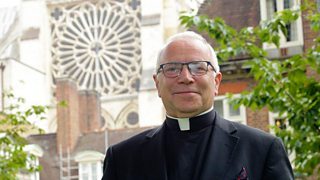
In the Queen, sovereignty is a reality in a life, says the Dean of Westminster.
The Tokyo Olympics – Stretching Every Sinew
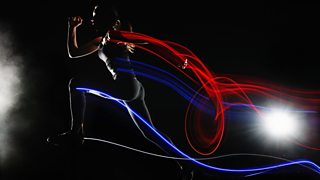
Athletes' reflections on faith and competing in the Olympics.
"We do not lose heart."
Marking the centenary of HRH Prince Philip's birth, a reflection from St George's Chapel.
St David's Big Life Hack
What do we know about St David, who told his monks to sweat the small stuff?
Two girls on a train
How a bystander's intervention helped stop a young woman from being trafficked.
Sunday Worship: Dr Rowan Williams
How our nation can rise to the huge challenges it faces, post-Covid-19.
