2. Nationhood
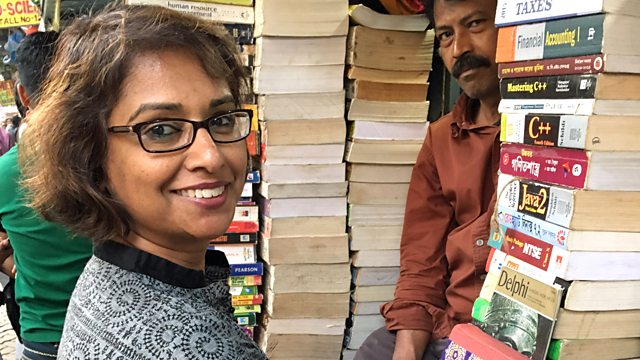
Historian Anindita Ghosh explores how the printing press shaped the idea of India that was born in 1947. From 2017.
Dr Anindita Ghosh is exploring the impact of the printing press on India and argues that print, much more than railways as is commonly understood, gave birth to the Indian nation that was born in 1947.
In this concluding programme, Anindita explores how the printing press played a fundamental role in the rise of nationalism in India.
Starting with the nationalist newspapers, she explains how English language papers as well as local language newspapers were crucial in forging anti-colonial sentiments among the reading public.
In response, the colonial government passed draconian acts which empowered district magistrates to seize presses of papers they deemed to be seditious. These measures applied to all publications, books and pamphlets as well as newspapers. But clamping down was not easy.
Indian publishers found ingenious ways to avoid the censors. And alongside books, pamphlets and papers, there was the vast circulation of printed images that proved far more difficult to police by the colonial government than written texts.
Anindita argues that print was key to the shaping of a modern public sphere in India because print was the vehicle of critical ideas of community, history, society, culture and identity that emerged in modern India.
Print was in that sense, modern India.
Contributors:
* Professor Tanika Sarkar (JNU, New Delhi)
* Professor Christopher Pinney (UCL, London)
* Professor Sunil Khilnani (KCL, London)
* Sandeep Hazareesingh (Open University)
* Professor Francesca Orsini (SOAS)
Producer: Melissa FitzGerald
A Blakeway production for BBC Radio 4, first broadcast in April 2017.
Last on

Broadcasts
 Thu 20 Apr 201711:30BBC Radio 4
- Mon 11 Sep 201716:00BBC Radio 4
- Fri 20 Feb 202610:30BBC Radio 4 Extra
- Fri 20 Feb 202616:30BBC Radio 4 Extra
- Sat 21 Feb 202600:30BBC Radio 4 Extra
