The Story of Ronnie Biggs – who was the man behind the headlines?
How did a small-time carpenter with a minor role in the 1963 ‘Great Train Robbery’ become Britain’s most famous fugitive and – for many – an unlikely folk hero?
A new six-part series for BBC Radio 5 Live – Gangster Presents: The Story of Ronnie Biggs – retraces the extraordinary journey of one of Britain’s most infamous criminals from gangland tea boy to Brazilian playboy, via the notorious heist, a dramatic prison break and years on the run Down Under.
Previously unheard recordings tell the story of the Great Train Robber in his own words, and of those who knew him.
Who was the real Ronnie Biggs?
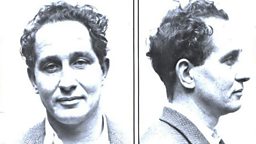
“I put my name on the list and I joined the gang”
Ronald Arthur Biggs was born in Stockwell, South London, in 1929, the youngest of five. As a teen, shoplifting and stealing cars led to a stint in a youth detention centre.
I was swept along with somebody paying me so much attention”Charmian (Bigg's first wife)
“I shared a cell with Ronnie Biggs,” says fellow inmate, Brian Stone. “I had a few things in common with him. He liked jazz, so did I. Just got on, you know, very intelligent.”
By 1960, Ronnie had cycled through three prison sentences and a dishonourable discharge from the RAF.
Then, he found a reason to reform his ways. 18-year-old Charmian Powell – from a respectable, middle-class family – was travelling to London by train when Ron stepped into her carriage.
“I was swept along with somebody paying me so much attention,” Charmian admitted. “My father was horrified.”
The pair eloped.
“I had made him promise me when we were married that he would never engage in any criminal activity ever again.”
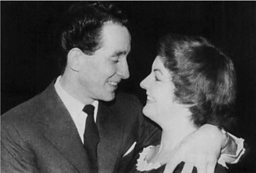
For a while, it worked. Ronnie Biggs had a new wife, new baby boy and work as a carpenter. He was going straight. But to put a deposit down on a house, they needed £500 cash.
Ronnie put a call in to an old friend. Bruce Reynolds – charismatic criminal mastermind – was planning the heist of a lifetime.
“Bruce laid it on me that there was a robbery in the offing and if I wanted to participate there would be some £40,000 for my share,” stated Ronnie.
“I asked him for some time to think it over but of course I didn't really need very much time at all… I put my name on the list and I joined the gang.”
“I was absolutely the non-favourite, the backmarker, one of the foot soldiers”
On 8th August 1963, at 3am, Ronnie Biggs and 16 fellow criminals hijacked and robbed the Royal Mail Glasgow to Euston night train. Their loot was £2.6 million.
Everybody was very excited, of course. It took us hours to count [the money]”Ronnie Biggs
The meticulously planned theft became a violent crime when the train driver, Jack Mills, was beaten brutally with an iron bar.
Ronnie Biggs was arguably the most insignificant member of the gang – he simply knew a retired train driver who could help move the hijacked locomotive.
“I was absolutely the non-favourite, the backmarker, one of the foot soldiers, in effect, and not at all important in the planning or the carrying out of the robbery,” Ronnie stated.
The job done, they headed to a nearby farm to hide out with the cash. “Everybody was very excited, of course,” Ronnie relayed. “It took us hours to count it.”
“Then came the difficult part, getting away from Leather Slade Farm and back to London with our haul.”
Soon, the police had located the farm, covered in fingerprints. They were closing in on the gang – who began to fall like dominoes.
“He had endangered our future happiness”
Soon, it was Ronnie’s turn. He returned home from work to find Scotland Yard in wait.
“The minute he came in the door they had his arm up the back and pressed against the wall and six people leaping on him. He was as white as a sheet,” Charmian recounted.
“I was horrified that he had endangered our future happiness, the happiness of two little children… Everything was totally out of my control.”
Following the longest and most expensive trial in British legal history, the judge handed down a 30-year sentence to Biggs and the bandits. This was a savage attack and theft from the Crown itself; these men were to be made an example of.
“My immediate reaction to that was to think the old guy’s off his rocker,” stated Ronnie. “No one goes to jail for 30 years.”
“Of course, the bottom falls out of your world when you hear it.”
“He was like a celebrity… everybody wanted to help him”
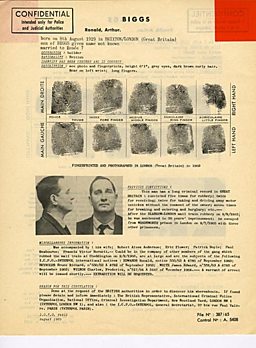
When Biggs decided to try and escape Wandsworth Prison, it wasn’t hard to get assistance from his criminal network.
We were smuggled out of England in a cargo boat”Ronnie Biggs
“He was like a celebrity, a train robber, everybody wanted to help him,” said Brian Stone.
The plan was comically simple: a rope ladder, thrown over the wall of the prison yard, and a van in wait. A fixer drove him to London Bridge.
“We were smuggled out of England in a cargo boat and then by car to Paris,” Ronnie explained.
There, Ronnie had surgery to alter his face.
“For the amount of money I've paid for the operation, I was assured that I would get the finest in Europe, but I think I got probably the worst. I think it was somebody who was learning the business. It was straight out the butcher shop.”
Regrets swirled.
“There I was living in Redhill with my lovely wife and my super little kids and now here I am lying on my back with this incredible pain going on… Was it all worth it?”
New face, new name, new country
“I read in the News of the World about Australia. It sounded like a land of milk and honey,” said Ronnie.
I didn't want the children to grow up without a father”Charmian (Bigg's first wife)
“Initially I was full of excitement at the prospect of living in Australia,” said Ronnie’s wife. “The possibility that we were going to go somewhere else in the world together and start life afresh.”
“I loved him very much. I didn't want the children to grow up without a father.”
Ron and Charmian, a few months apart, travelled to Oz on forged documents. The heist money had nearly run dry. Under the alias Terence Firminger, Ron got work as a carpenter.
“I enjoyed my life in Australia,” said Ronnie. “I’d had what I considered to be a very, very ordinary life.”
“The kids were getting good educations and we had a very happy home life.”
Before long, Charmian was expecting their third child.
But when Bruce Reynolds was finally captured, and Ron’s face was plastered over the Australian press, their world was turned upside down again. Ronnie went into hiding.
Ronnie’s old friend, Mike Haynes, offered him his own passport as a ticket to freedom.
Charmian packed his bags for him. “We walked in the dark together and we knew then that we might not see each other again.”
“He struck me as a bit psychopathic”
1970, Ronnie landed in Rio de Janeiro. He soon settled into Rio life: the caipirinhas, the beach parties, the women.
“He was so attractive, but he was also such a nice man. That's what I feel people don't always know about him,” said fellow ex-pat Ursula, who bonded with Ron at the dance halls. “He was fun and generous and good to be with.”
Charmian and Ron kept in touch by post. “It was difficult,” admitted Charmian. “But I suppose I did hope that eventually we might get together again.”
Then in 1971, Ron received a letter from Charmian. Their first-born, Nick, had been killed in a car crash.
Ronnie came close to turning himself in but, in the end, stayed.
“His son got run over and he didn't go back. I couldn't forgive him for this,” said Noel ‘Razor’ Smith, who spent 34 years inside and had always held Biggs up as a hero. “If that was my son, no matter how many years I had to face, I would come back. He struck me as sort of a bit psychopathic.”
“He would succumb to any pretty girl”
Ronnie was living with a new lover, 23-year-old Raimunda de Castro, when he received a tape from Charmian. She was miserable.
“After thinking about it very deeply, I decided I was going to give myself up,” said Ronnie. “It was the only way to put my life in order.”
First though, he needed to make some money to support the women in his life. He arranged an exclusive with Colin MacKenzie at the Daily Express. Scotland Yard got wind and, during the photoshoot, they swooped in and arrested Biggs.
Another twist – because Raimunda was pregnant, Brazil would not allow Biggs to be extradited.
Charmian flew over to be reunited with her husband, only to learn that he was having a baby with another woman.
“She was heartbroken, she had obviously lost Ron,” says journalist, Colin MacKenzie.
“I think he still felt enormous love and respect for Charmian but he was quite a weak man. He would succumb to any pretty girl, pretty face that danced in front of him.”
Ronnie stayed in Brazil and lived off his notoriety, selling t-shirts and entertaining tourists at his home. He called it The Ronnie Biggs Experience.
The fugitive even recorded a punk record with The Sex Pistols that made it into the UK Top Ten.
“I always look on the bright side of things”
In 1981, a band of British ex-soldiers kidnapped Ronnie, and hauled him off in a boat. In another stroke of luck, their vessel broke down and Ron was rescued.
Even as a captive, Ronnie remained chipper: “I'm sort of optimistic and a happy person by nature. I don't let such circumstances get me down… I always look on the bright side of things.”
He felt satisfied when he avoided extradition once again. “The purpose of imprisonment, we are told, is to rehabilitate the person,” said the fugitive. “I am completely rehabilitated. I am no longer a dishonest person and there can be nothing served with me going back to prison.”
Raimunda travelled to pursue her dancing dreams and Ronnie became a full-time parent.
“I was perfectly happy bringing Mike up on my own,” he said. “It was a nice kind of existence.”
“It has not been the bed of roses that a lot of people might imagine”
On the 20th anniversary of being on the run, Biggs held a party to celebrate.
“It most certainly does please me to think that I, if you want to put it that way, beat the system,” he said.
As far as I'm concerned, I have definitely paid the price”Ronnie Biggs
“I did sort of manage to get free, manage to get to Rio and live what you call a life in the sun – but along the way there's been a lot of heartbreaks, there's been a lot of suffering and it has not been the bed of roses that a lot of people might imagine.”
“As far as I'm concerned, I have definitely paid the price.”
In later years, the fugitive’s life spiralled.
Age 66, Ronnie was devastated when he found his then partner – Ula Sophir – dead at her home. They’d been together for more than a decade.
Biggs suffered a series of strokes. Depressed and unwell, the man once so full of energy made a failed suicide attempt. By 2001 he was ready to submit himself to the prison system that he had spent 30 years evading.
Back in a UK jail, Ronnie’s health continued to deteriorate. After being granted parole, he died in 2013. He was 84.
Ronnie Biggs’s legacy remains hard to define. Harshly punished working class hero, or ruthless thug who damaged those who loved him? Without question, it was a colourful life that took him far from the South London streets he grew up on.
“Before the train robbery I always thirsted for a life of adventure,” stated Ronnie Biggs. “As a result of getting involved in that robbery, plenty of adventure I had.”
![]()
Want to listen to the whole series?
Search "Gangster Presents" on BBC Sounds, where you can find The Story of Ronnie Biggs and every other series of Gangster and Gangster Presents now.