The Highs and Lows of the Ukulele: A History
6 November 2015
One of the ukulele’s online pioneers GUS RAUCOUS conducts a whistlestop tour of the story behind the iconic instrument.
Pre-1915
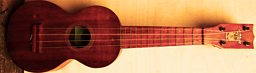
In 1879 a ship carrying 419 immigrants from the Portuguese island of Madeira docked at Honolulu harbour in Hawaii. As was their custom, some of the arrivals walked around singing and playing their small, four-stringed Portuguese guitars, or “machetes”.
Straight away the local people were impressed by the instruments' handy size and sweet sound. Craftsmen soon started to make their own version from local wood, and the ukulele was born. Hawaiian manufacturers were producing about 600 ukuleles every month by 1910, and their exotic sounds began to drift over to the States.
The next 100 years would see this half pint-sized instrument take over the world...
1915
The ukulele officially “arrives” at the Pan Pacific International Exposition in San Francisco.
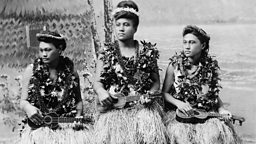
The Hawaiian stand makes a big impression with its dancing hula girls and ukuleles.
A ukulele craze happens almost overnight and sales of ‘how to’ instruction manuals and sheet music for the ukulele are big sellers.
Importantly, technological advances such as the phonograph and radio help boost the craze.
1925
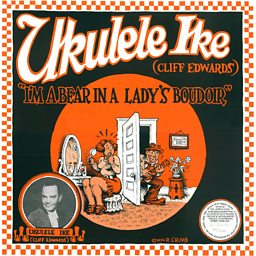
Ukulele stars have risen to prominence: Wendell Hall, May Singhi Breen, Roy Smeck, and Cliff Edwards (Ukulele Ike) all have songs in the hit parade as well as appearing in musical stage shows and musicals on film.
1930s
The ukulele suffers a slight decline in popularity due to the steady rise of the semi-acoustic guitar, which becomes a more practical choice for rhythmic accompaniment in dance bands.
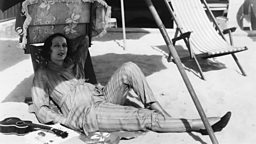
Not for the last time, the ukulele is mocked and people who play it become figures of fun. The 1933 film Sons of The Desert features Laurel and Hardy in some great scenes with ukuleles.
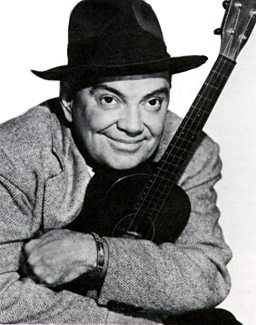
The 1930s also sees the rise of George Formby and his “cheeky chappy" persona accompanied by his little ukulele (or, more usually, his ‘banjolele’). He stars in over 20 comic musical films and makes over 230 records.
1939-1945
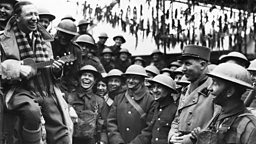
George Formby performs to an estimated to 3 million troops during World War II and is awarded an OBE for his efforts.
1946-1950
American GIs who had been stationed in the South Seas islands bring back ukuleles and their exotica nostalgia helped fuel another ukulele craze.
1950
Once again technological advancements help achieve ukulele domination. A massive increase in television sets in the home helps spread the word of the uke.
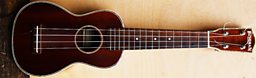
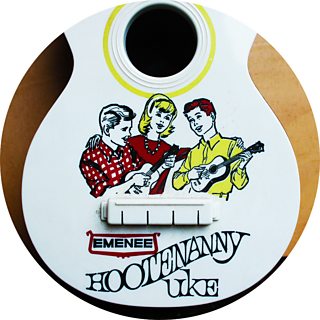
In the States, Arthur Godfrey - one of the most popular tv personalities of his day and a ukulele player - endorses the TV Pal plastic ukulele. It is a ukulele to strum while watching TV.
This and other mass-produced plastic ukuleles are easy and cheap to make and sell by the millions during the '50s.
1956
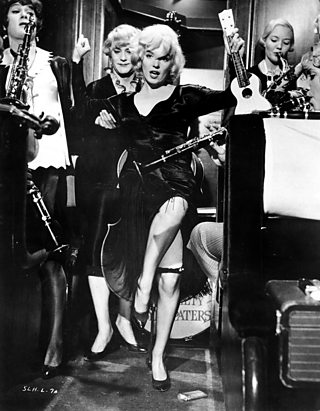
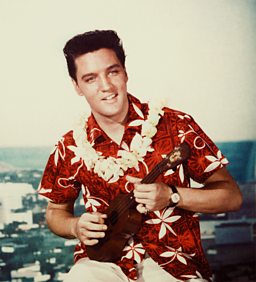
In the latter half of the 1950s there really is no place for the ukulele - it’s much too quaint and, let's face it, polite for rock ’n’ roll!

1959
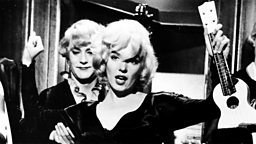
Marilyn Monroe, Jack Lemmon & Tony Curtis in Some Like It Hot, 1959.
1960
Massive global success of guitar bands like the Beatles sound the death-knell for the ukulele. Ironically Paul McCartney, John Lennon and, famously, George Harrison are all uke fans and reportedly used to jam with them during recording breaks for Let It Be.
1961
1967
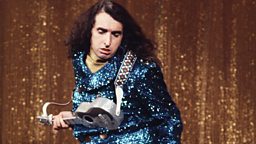
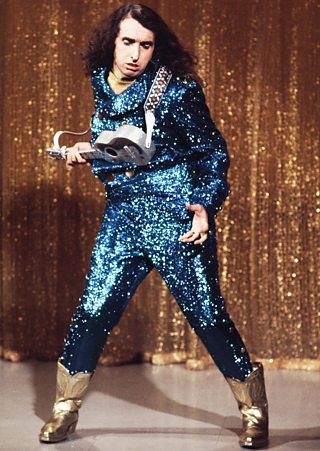
One-hit-wonder Tiny Tim is The Advocate for the ukulele in the psychedelic sixties and as a result it sinks even further into the underground.
1970s
The ukulele takes a well-earned rest from influencing events in popular culture.
1980s
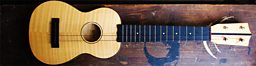
Although ukuleles were unsurprisingly absent during the glam and punk eras, they did make an unexpected re-appearance from the mid to late '80s as the “ultimate punk instrument” and a few brave souls formed ukulele groups with names like Uke Till You Puke began to perform in rock venues in NYC. The documentary Rock That Uke charts the rise of the post-punk uke.
1995
The spread of internet allows people with specialist interests from all over the world to join forces and share their expertise - and to start clubs. It's not long before ukulele clubs like Ukulele Noir start popping up.
2005
Launch of YouTube in February 2005 provides an online stage for musicians from around the world. Now ukulele players could play their funny little instruments to other enthusiasts, the uke-curious, and people who had never seen or heard one before.
Very quickly the internet ukulele phenomenon grew and sales of ukuleles increased.
An early viral video was Jake Shimabukoro playing an extremely slick and accomplished version of While My Guitar Gently Weeps.
With currently over 14 million views and more than 18,000 comments this short video seemed to bring everything together: the ukulele as Credible Instrument, a connection with The Beatles and George Harrison, and the entire world’s approval. The ukulele was back!
2015
Ukulele sales in Britain are currently running at 250,000 per year, according to the Music Industries Association, and there are now more than 100 ukulele clubs and orchestras active across Britain.
More and more people are discovering that picking-up this humble little instrument is not too daunting, and is a great way to get involved with playing music.