Britain, Unexpected
Five surprising discoveries from a German film crew exploring the UK’s wildest places
Written by Martin Koddenberg and Caroline Payne
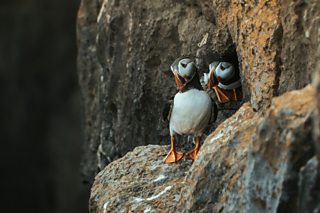
The UK is one of the most densely populated countries in Europe. Yet around 10% of the country is protected as national parks.
Across these areas wildlife continues to thrive, from remote uplands to ancient forests and exposed coastlines. These places are shaped by both nature and people. Inside Britain’s National Parks explores these iconic landscapes.
The series is created by a young German production company from Berlin, encountering Britain’s national parks with fresh eyes. Here, they share their five most surprising discoveries.
1. Caring for the environment
One of the biggest surprises was the locals’ level of commitment to protecting their environment.
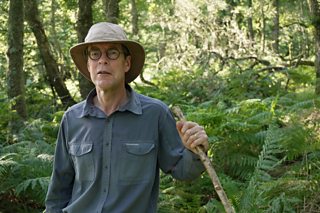
Across all four parks, people dedicate large parts of their lives to it. From rangers to volunteers, conservation here is not just policy, it is personal. What drives people like the guardian of a temperate rainforest on Dartmoor? Or the Commoners in the New Forest? Their spirit is rooted in wondrous traditions, carried forward over generations. In Britain, things tend to follow a plan.
And it makes sense: on an island, space is never taken for granted, so you’d better look after it.
2. Brits love to engage
There is a quiet but constant culture of participation. People give their time freely, spending weeks down on their knees, cup of tea in one hand, a biscuit between their teeth, digging up artefacts of ancient Roman pottery. Or organising fundraising runs through their local national park. Or maintaining footpaths and habitats – all usually while being rained on.
Once you notice it, it is everywhere. There is something quietly comforting about it, a sense that someone will always turn up and get on with it. For all their differences of opinion, volunteering might just be the glue that holds British society together.
3. The Pembrokeshire Promise
InPembrokeshire, there is a phrase we heard again and again: the “Pembrokeshire Promise”.
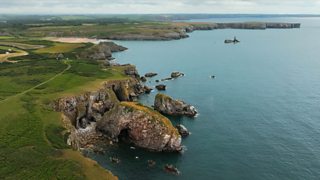
It means something will get done, but without committing to exactly when. It is a very particular way of agreeing to something while also completely disregarding even the slightest notion of a timetable. Over time, it starts to make sense. We just wish someone had told us in advance.
Perfectly manageable for most, perhaps slightly more testing for a German film crew!
4. Cars and nature
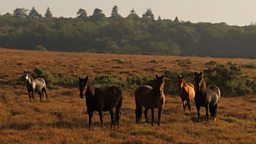
The New Forestis probably the only national park in the world with a car dealership at its centre. Major roads run straight through it, and yet ponies, cattle and deer move freely across the landscape. Do they mind sharing the space with all those good-looking vintage cars?
We also noticed a growing number of EV charging points and, with them, so many electric campervans that at times it felt as a German car factory had quietly relocated to the forest to secretly release them into the wild. Whether that is good news for nature is another matter.
The wildlife, at least, does not seem particularly bothered.
5. Doing the right thing
As busy as some of the parks are, Northumberland National Park remains something of a blind spot for many Britons – more sheep than visitors!
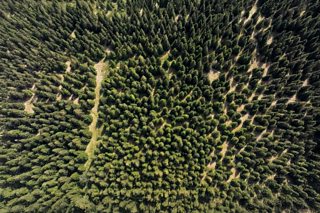
The biggest surprise was Kielder Forest, one of the largest man-made forests in Europe, sitting right on the edge of the national park.Never-ending rows of Sitka spruce, planted on moorland, managed and harvested for timber.
And yet, despite this essentially being an oversized treefarm, it has also become an important habitat for wildlife. We filmed Ospreys nesting on poles, staring down our lenses from afar, surrounded by huge swathes of felled forest. It’s a scarred and heavily worked landscape. But this suggests that sometimes, doing the right thing for nature does not mean leaving it alone.
Watch the full series here!

