Why do British people love tea?
For the podcast Here for the History, Alice Loxton and Ben Henderson reveal the surprising moments behind the traditions, customs and objects all around us. There’s one ritual that many Brits can’t face the day without: the morning brew.
Alice and Ben look at the origins of the humble cuppa, its appearance in England in the 1600s and its popularisation in the royal court thanks to a Portuguese princess.
They explore how the British East India Company sought to break China’s monopoly on tea production, leading to the Opium Wars and corporate espionage.
Finally, we learn how tea fuelled Britain’s Industrial Revolution and the soldiers and civilians of World War II.
![]()
Listen to Here For The History on BBC Sounds
Listen to the full episode now on BBC Sounds
Putting the tea into royalty
Next to water, tea is the most consumed beverage in the world. But how did something not native to Britain become intrinsically linked to our identity?
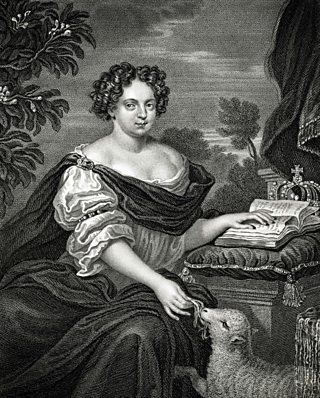
In 1662, Princess Catherine of Braganza sailed to England to marry King Charles II – a great strategic alliance arranged by her father, King John IV of Portugal.
The pious, quiet 23-year-old arrived in Portsmouth after a terrible voyage, and the first thing she asked for as she stepped on to dry land was a cup of tea. We know from the famous diarist Samuel Pepys that tea had arrived in the UK by the 1650s but it wasn't yet popular, and so the princess had to make do with a small ale instead!
Post wedding, Catherine was installed in the English Court. She is known for introducing the English aristocracy to the fork, marmalade and, most importantly, tea. As part of her dowry, Portugal provided a chest of the stuff, which was already a hit in her native country.
“She serves this tea to her ladies-in-waiting and the ladies at court so this sets a trend in England for the elites drinking tea,” explains Alice. “We know that she would go and visit aristocratic families and drink tea at their houses.”
The first British tea shop
“A big moment in the history of tea in Britain comes in 1706 because we get our first tea shop,” states Alice. “It opened on the Strand, which is where many of the London elites were living after the Great Fire of London, and it was opened by a man called Thomas Twining.” The same flagship Twining’s store still exists today.
Tea at this point was extraordinarily expensive, because it had to be transported from China, and was subject to massive import taxes. By 1707, 3.5 ounces of Twining’s tea cost a whopping £160 in today’s money!
The masses simply couldn’t afford it, and so tea began to be smuggled into the country. Pirates brought it over from Holland and Portugal where taxes were far lower. The smuggling was so widespread, even teachers and members of the clergy were involved! To try and stamp it out, the tea tax was slashed in 1784.
The Tea Wars
By the 1800s, tea had become so popular that Britain was willing to go to war for it.
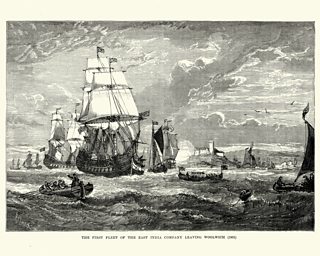
The British Empire was at the height of its power, but still totally reliant on China for its tea. The East India Company, a merchant company turned imperial power, wanted to buy more tea from China, but China would only accept silver as payment, of which the Brits had a shortage. They tackled the issue by ramping up opium production in East India and selling it illegally to Chinese merchants in exchange for silver, which then allowed them to buy more tea. This led to a huge opium addiction problem in China.
What happened next became known as the Opium Wars.
After failed attempts to stop the flow of the drug including; strict laws, blockades and diplomatic outreach, the Chinese Emperor ordered 20,000 chests of opium to be seized and dumped into the sea. The East India Company, with the help of the navy, retaliated with great force. Boats smashed through China’s coastal defences and China was forced to capitulate.
“It's a great humiliation for them,” says Alice. They ended up paying for the loss of the opium, ceding Hong Kong to Britain and opening up more ports to trade with Britain. Tea started to flow more easily.
Daring undertakings for Darjeeling
Britain wanted a way to grow its own tea, so they didn’t have to rely on China. In
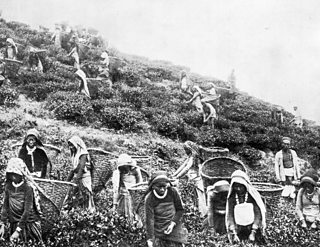
India, they set up tea gardens and plantations. There were two major problems: they were lacking the know-how, and the tea plants.
Along came Robert Fortune, Scottish botanist and explorer. In 1848, he was instructed by the East India Company to travel to China in secret and gather the tea seeds and the understanding which would enable the British to grow tea.
In a risky attempt at corporate espionage, Fortune disguised himself in traditional Chinese clothing, snuck into areas of China forbidden to foreigners and ventured into the tea factories.
He brought back 20,000 live plants and convinced a small number of workers to travel with him to the area we now know as Darjeeling.
Fortune remains very unpopular in China today. “They view him as this terrible figure,” says Alice. “He single-handedly kneecapped the economy.”
China's monopoly on tea production was broken and the raging demand for tea in Britain could finally be satisfied.
The birth of the tea break
The Industrial Revolution turned Britain from a largely agrarian country, where most people lived in the countryside, to a heavily urbanised factory-based nation. Workers endured terrible hours and terrible diets.
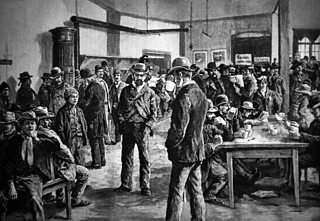
A warm cup of tea became a real highlight of the day, broadening out to be something for the masses, not just the elite.
“It becomes increasingly important for industrial workers,” says Alice. “By 1834, there’s a lot of mills and factories where they're giving workers particular moments in the day which are specified as tea breaks.”
The drink was fast becoming part of the fabric of society.
“Tea, which is basically the sustaining juice that’s firing the Industrial Revolution, is naturally going to become part of our national identity,” explains Ben.
Tea as medicine and fuel
“In the Industrial Revolution, tea is cemented as not just a warm and cosy drink, but actually one that's really integral for our health,” says Alice.
The water had to be boiling, so that made it safer to drink. It contained milk for protein and sugar for energy.
There was poverty, and problems with alcoholism, but tea was seen as a great solution to that too.
Florence Nightingale, the founder of modern nursing, recommended tea. “There is nothing yet discovered which is a substitute to the English patient for his cup of tea,” said the Lady with the Lamp.
In the Second World War, tea played an integral role.
“The top five purchases of the government in the Second World War are bullets, artillery shells, bombs, explosives and tea,” reveals Alice. Tea was core to the war effort and became a symbol of national resilience.
What is the future of tea?
Research published a few years ago suggests that more Brits now regularly drink coffee than tea. The infiltration of American culture drives the popularity of the artisan coffee house. The drink is seen by some as a sexier alternative to tea.
Tea, in contrast, is considered “cosy”, says Alice. It’s the drink you have in tea rooms, maybe with your Granny, to accompany a slice of cake.
But tea is seeing innovations too. Bubble tea, which emerged from Taiwan, is now taking the UK by storm.
Today, we are even producing our own tea. There are more than 50 tea growers in Scotland alone.
“Tea is still a big part of our story,” stresses Alice. “84% of Brits drink tea every day and some research puts it at 60 billion cups drunk per year.”
Time to put the kettle on.