
Home > Features > An actor's life's for me
An actor's life's for me
20th February 2008
We get heaps of emails at Ouch from disabled people asking how they can get into acting. We felt it was about time we addressed this and put something useful up on the site, so we approached award-winning BBC drama producer Ewan Marshall (Pear-shaped, Every Time You Look At Me) to get some definitive advice from a disability point of view.

In the distant 90s, I was Artistic Director at Graeae, a professional theatre company of disabled actors. It was not uncommon to receive a phone call or letter (e-mail and texting were yet to happen) which ran along the lines of:
I exaggerate slightly, but it is accurate to suggest that there are a significant number of people out there who think they will be able to bag an easy role because of who or what they are, rather than what they've done. When did we disabled people become so deluded?
If your ambitions have been limited to that of being wheeled, pushed or thrown on as shepherd/ess in the school nativity play, who can blame the poor disabled person who has to come to their own, rather positive decision about their abilities.
The 'proper' industry in the '90's excluded disabled actors as it still does in the noughties. There is the odd exception, but that's all it is - odd and an exception. However, fuelled by discrimination legislation and continuing embarrassments - like the fact that many lottery funded theatres are now physically accessible but empty of disabled staff - the barriers are starting to fray a little round the edges. Now is a good time for disabled actors to get in their face.
"I'm disabled, I can act, so I am going to join your company. I did try proper companies; however it appears you'll have to do. It's not convenient for me to start on Monday as I'm washing my hair, but I will be with you promptly on Tuesday. P.S. two sugars, please."
I exaggerate slightly, but it is accurate to suggest that there are a significant number of people out there who think they will be able to bag an easy role because of who or what they are, rather than what they've done. When did we disabled people become so deluded?
Question: How does someone decide they're any good at acting?
Answer: By receiving training, by performing in front of a critical audience, by comparing yourself against peers, and above all by gaining experience.
If your ambitions have been limited to that of being wheeled, pushed or thrown on as shepherd/ess in the school nativity play, who can blame the poor disabled person who has to come to their own, rather positive decision about their abilities.
The 'proper' industry in the '90's excluded disabled actors as it still does in the noughties. There is the odd exception, but that's all it is - odd and an exception. However, fuelled by discrimination legislation and continuing embarrassments - like the fact that many lottery funded theatres are now physically accessible but empty of disabled staff - the barriers are starting to fray a little round the edges. Now is a good time for disabled actors to get in their face.

I still come across employers in the industry saying, "We did want disabled students or actors, but no one can be interested because no one applied". It's not true, so don't give them that excuse. Get experience, apply.
Here are a few tips to help the wannabe actor - many very obvious, but all worth following.
Here are a few tips to help the wannabe actor - many very obvious, but all worth following.
1. Regularly practise what you claim to be good at
There are few other trades that expect you to be good without actually doing it, but in acting it's as common as it is wrong
2. Get training
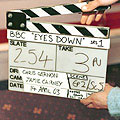
Our drama colleges and universities have no legal or moral right to exclude disabled people. Sure, they can always play the 'no talent' card (see above), but if enough people apply are they really going to say that no disabled people can act? What would happen if one of our esteemed acting knights fell off his horse and needed a limb amputated? Would the ability to act leave him along with his leg? Remember that a lot of great training also exists outside formal education, e.g. youth theatres, amateur groups, arts centres.
3. Get yourself noticed
Write to those casting directors, directors and producers that could employ you. Let them know what you're doing and when you're doing it, so that they have every chance to see you in action. Do your homework, too - not all casting directors live or are based in London. The book Contacts, published by Spotlight, will give you most of the information you need about all aspects of the entertainment industry. Also target the fringe and experimental companies, who have a much better track record than the mainstream in employing disabled actors.
4. Get yourself an agent
Most casting is done through agents. You have to work a great deal harder to find out what's going on if you haven't got one. Getting an agent will be difficult, as they have yet to be convinced they will make money out of you, but don't let this stop you. It's essential to have someone to bitch about in this industry, and agents are top of the list.
5. Prepare a clear CV and photo
At all costs, resist the urge to send snaps of your last performance! Get a good black and white, neutral shot taken of your head and shoulders. If you can't afford a professional photographer, then find a good amateur or club together with other actors. If you haven't done a lot of theatre, don't make the mistake of trying to over-flesh the details of your CV a little - only you are interested in the complex character work involved in the preparation for that second shepherd. I would always recommend you put down relevant information, and that could include your disability. If that makes you feel too degraded then you're in the wrong job
6. Get yourself in <a href="http://www.spotlightcd.com/">Spotlight</a>
Casting directors do use it! It's a hugely important way to increase your visibility. If they say you don't have enough experience then be as imaginative as you need to be about ensuring you satisfy their requirements.
7. Go to see stuff
Watching great - or even poor - acting can be inspiring and educational. If it's theatre, talk to the actors and directors afterwards (in the bar?). If you like a show, film or TV programme, write to the key names involved. Nothing opens doors much better than sincere appreciation.
Bookmark with...
Live community panel
Our blog is the main place to go for all things Ouch! Find info, comment, articles and great disability content on the web via us.
Listen to our regular razor sharp talk show online, or subscribe to it as a podcast. Spread the word: it's where disability and reality almost collide.
More from the BBC

All the latest news from the paralympics.

News and views for people who are blind or partially sighted.

Weekdays 12.40pm. Radio 4's consumer affairs programme.

~RS~q~RS~_bbc_=0&__ip__=54.76.44.195&dnainitialtitle=An%20actor%27s%20life%27s%20for%20me&dnahostpageurl=http://www.bbc.co.uk/ouch/features/an_actors_lifes_for_me.shtml&dnauid=ouch:article:753&s_baseHeadingLevel=1&dnashow=10&dnafrom=0&dnato=9&dna_encoding=utf-8&s_sssicomponent=1&s_sssiCommentCount=&dnacommentforumlistprefix=%5B_%5D&dnarecentcommentsprefix=%5B_%5D&s_commentprofileurl=/dna/mbouch/CommentProfile?&s_contact=0~RS~z~RS~38~RS~)

Comments