|  | The southern section of the M1 from St Albans to Birmingham was opened in 1959.
In the early days there was no speed limit, no central reservation, no crash barriers and no motorway lighting.
More importantly, a mere 13,000 vehicles were estimated to use the M1 on a daily basis in 1959 compared with today’s figure of just over 88,000. Pioneering engineering The 72 miles of the southern section of the road was built by a labour force of 5,000 in just 19 months. This works out on average at one mile every eight days. | M1 facts | | The southern section of the M1 was completed in 19 months at a cost of £16.5 million. | | 20 million tonnes of earth, gravel, rock and chalk were excavated to make way for the M1. | The 5,000 labour force who worked on the M1 were brought to work on double-decker buses. Canteens were needed every 2.5 miles along the motorway. | | The cost of the whole M1 was £50 million (the cost today would approximately be £1.5 billion). | | The average daily traffic flow on the whole of the M1 is 88,000 vehicles per day. | | The M1 is monitored 24 hours a day by eight different police control offices. | | The heaviest traffic flow is between junction 7-10. |
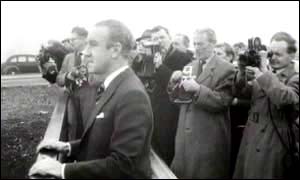
Preliminary investigations and research took four years which is not surprising considering the project would be the first substantial length of motorway ever built in this country. The big day and beyond The M1 was officially opened on 2nd November 1959 by the Minister for Transport Ernest Marples. He described the M1 as a "magnificent motorway opening up a new era in road travel, in-keeping with the new, exciting, scientific age in which we live." Today, many describe it as a car park; the problem being the huge increase of cars on Britain’s roads from 2.8 million in 1959 to over 27.5 million today. The M1 now stretches from the north circular road in London to the Leeds city boundary and is 187 miles long. |





 View
View