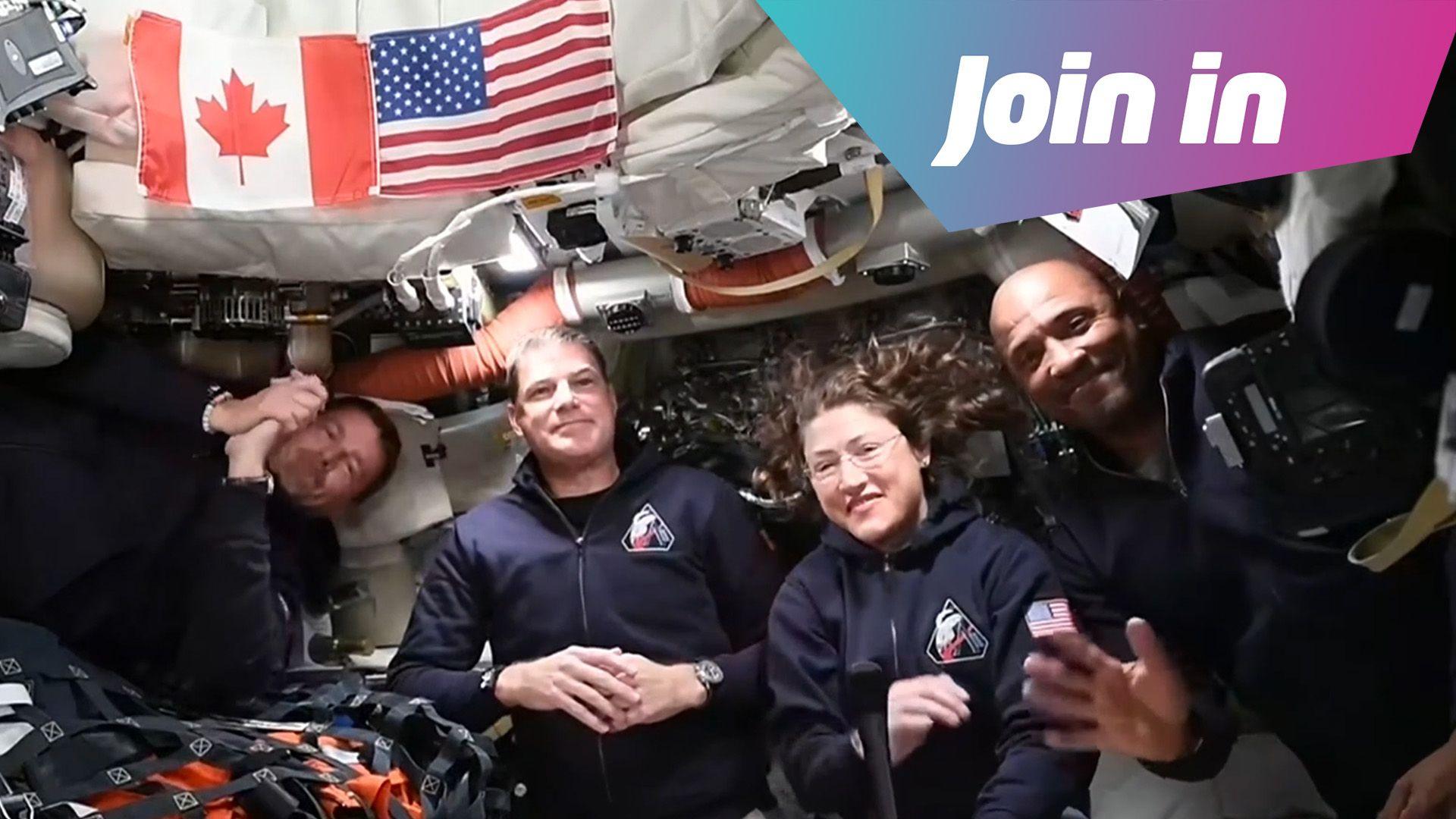
Artemis II splashdown: Astronauts 'happy and healthy' after successful space mission

Nasa's Orion spacecraft splashed down in the Pacific Ocean
- Published
The crew of Artemis II have safely returned to Earth after making a "textbook" splashdown in the Pacific Ocean.
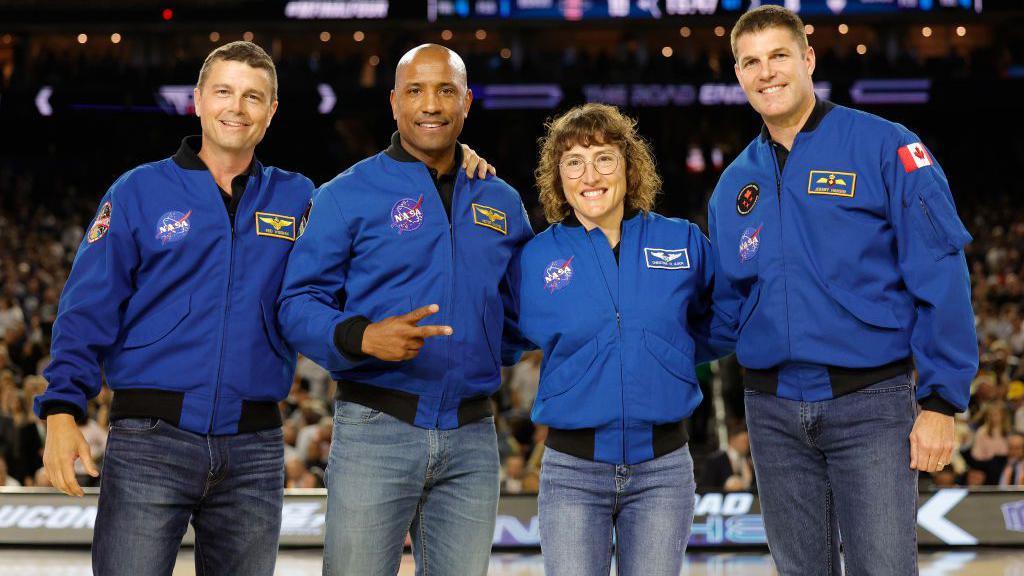
The four astronauts touched down off the coast of California at 00:07 GMT on Saturday, finishing a historic nine-day voyage travelling to a part of the Moon never visited by humans before.
A Nasa official said they were "happy and healthy" and undergoing medical checks before being reunited with their families.
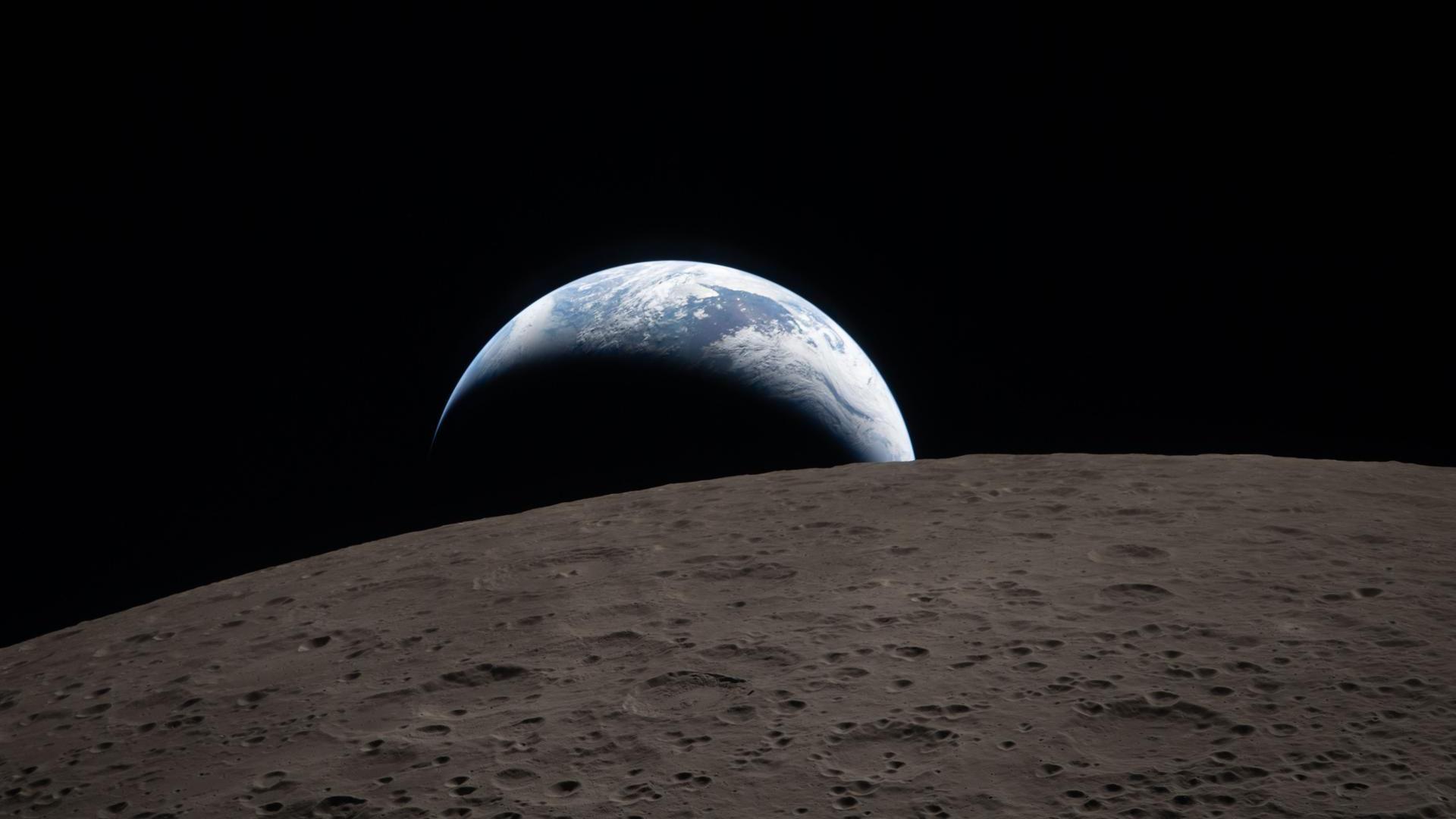
They have seensome amazing things during their mission, including the far side of the Moon (which we can never see from Earth), an eclipse, and the Northern Lights.

Helicopters transported the crew to the recovery ship after being extracted from the Artemis II capsule

Reid Wiseman and Jeremy Hansen seemed happy to be back
The four travelled further from Earth than any human before them, reaching 252,756 miles - more than 4,000 beyond the previous record set by the Apollo 13 crew in April 1970.
As the Orion capsule re-entered Earth's atmosphere, it was travelling really, really fast.
Nasa has said it reached a top speed of 34,965 feet per second - that's more than 23,000 miles per hour.
There was a nerve-wracking 6 minutes without communication as the spacecraft plunged into the atmosphere.

Viewing parties at the San Diego Air & Space Museum erupted into cheers when they landed
The Orion spacecraft had a system of 11 parachutes on board to soften its splashdown. It was then met by US military helicopters and soldiers, who lifted the astronauts to safety.
There were cheers at Nasa's control room when the crew touched down safely, and celebrations at viewing parties in San Diego at the Air & Space Museum.
Howard Hu, Nasa Orion program manager, said it was "a fantastic day".
He added that the team at Nasa had "dreamed" of reaching this day.
"This is the start of a new era of human space exploration."
What happens to the Artemis II astronauts now?

The crew have been examined by doctors on the ship that was sent to pick them up.
Astronauts have to do a lot of exercise in space because without the tug of gravity, muscle and bone mass shrinks.
The most affected muscles are those that help maintain posture in the back, neck and calves.
After being flown ashore by helicopter, the crew will be taken by plane to Nasa's Johnson Space Center in Houston where they are expected to be reunited with their families.
President Donald Trump welcomed them home and said the entire trip had been "spectacular", and invited them to visit the White House.
What happens next?

The Artemis II crew took this stunning photo while on voyage
The next mission, Artemis III, is due to blast off in 2027.
However, it won't be landing on the Moon as originally planned.
They'll instead be doing some tests closer to home, living on their spacecraft while still in Earth's orbit.
Nasa is now aiming to get people on the surface of the Moon in 2028.
More on Artemis II
- Published7 April
- Published30 March
- Published8 April