Summary

  1. How could changes to Instagram and Facebook work?published at 15:14 BST

    Tom Gerken
    Tech reporter

    As part of the settlement, Meta has agreed to a range of changes - but it isn’t as cut and dry as you might think.

    One of the agreements was for videos to not play automatically, for example, while a new default setting will mean the things they see aren’t being tailored to the viewer.

    However, in both cases, these are options teens can turn on and off - with the caveat that parents can adjust their child’s account to take control of the features.

    By default, teens won’t see the number of likes and reactions on posts, which will likely require some work behind-the-scenes from Meta to make possible.

    The headline features - a default two-hour daily time limit for teens, and a block from midnight to 0600 - raise the biggest questions.

    Will the app stop opening? Will it display a blank screen? Will it be a text box which reads “try again later”?

    Right now, the only thing we know for sure is these changes are coming.

  2. What changes has Meta agreed as part of the settlement?published at 15:09 BST

    According to the attorney general of California - one of the states that was suing the company - the settlement includes the following measures:

    • A default daily time limit of two hours for users under 18 that can only be lifted by a parent
    • A default nighttime block between midnight and 06:00 for users under 18 that can only be lifted by a parent
    • Default blocks on notifications to users under 18 from 22:00 to 07:00 and during the school day
    • An enhanced mechanism for teens to report potentially harmful content and a requirement that Meta respond to 90% of those reports within six hours
    • A ban on displaying numbers of likes or reactions to users under 18
    • A ban on cosmetic procedure image filters for users under 18
    • An option for users under 18 to have a non-personalised feed
    • A commitment to enhance parent supervision tools

    In terms of implementation, it says Meta has agreed:

    • To institute robust age assurance measures to detect users under 18, as well as measures to identify and remove under 13s
    • Use an independent auditor with expansive access to information and resources
    • Be subject to an injunction prohibiting it from making "further false, misleading, or deceptive statements around its safety features"

    The full list of what has been agreed is quite lengthy - we will have more details shortly.

  3. Meta says settlement is an 'important step' other platforms should followpublished at 15:04 BST
    Breaking

    Meta has just released a statement welcoming the settlement, calling it an "important step", and saying it hopes to set a new "industry standard".

    "Ensuring teens have a safe and productive experience on our platforms is an absolute imperative for Meta. We want to get this right for parents and teens," the statement says.

    The company also directly calls out TikTok and YouTube, saying the platforms should implement the same restrictions.

    "We know that when teens are restricted on one app, they simply move to another," it said.

    Meta also says the agreement is "building on our longstanding efforts to empower parents and support teens".

  4. Meta share price jumps then falls on back of settlement newspublished at 14:59 BST

    Michael Race
    Business and economics reporter, New York

    Meta's share price rose as the US stock exchange opened for trading on Wednesday on the news that it had agreed to settle the case with US states, which is subject to final court approval.

    But while the tech firm's share price jumped 3% on the open, it reversed gains immediately with shares trading lower as investors digested the details of the deal.

  5. Meta has consistently defended 'longstanding commitment' to young peoplepublished at 14:54 BST

    The Meta logo on a phone and the logos of its various platforms on a screen in the backgroundImage source, Getty Images

    In the settlement, Meta has denied the allegations against it and that it has any liability to the plaintiffs.

    Meta has consistently denied allegations that it has failed teens, including claims in this case that it deliberately designed its platforms to be addictive and breached child privacy laws.

    "We strongly disagree with these allegations and are confident the evidence will show our longstanding commitment to supporting young people," a company spokeswoman said in a statement.

    It has often cited numerous measures to protect young people, such as parental controls, safety features and making teen accounts private by default.

    But this hasn’t stopped a groundswell of legal action in the US.

  6. 'A monumental public health victory', one plaintiff sayspublished at 14:51 BST

    Head attorneys of the US states and territories that sued Meta are speaking out now in reaction to the settlement.

    Washington DC Attorney General Brian Schwalb calls it "a monumental public health victory for young people".

    “Meta intentionally exploited kids for profit and then lied about it, claiming its products were safe when its own internal research confirmed the platforms were addictive and harmful,” Schwab said.

    He added: "The safety features Meta is required to install will fundamentally and immediately change how young people use Instagram and Facebook."

    Meta is the "first platform to come to the table" and agree to reforms, Schwalb said, but there are numerous other platforms across the tech sector.

  7. What changes did the states want Meta to make to its platforms?published at 14:42 BST

    The states that brought the lawsuits against Meta wanted a variety of changes made to its products, as they allege as things run now causes "harm" to young users.

    They wanted the company to:

    • implement a process of parental verification for teenage users
    • change its "dopamine-manipulating recommendation algorithms"
    • remove many image filters that change one's appearance in photos
    • end autoplay of video content
    • prohibit the creation of multiple accounts
    • end disappearing or "ephemeral" posts, such as Instagram Stories

    All of these features are central to the current user experience on Meta's platforms.

    Meta has agreed to make some changes, court documents show, which we will bring you more on shortly.

  8. What was the case against Meta?published at 14:36 BST

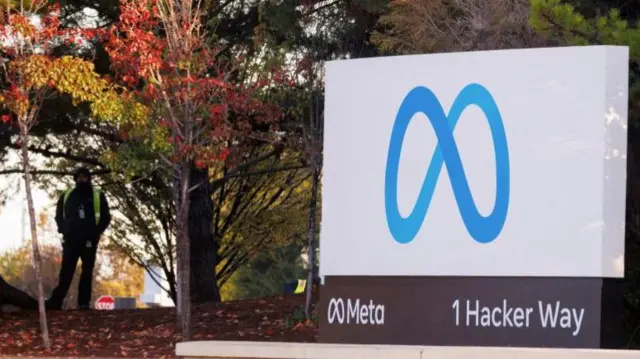
    The Meta logo on a sign outside their office on 1 Hacker WayImage source, Reuters

    Meta's settlement ends a trial that began in Oakland, California, just over a week ago, and was due to last for six weeks.

    It stemmed from a lawsuit filed in 2023 by 29 US states, including California and New York, which claimed numerous violations of federal and state privacy laws for children.

    That includes breaches of the federal Children's Online Privacy Protection Act - intended to protect children under 13 years old from being targeted by businesses operating online.

    The states allege Meta designed Facebook and Instagram to be addictive to children and teens, with features on the apps (such as video autoplay and Instagram Stories) made to keep them on there for as long as possible.

    They claim Meta makes it difficult for young people to use the platform less - through functions like frequent notifications intended to get young people back on the apps.

    The states allege the company has misled consumers about the safety of the platforms for young users.

    Meta is also accused of improperly collecting and using children’s personal data while they used the company’s platforms.

    Meta has consistently denied such claims.

  9. Meta agrees to settle case that social media platforms harmed childrenpublished at 14:27 BST
    Breaking

    Meta, the parent company of Facebook and Instagram, has agreed to a multi-billion dollar settlement over claims brought by several US states that its platforms harmed children.

    The deal, which is subject to court approval, requires Meta to introduce certain rules for teenage users, including daily limits and night-time blocks.

    We'll bring you the latest details as we get them.